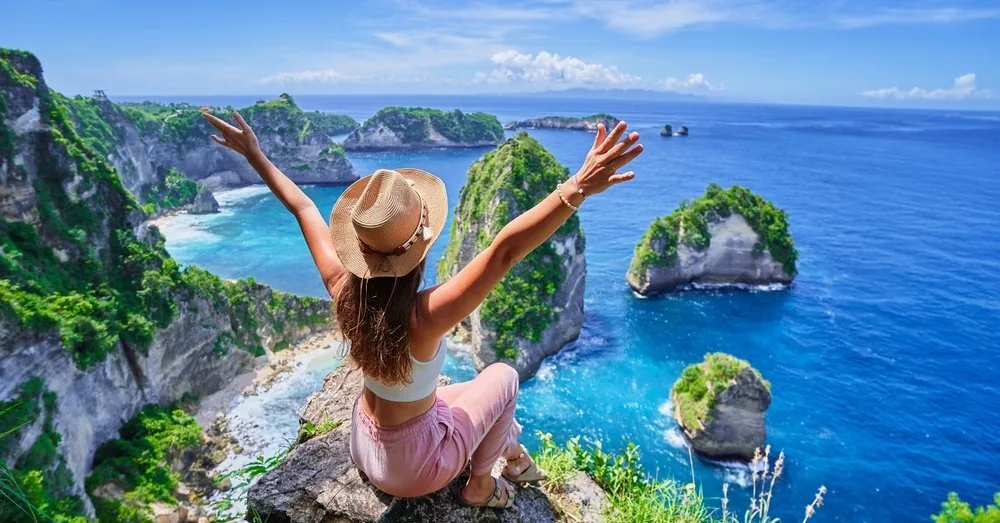
You are vacationing in Porto, uploading a family photo to Instagram or Facebook. In the background – a barely visible part of the Douro River, no location tags or inscriptions. It seems that no one could understand where you are from such a shot. A few days later, you receive a message: “Unusual activity detected while you were traveling in Porto. Please verify your information immediately.”
Read more An inappropriate man rampaged in the Klaipėda branch of the Tax Inspectorate
Since you didn’t write anything about your trip on social networks, the message may seem completely genuine. However, it could be a scam trap.
As The Guardian writes, criminals can now use AI to determine a person’s location from travel photos posted on social networks. This information is then used to create much more convincing fraudulent SMS messages or emails.

No location tags needed
A new McAfee study showed that AI can determine where a photo was taken even if there is no geotag or other clear data in the photo.
The system analyzes the photo itself: its background, architecture, signs, road markings, city panorama, lighting, vegetation, and other elements that are sometimes almost imperceptible to humans.
The antivirus software company McAfee tested two publicly available artificial intelligence models with more than 21,000 travel photos.
The results surprised even the researchers themselves. One AI model accurately identified the location in 91% of cases, the other in 87%.
Later, company employees tried to do the same with their personal travel photos. According to them, it was unsettling to see how easily AI could trace where the photos were taken.
“Artificial intelligence provides context, and it is this that makes a scam message convincing,” said Vonny Gamot, McAfee’s head for Europe, the Middle East, and Africa.
Sometimes flowers or trees are enough
AI finds it easiest to recognize a location when the photo shows famous landmarks, city panoramas, signs, road markings, shops, or food kiosks.
However, even a seemingly completely unremarkable image can provide surprisingly much information.

One McAfee employee gave AI a photo of a river with only trees in the foreground. The system correctly identified that the shot was taken in Hastings-on-Hudson, New York State.
Read more A package not meeting safety requirements detected on the protective fence
Another photo showed flower beds. AI assessed the arrangement of tulips and smaller blue flowers planted among them and determined that the photo was taken in the famous Keukenhof Gardens in the Netherlands.
If a photo is taken on a beach or in a hotel room, AI may find it harder to determine the exact city. However, according to McAfee, the system often still manages to recognize the country. Sometimes that’s enough for scammers.
The message becomes much more convincing
With information about your trip, scammers can create a message that looks much more credible than a typical mass phishing attempt.
For example, a person might receive a notification that an “unusual transaction” was detected on their bank card precisely in the country or city they are currently visiting.
Scammers can also impersonate hotel staff and claim to be contacting you after your stay, or report an alleged login to your account from the country where you are vacationing.
In such situations, it is easy for a person to think: if the sender knows where I am, then it is probably really the bank, hotel, or another institution.
Then there is only one step left – convincing the victim to click the link and enter bank, login, or other personal data.
Do not share vacation photos immediately
Experts advise not to post travel photos publicly in real time. If you want to share your experiences on social networks, it is safer to do so after returning home.
It is also worth reviewing privacy settings and choosing to make posts and photos visible only to acquaintances.
Messages demanding action “immediately,” “within minutes,” or threatening to block an account should be viewed with suspicion. A sense of urgency is one of the most common tactics scammers use to make a person react without thinking carefully.
The most important thing is not to click on suspicious links in SMS messages or emails. If the message supposedly comes from a bank, airline, hotel, or another company, it is safer to open their official website or app yourself and check the information there.
Read more Social networks call them magical: what can ashwagandha and mushrooms really do?