This statement came after reports that Washington returned a tougher peace proposal to Iran.
Any changes to the proposal could further delay the agreement to officially end the war in the Middle East and reopen the Strait of Hormuz after long weeks of tense negotiations marked by harsh rhetoric and isolated outbreaks of violence.
The New York Times and news portal Axios reported on Saturday that Donald Trump returned a new plan with “tougher” conditions for Iran to consider, although further details remain unclear.
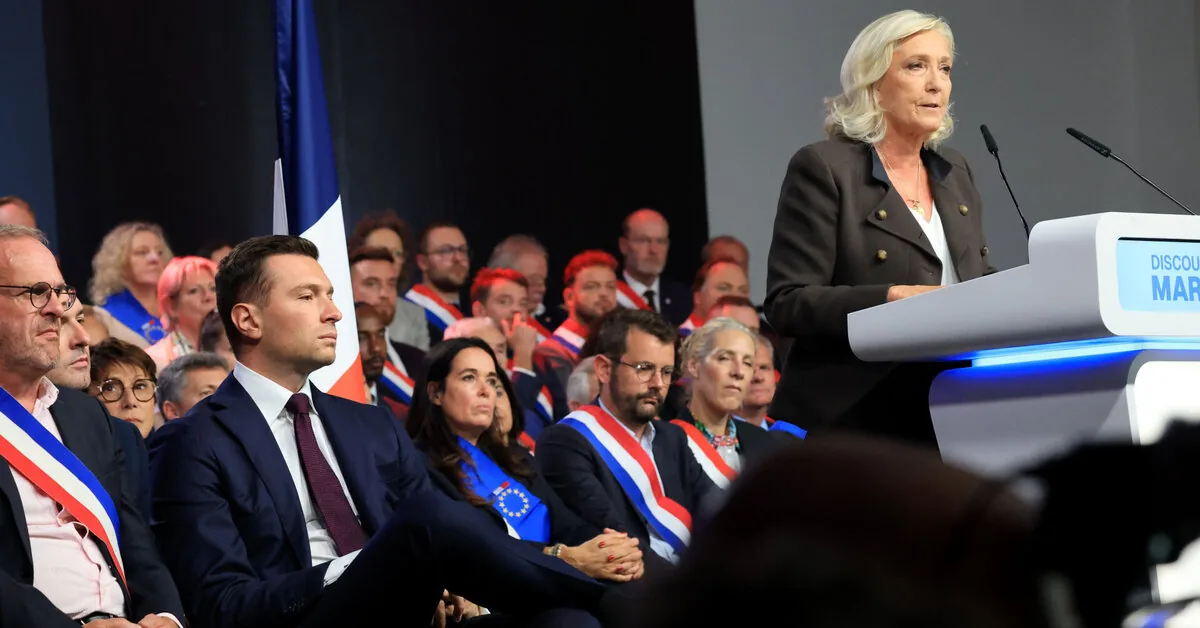
“We will not agree to any deal until we are sure that the rights of the Iranian people are protected,” said Mohammad Bagher Ghalibaf in a video shown on state television.
Trump stated that among his priorities is to prevent Iran from developing any nuclear weapons and to reopen the blocked Hormuz shipping route.
“The only guarantee I must have is that there will be no nuclear weapons. They agreed to that, and that was very interesting,” he said in an interview broadcast Saturday evening on Fox News with his daughter-in-law Lara Trump.
However, Tehran has previously questioned Trump’s claims, and the countries’ positions on key issues still differ significantly.
Iran has stated that before substantive negotiations on its nuclear program begin, the blocking of $12 billion worth of frozen assets must be lifted. According to Iranian media, Tehran dismissed previous Trump comments that its enriched uranium stocks would be destroyed as unfounded.
Tehran also demands that Lebanon be included in any agreement, despite ongoing fighting, with Beirut accusing Israel of a “scorched earth tactic” as it expands operations against the Iran-backed Hezbollah.
Previously signaling that an agreement was near, Trump changed his tone to a less rushed one and hinted at possible renewed military actions in a Fox interview.
“I’m not in a hurry,” he said. “If we don’t get what we want, we’ll finish it another way.”
Outbreaks of tension
He echoed remarks by Pentagon chief Pete Hegseth. At a high-level defense meeting in Asia on Saturday, he stated that Washington is “stronger than ever” if it needs to restart the war.
Although daily strikes across Iran and the Persian Gulf ceased after Tehran and Washington agreed to a temporary ceasefire in April, mediated by Pakistan, sporadic fighting continues.
The Iranian Revolutionary Guard shot down a US military drone that “intended to enter Iranian territorial waters,” reported Iranian state broadcaster IRIB, although Washington did not confirm the incident.
Earlier this week, the fiercest fighting since the ceasefire began when US forces struck Iran’s Bandar Abbas port, provoking retaliatory Iranian fire.
Despite this, diplomatic efforts continue, and Trump is under pressure to reach an agreement that would lift mutual US and Iranian blockades around the Strait of Hormuz, paralyzing a vital global oil supply route.
After Trump stated that under any agreement Iran would not impose “any fees” on ships passing through the strait, Iranian news agency Fars, citing sources, indicated that “such conditions do not exist.”
Iranian news agency ISNA quoted parliament member Alireza Salimi on Saturday, who said a plan to “implement Iranian control and sovereignty” over the strait would soon be presented to parliament.
Lebanon front
Israeli Defense Minister Israelis Katz said on Sunday that troops also crossed the Litani River and raised the Israeli flag over the strategic medieval Beaufort fortress in southern Lebanon.
Smoke rose from surrounding areas, and AFP journalists saw the invading army’s flag flying over the castle. Israel used this castle as a base during a previous two-decade occupation.
The push toward Beaufort began after the Israeli army issued a mass evacuation order for areas south of the Zahrani River, north of the Litani, and about 40 km from the border, warning that its target was Hezbollah.
The army reported on Sunday that one soldier was killed the previous day in a Hezbollah drone strike.
Lebanese Prime Minister Nawaf Salam accused Israel of conducting a “scorched earth policy and collective punishments” and called for a “quick and real ceasefire.”
Israel confirmed it is expanding its ground offensive in a statement released Sunday morning, saying that a “large part” of its forces are operating against Hezbollah beyond the Litani River.
A ceasefire between Israel and Hezbollah officially began on April 17, but it was never observed, with both sides accusing each other of violations.
In early March, Tehran-backed Hezbollah launched rockets into Israel in retaliation for the killing of Iran’s supreme leader during US and Israeli strikes. This prompted Israel to conduct almost daily airstrikes in Lebanon and begin a ground invasion.
Israel and Lebanon began direct talks in April, with the fourth round of negotiations scheduled for next week.
Read more What happens to the body if you drink water with lemon every morning?