Longevity and the ability to maintain good well-being for as long as possible matter to residents, yet this concern often remains passive. According to the National Well-being Index (NWI), 43% of Lithuanian residents try to be interested and make efforts to improve their long-term health and extend their lifespan. A quarter only think about it occasionally but take no action, and as many as 16% pay no attention to it at all.
Read more LKL vice-champions – close to an agreement with another Lithuanian national team player
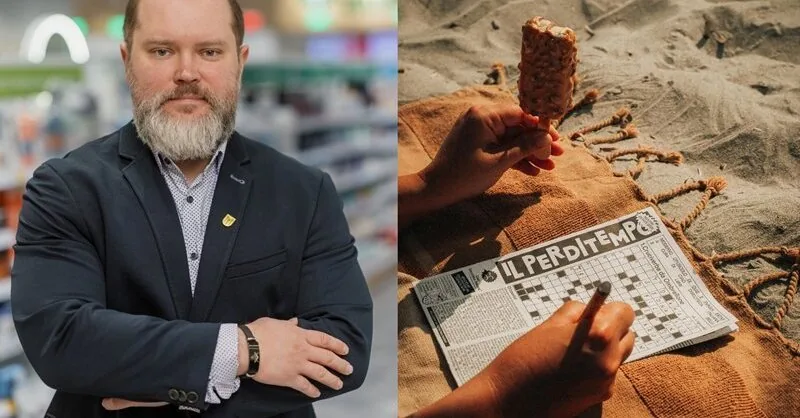
“It is also telling that although most residents at least partly care about long-term health, only 9% consider it a priority in their lives. Moreover, when talking about longevity, people usually first think about physical health, while brain health is somewhat neglected. However, the ability to preserve memory, attention, and clear thinking for as long as possible is no less an important part of a quality life,” says pharmacy expert Eglė Laskauskaitė.
Crosswords won’t protect against dementia
According to Dr. V. Dirsė, when discussing the benefits of mental exercises, it is important to understand the so-called transfer of skills problem. Any training best develops exactly the skill we repeat, but its benefits do not always transfer to general memory, attention, or the ability to solve different tasks.
“In short, crosswords make you better crossword solvers but do not necessarily protect against dementia. In one of the largest experiments of this kind, involving more than 11,000 people, participants improved their trained task results, but no significant effect on general cognitive abilities was found,” explains the medical science doctor.
Research indeed shows that older people who often solve crosswords tend to have better cognitive indicators. However, the causal relationship may be the opposite: perhaps people whose brains age more slowly simply choose such activities more often.
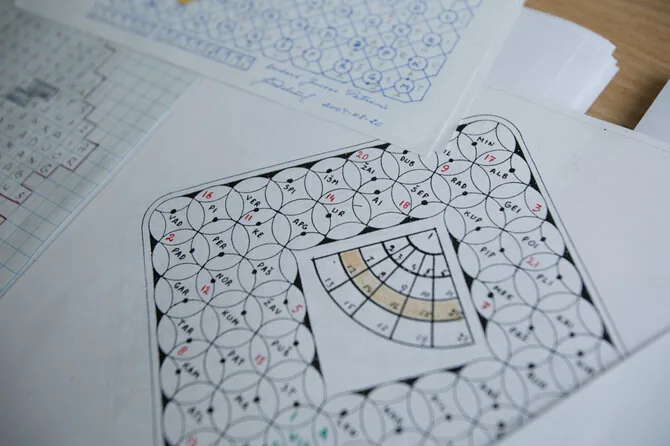
“Crosswords are one of many meaningful forms of mental engagement. They can be useful and enjoyable, but they are not a miracle cure and certainly not the most effective investment in brain health,” emphasizes Dr. V. Dirsė.
For the brain, new challenges matter more than routine
What kind of mental activity should one choose then? According to the pioneer of longevity practices in Lithuania, the three most important qualities are novelty, complexity, and a social component. Different activities train different brain networks, but from the perspective of protection against aging, it matters whether the brain is forced to form new connections or just smoothly repeats an already mastered pattern.
“Sudoku that you have been solving for twenty years is already a routine. An instrument you are learning to play for the first time is not. The best mental exercise is one that is a bit too difficult for you, that you do not know how to do, and that you will not abandon after two weeks. If it also takes place among people – the effect is doubled,” says Dr. V. Dirsė.
Sudoku that you have been solving for twenty years is already a routine. An instrument you are learning to play for the first time is not. The best mental exercise is one that is a bit too difficult for you.
This is illustrated by an interesting experiment: older people either learned digital photography and embroidery for 3 months or engaged in pleasant but undemanding activities – socializing, listening to music, watching movies. Episodic memory significantly improved only in those who learned something complex and unfamiliar.
“Pleasure does not burden the brain – difficulty does. This is how the so-called cognitive reserve is accumulated – brain resilience created by higher education, complex work, multilingualism, and lifelong learning,” explains the medical science doctor.
If priorities had to be set, crosswords would not be first
According to Dr. V. Dirsė, one of the most common mistakes is overestimating what mental exercises can change: “No matter how new and complex they are, they cannot compensate for an unhealthy lifestyle. An hour of sudoku will not offset uncontrolled blood pressure, constant lack of sleep, or smoking.”
The difference in scale is shown by a study published in 2024: fourteen risk factors explain about 45% of all dementia cases worldwide. Among them are midlife hypertension, elevated LDL cholesterol, diabetes, obesity, smoking, alcohol, physical inactivity, hearing and vision impairments, depression, social isolation, head injuries, air pollution, and low education.
14 risk factors explain about 45% of all dementia cases worldwide
Vascular health, according to the longevity science representative, is probably the most important axis. The brain makes up about 2% of body weight but consumes about 20% of oxygen – it heavily depends on the condition of blood vessels. So the saying “what is good for the heart is good for the brain” is not a metaphor but physiology.
Scientific research shows that physical activity affects brain structure, and regular sleep of six hours or less in midlife is associated with about a 30% higher risk of dementia.
Most importantly – the mentioned factors work together. A two-year study conducted in Finland, where people at risk simultaneously changed their diet, exercised, trained their minds, and monitored blood markers, showed significantly better results. The effect was due to the combination, not a single element.
“Therefore, if a person does not know where to start, the order could be roughly this: first – blood pressure regulation, cholesterol, glucose control, and not smoking; second – regular movement; third – quality sleep; fourth – people around; and only then crosswords,” suggests Dr. V. Dirsė.
Read more Quick dinner: crispy sea pike fingers according to Kristina’s recipe