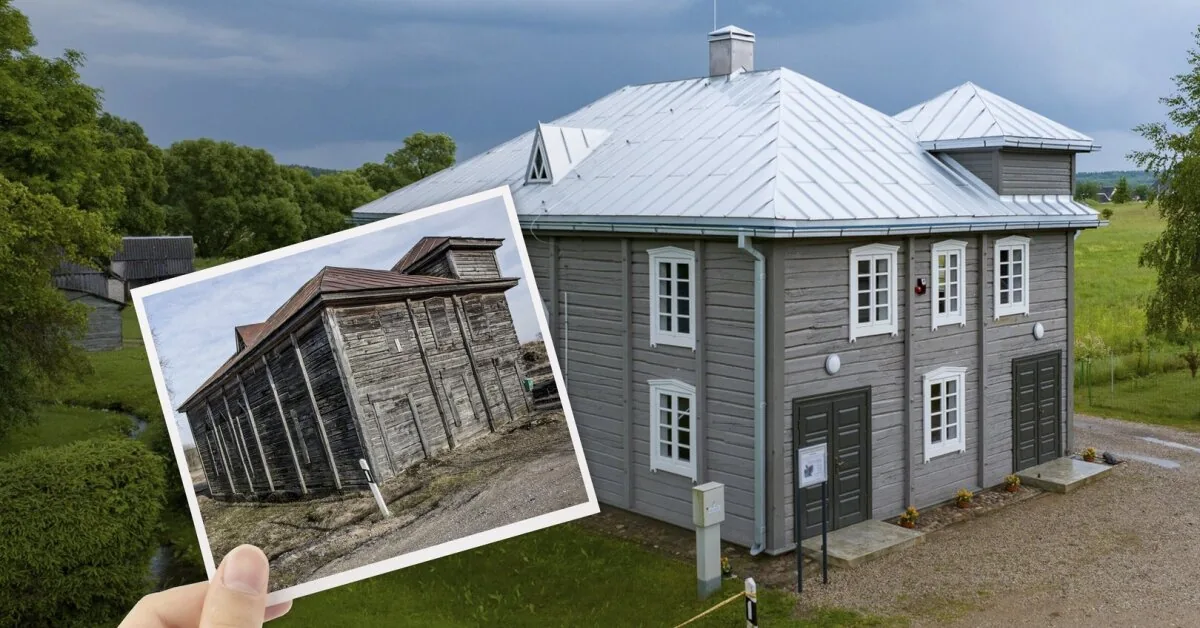
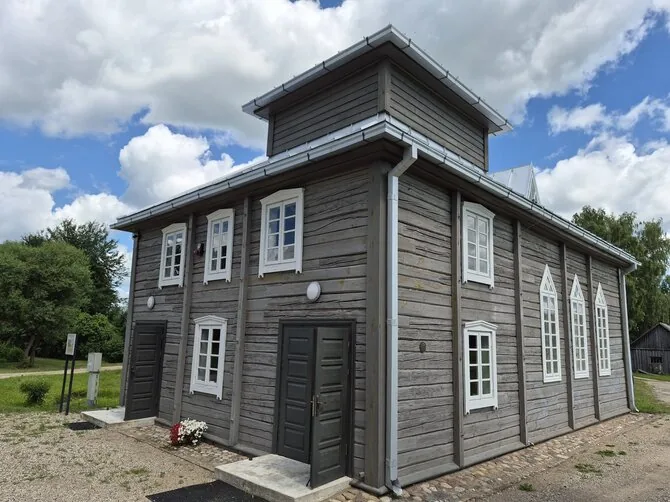
This synagogue was built exactly 90 years ago, but for most of the time it served not the Jewish community, but the Soviet collective farm. Built just before the Second World War – in 1936 – the wooden Jewish prayer building is considered the youngest synagogue in our country.
Read more At the European Championship – the first Lithuanian starts: triple jumpers fight for the final
It is estimated that 17 wooden synagogues have survived in Lithuania to this day (and about 7 more – masonry ones), which is the largest number in all of Europe. Several of them – Pakruojis, Žiežmariai, Alanta, and Kurkliai – have been restored and adapted for cultural life.
In the Kurkliai synagogue, now in its fourth season of activity, exhibitions, concerts, and educational activities are regularly held, introducing local residents and visiting guests to the history of the Jewish community of this town, its most prominent Litvak personalities, and their works.
Place of prayer turned into a warehouse
The Jewish community in Kurkliai has been known since the 17th century, and at the end of the 19th century, 257 Jews lived here, making up 32 percent of the town’s population.
As in many other Lithuanian towns and villages, Jews in Kurkliai engaged in small businesses – there was a butcher shop, a pharmacy, a fabric store, and even two mills. There were also 6 small craftsmen: a baker, a tailor, a shoemaker, a stove mason, a metalworker, and a butcher.
The earliest historical sources indicate that as early as 1706, the Jewish community of Kurkliai was allowed to build a building for community meetings and religious ceremonies. In the 19th–20th centuries, there were two synagogues in Kurkliai – a winter one, which had a stove, and a summer one.
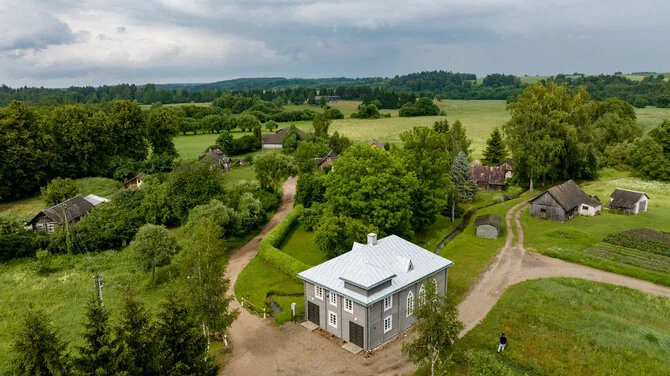
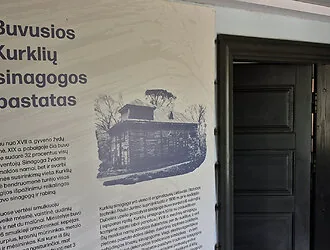
In 1936, a small wooden synagogue designed by Povilas Jurėnas was built near the Dubelė stream. This is the latest synagogue built in Lithuania, which served the Jewish community for only five years.
According to cultural heritage experts, this synagogue is unique in Lithuania for the staircase tower rising above the building, which was decorated with two Stars of David and rectangular windows with triangular upper parts.
During the period of independent Lithuania, according to the 1923 census, 181 persons of Jewish nationality lived in Kurkliai, and before the Second World War – about 90 Jews. During the Nazi occupation, most of the town’s community was destroyed.
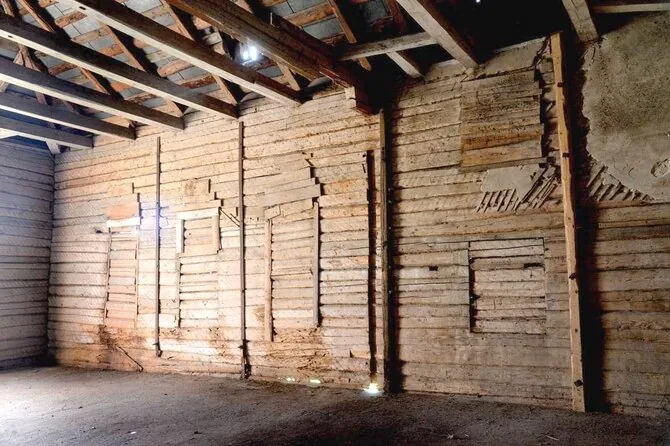
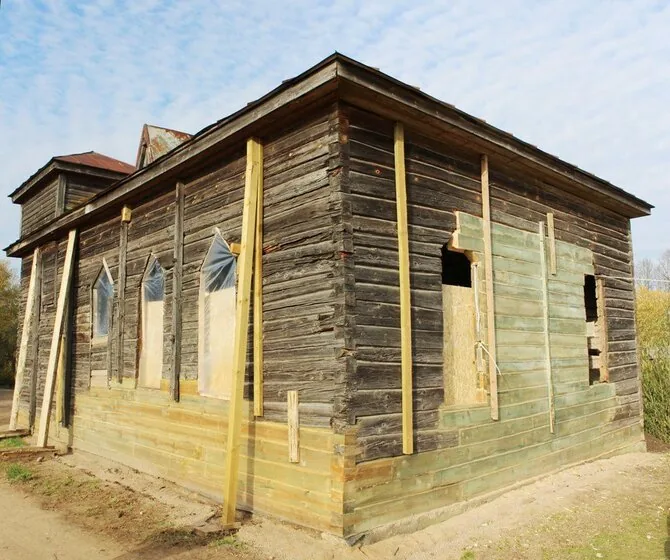
During the Soviet era, the synagogue building was used for collective farm needs – it was used to store fodder for livestock. All windows and doors were boarded up, and an opening was cut in the eastern part to allow a truck to enter. According to Tomas Tuskenis, director of the Anykščiai Arts Center, paradoxically, if not for the collective farm function, it is likely that the synagogue building would not have survived to this day.
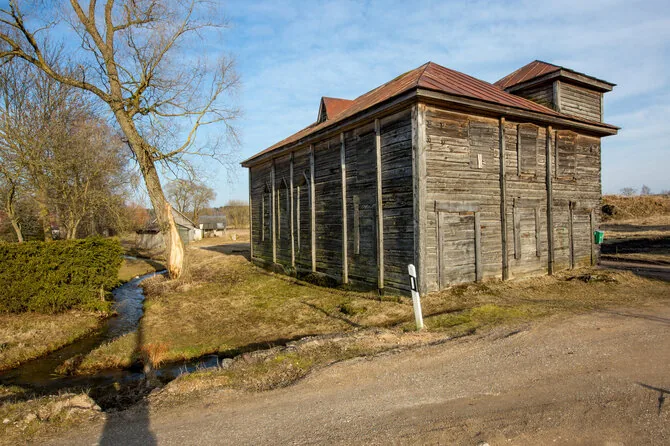
After Lithuania regained independence, the synagogue was returned to the Lithuanian Jewish community. At that time, its condition was simply deplorable – only the outer walls remained, no internal floors, some walls were completely rotten, the roof was leaky, and the floor was just earth.
“Only the building frame and empty walls remained. Over five decades of the Soviet era, no interior details, ornaments, let alone ritual objects, furniture, holy books, or works of art survived in the synagogue,” said T. Tuskenis.
However, he emphasized that currently one authentic and highly symbolic exhibit can be seen in the synagogue – the Lithuanian tricolor preserved by a Kurkliai Jew who survived the Holocaust.
Warm and cold seasons of Kurkliai Synagogue
In 2021, through the efforts of the Lithuanian Jewish community and Anykščiai municipality, the Kurkliai synagogue was fundamentally restored and brought back to life. Under a usage agreement, the Anykščiai Arts Center committed to care for the building and its activities for ten years.
Today, the Kurkliai synagogue is in its fourth season of cultural activity. Asked whether this brings more joy or trouble, the director of the Anykščiai Arts Center told 15min that this commitment involves both.
“This is a separate cultural object that requires additional funding and staff. And considering that the synagogue is in a small town, located several kilometers from Anykščiai, it is natural that even in the summer season you cannot expect a large number of visitors. So from a business perspective, it is clear that it is not profitable. But culture is not just money; it is, first of all, education, understanding the past, community, and inner human growth,” said T. Tuskenis.
Read more Trinchieri invited the Greek who became champion with «Rytas» to his staff
In 2023, the already restored Kurkliai synagogue opened its doors and invited visitors to the first exhibition, where works by the famous Litvak artist Arbit Blat could be seen.
In 2023, the already restored Kurkliai synagogue opened its doors and invited visitors to the first exhibition, where works by the famous Litvak artist Arbit Blat could be seen. The following year, the synagogue exhibited works on Jewish themes by artist Vytautas Kasiulis and showed a specially created virtual reality educational film. In 2025, a lithograph exhibition by Samuel Bak was held in the synagogue.
Alongside exhibitions, various meetings, concerts, and educational events are also held here – all events are in some way related to the history and culture of Lithuanian Jews (Litvaks).
“We aim for the Kurkliai community and its people to see the synagogue as their own place, their own space. That it would be not so much a museum as a community home, a place for meetings and friendship. That is why in the warm season you can often hear music here, and we invite residents to taste bagels or other Jewish dishes,” said T. Tuskenis.
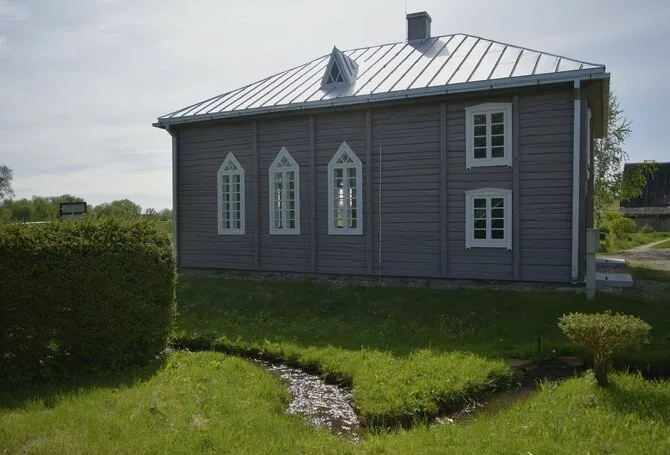
Justė Lotyš, a museologist at the Anykščiai Arts Center, emphasized that after restoration, the Kurkliai synagogue was adapted to operate only during the warm season, so the cultural event season here runs from early June to the end of September.
However, it is also possible to visit the synagogue during the cold season – reproductions of works by artist Rudolf Baranik, who was from Anykščiai, are exhibited here. But as the museologist notes, the number of visitors to the Kurkliai synagogue during the cold season is very low.
To know, discover, remember
Currently, the Kurkliai synagogue hosts an exhibition of sculptures and graphics by Rhona Gorvy – an artist born in South Africa to a family of Jewish emigrants from Lithuania. Earlier this year, there was an exhibition of works by local ceramicist Lina Bekerienė, which at the end of July was replaced by a historical introduction to Moiše Dovydas Osinski, who was from Kurkliai and founded one of the largest men’s clothing companies in 20th-century Great Britain.
According to J. Lotyš, in this way the Kurkliai synagogue becomes an art space introducing visitors and Kurkliai residents to Jewish culture, which until recently was a natural part of everyday life in Lithuanian towns and villages.
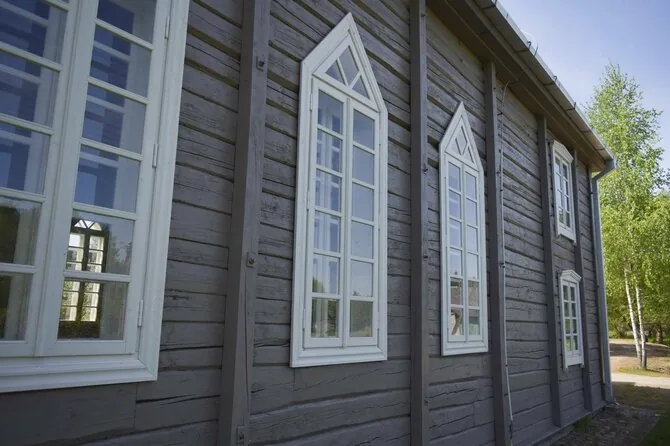
“Art affects each of us very personally, subjectively, and in this way Jewish culture comes closer to us. But at the same time, this understanding also happens through language, trying to see which words came to us from Yiddish and are still used, which Jewish dishes have become part of our cuisine. All this is part of our shared culture, so it is important to talk about it,” said Anykščiai Arts Center museologist J. Lotyš.
Asked how many people visit the Kurkliai synagogue during the warm season, T. Tuskenis said that about half a thousand travelers from both Lithuania and abroad visit here over about four months.
However, those planning to visit the synagogue and see the exhibitions here should keep in mind that it is open not every day, but from Thursday to Sunday.
“Previously, you could enter the Kurkliai synagogue simply by arriving and calling the indicated phone number. But people did not always dare to do so, so we finally decided that the synagogue must be open at least four days a week. That is why now travelers passing through Kurkliai on weekends, seeing the sign indicating the synagogue, can turn off the main road and find the synagogue open,” said the director of the Anykščiai Arts Center.
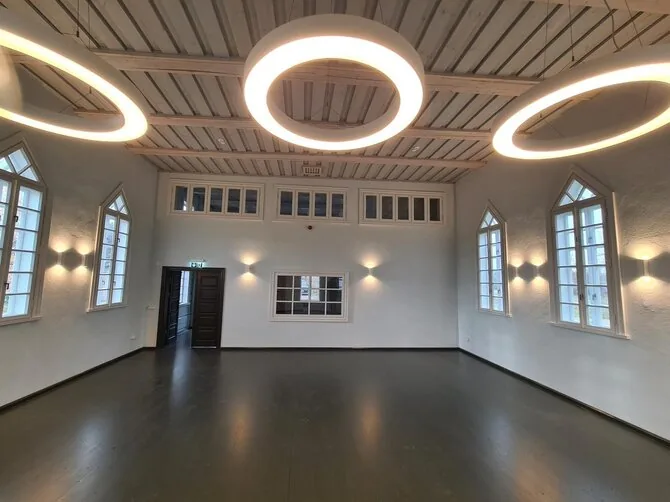
In the future, it is expected to create a permanent exhibition in this synagogue, which will provide a detailed story about the Jews of Kurkliai, their histories, prominent personalities, and works.
By the way, some time ago, Kurkliai teacher Angelė Dūdienė, together with her students, collected memories of the old local residents about the local Jews, and this, according to Anykščiai Arts Center director T. Tuskenis, is a very significant historical testimony that connects the past with the present, the interwar Jewish community with today’s Kurkliai residents.
“In this way, as well as through various exhibitions, educational activities, and concerts, a bridge is being built that helps us today to get to know the culture of Lithuanian and diaspora Jews, which was essentially destroyed during the Nazi occupation and completely silenced throughout the decades of the Soviet era,” said T. Tuskenis.
Read more Drone shot, Moldova recalled its ambassador in Moscow for consultations