







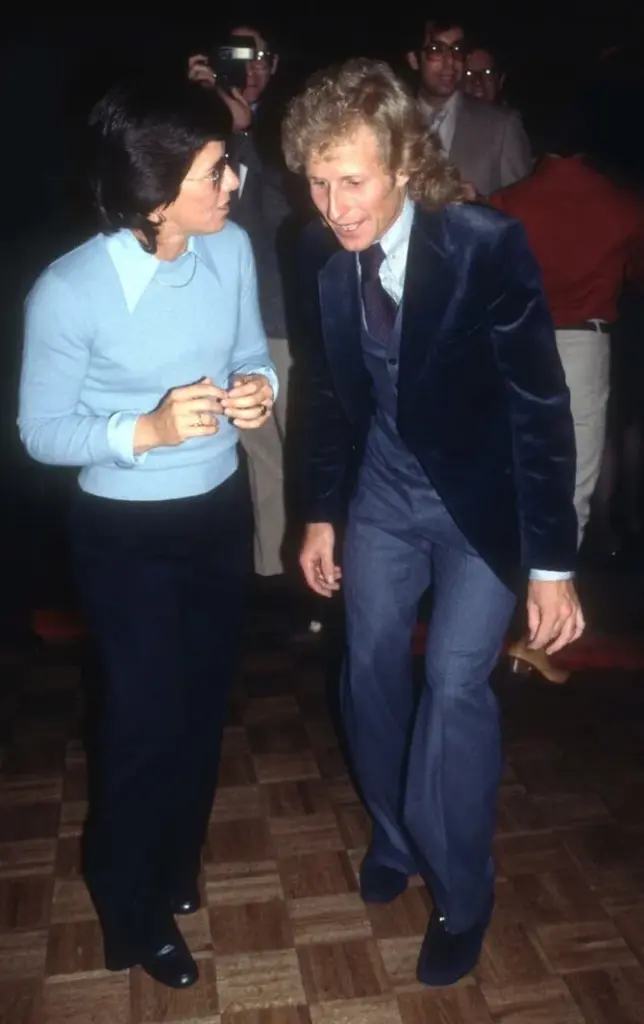
In 1978, a Lithuanian-born athlete became the world’s third-ranked tennis player. His trophy shelf boasts victories in the most important tournaments, and he was called one of the members of the golden age’s big four in tennis. But this tennis player was famous for more than just that. Mick Jagger, Andy Warhol, and other show business stars were his close friends; he was constantly surrounded by beautiful women, loved a wild pace of life, and sometimes slowed it down – his cocaine addiction was publicly known.
Read more Salantai Gymnasium has completed the stadium reconstruction worth 785 thousand euros
The most famous Lithuanian-born tennis player of all time – says without a doubt the head of communications of the Lithuanian Tennis Union, podcast host of “13 geimas” Tomas Ganusauskas. He was the main initiator of publishing the book “Broadway Vitas” by French TV host Florian Gazan in Lithuania (published by “Lapas”, translated by Vincentas Klipčius). This biographical novel, written based on factual material collected by the author, describes the tennis player’s life – his rise, fall, and tragic death. “I hope this book will help at least somewhat understand and appreciate the compatriot we had. A man we can proudly be proud of,” says T. Ganusauskas, sharing his thoughts in this interview about why V. Gerulaitis’s personality is interesting and important.
Connected several worlds
T. Ganusauskas tells that the idea to publish the book was born from a chance meeting. “On the street, I unexpectedly met sports journalist Giedrius Janonis, who lived for a long time in Spain and France. He told me that a book was published in France that might be interesting in Lithuania – about V. Gerulaitis. In Lithuania, only avid tennis fans, those who are more than average interested in this sport, knew a bit more about him,” Tomas said. “I myself am such a person, but my knowledge was also somewhat superficial. I knew such a person existed, that he was of Lithuanian origin. Probably everyone has heard one or two of his most famous quotes. Probably heard about his most famous encounters, about that unfortunate incident that ended in death. Also, an ATP Challenger series tournament called the ‘Vitas Gerulaitis Cup’ was held in Lithuania. And he won a Grand Slam tournament, which is every tennis player’s absolute dream. He won the Davis Cup with the US team. He was the world’s third-ranked player. In tennis terms, he was an absolute megastar. And tennis is considered the most popular individual sport in the world. So naturally, he was very well known worldwide, and considering his charisma and extracurricular activities, which were probably as famous as his sports achievements. He managed to connect several worlds – tennis, pop culture, rock, through A. Warhol – and contemporary art.”
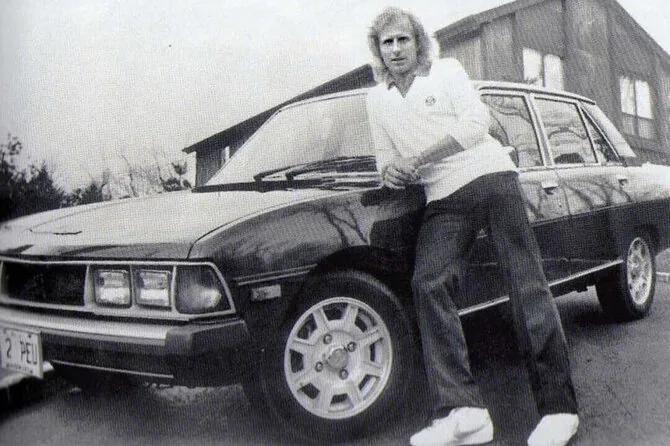
“Why is little known about him in Lithuania? I think we didn’t have a tennis culture for a very long time. There were only a few people who followed tennis, so only they knew something about V. Gerulaitis. Basically, until Ričardas Berankis, there was essentially no tennis in Lithuania, we didn’t have any very prominent professionals. We basically didn’t have a tradition in this sport. Besides, when Vitas played, it was behind the then Iron Curtain, he never visited Lithuania,” says T. Ganusauskas.

– F. Gazan’s book “Broadway Vitas” is described as a biographical novel. The writer, a sports show host, collected information about this tennis player and described it fictionally, in novel form. How authentic, in your opinion, is this story?
– The genre is quite unexpected. What struck me most was the part where Vitas’s funeral is told through his own eyes. But the book is not fictional; it has gathered quite a lot of material – from his own interviews, stories from his comrades and contemporaries. Certain things that were quite surprising to me, for example from the tennis side, I checked – and they were true. For example, when he and Jimmy Connors returned to the court for the last time in Paris to play doubles at Roland Garros, since both were older, they walked onto the court during the introduction with crutches, supporting themselves. It turned out to be true; those videos are on YouTube, you can find and watch them. So the book is based on facts from his life, but it is not a classic biography with lots of tennis statistics. But, in my opinion, it shows various sides of his life well. It’s a good opportunity to get to know him, to see a bit closer his joys, anxieties, and pains both on and off the tennis courts.
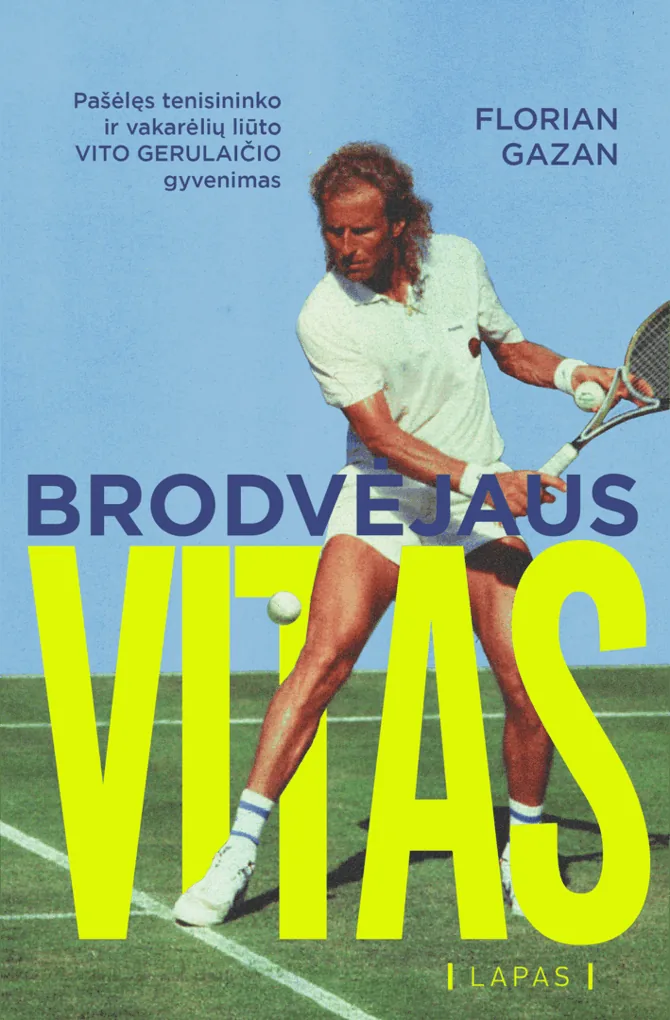
– The author writes that Vitas “was a man who cared more about others’ happiness than his own success.” The book repeatedly emphasizes that he could even befriend his competitors; it seems very important for him to be surrounded by people. How would you describe his personality?
– My first thought was that this is how I imagine a free person. Someone who does what he likes, can balance various aspects of life. Nowadays, I find it hard to imagine such an athlete because professional sports, including tennis, have become robotic: training, diets, regimes, everything else. I couldn’t even imagine anyone now who is somewhat close to what Vitas was and how he lived.
He was completely free, charismatic, probably empathetic. We call tennis, and I think there is much truth in this, an introvert’s sport. It is an individual sport; these people spend a lot of time alone, from competitions to travel planning. Psychologically, it is very hard; there is a lot of loneliness, being only with oneself. Vitas, it seems, stood out here – at least from what is written, he was an absolute extrovert, he needed other people. The book beautifully depicts his relationships with the tennis elite of that time – the other three members of the big four: Björn Borg, Jimmy Connors, John McEnroe. They didn’t like each other, which was normal because they competed for the biggest prizes, the brightest trophies, and attention. And V. Gerulaitis was the link that connected them all. This was especially evident when they all ended their careers because it was on Vitas’s initiative that their exhibition matches and other initiatives took place. Finally, even at Vitas’s funeral, they all carried him on their shoulders to his last journey. I think these are very telling facts.
– They competed, but was it friendship first?
– At least judging by the book, yes. Of course, results mattered to him – they couldn’t not matter, or he wouldn’t have achieved so much in sports. He loved tennis. He could play very well; sport was his passion, but judging by everything, he had other passions too – closer to us, more understandable. But he knew how to balance them.
He wanted to become a basketball player
– His achievements in the tennis world are huge; he became the world’s third-ranked player. How did specialists describe his playing style? The book says he was like a tightrope acrobat. And although he didn’t win as many trophies as other contemporaries, he was especially loved. For what? Probably his aura was built not only by his game but also by his wild lifestyle?
– The book says his main strength was movement, his feet. In tennis, that is very important. Keep in mind that he won the Australian Open, played in the finals of two other Grand Slam tournaments, and a semifinal in one. All those tournaments are very different because they are played on different surfaces, which essentially changes the game – both preparation and play are absolutely different on clay and grass. In such tournaments, he reached among the top two or four players, which means he was an absolute all-rounder. He played in a way that he could adapt his game to different conditions, different circumstances, different surfaces. His tennis was versatile, universal, suitable for various surfaces.
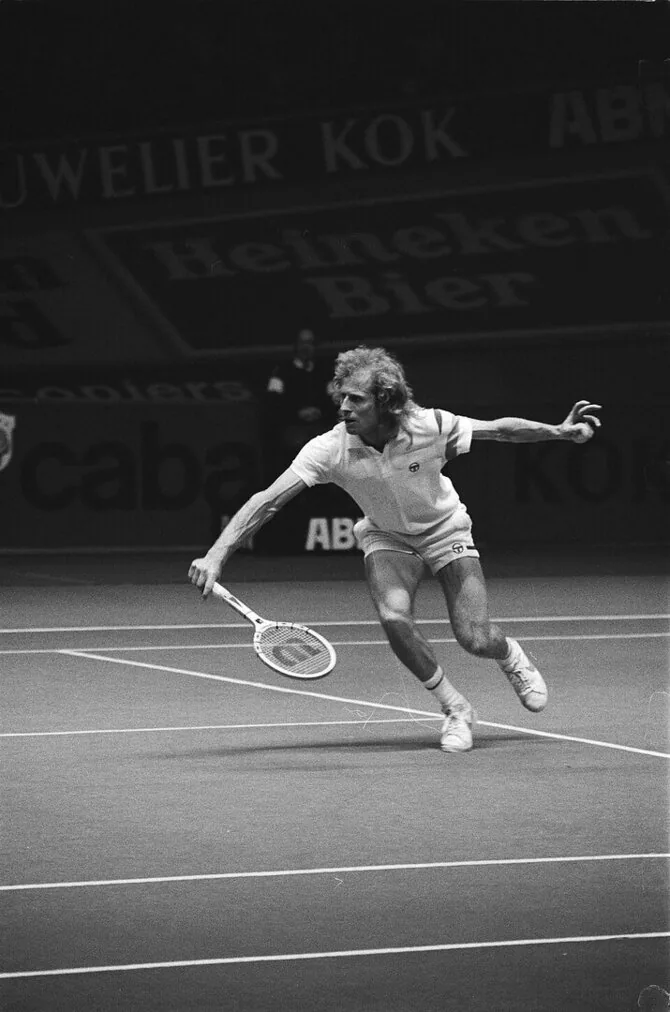
– The book says he first wanted to be a basketball player, not a tennis player. He wanted to be a basketball player because he felt Lithuanian, and basketball is the national sport in Lithuania. But his father pushed him into tennis – primarily for pragmatic reasons, because almost everyone played basketball around then, but almost no one played tennis. The book also feels that tennis was not really his main passion. “Tennis became more of a job than a pleasure for me, so I sought the latter at ‘Studio 54’,” the book says.
– I imagine this is the feeling of many professionals, not only in tennis but in any sport. Sport takes so much of their life that there is less and less room for passion – whether you want it or not, it becomes work. I know very few former good players who, after retiring, would want to play again, pick up a racket. They are so fed up with it. You have to understand that being in that elite is damn hard; you have to dedicate a lot of time, work, and be extremely persistent. Out of millions playing, only a few reach tennis heaven. But I guess they must have some passion because if you looked at it purely as work, I doubt anyone would succeed. But basically, it is work you do every day without breaks. You have, like all normal people, a few weeks of vacation and then go back to the court, the gym, working eight hours a day. So it’s probably normal that there was more passion at that ‘Studio 54.’ It was probably a way to escape the exhausting professional sport.
– He was known for a wild lifestyle. Yet he managed to balance partying, adventures, and playing. The book says that despite his reputation, when he played, he didn’t drink, and before big tournaments, he didn’t appear in public at all. “That’s the price I have to pay,” the book says. Did he abuse his freedom?
– It’s hard to say; I wasn’t with him at ‘Studio 54’ – which is a pity; it would probably have been fun. The fact is that before big tournaments, he still had to get back in shape. But the same book has episodes where he returns from the club at six in the morning and goes to train on the court at eight. Still, when he knew what awaited, what ambitions and goals he had, he had to get back on track and endure without ‘Studio 54.’ But we have probably heard more than one story from our old Kaunas ‘Žalgiris’ days about how things went – so probably there was a time when he allowed himself a bit more and when he slowed down a bit.
– You already mentioned the difference between those times and modern sports. The author himself says that in today’s tennis world, V. Gerulaitis probably wouldn’t have a place with his lifestyle. How has tennis changed from those times to today? Has romance disappeared, replaced by more professionalism? Would the sex-drugs-rock’n’roll life described in this book even be possible in today’s tennis world?
– I think this applies not only to tennis. Look at basketball players, for example. All somewhat older former athletes say that if they were professionals now, they would have to change their approach to sport and preparation somewhat, or they simply wouldn’t be where they were then. So V. Gerulaitis is probably no exception. The longevity of athletes then and now tells me a lot. Vitas won his main career victories at 23-25 years old, and by 30, his career was going downhill significantly. The same with B. Borg, who, for various reasons, ended his career at 25-26. But now we still talk about N. Djokovic, who is 39 and still one of the best tennis players in the world. R. Federer won his last Grand Slam at 37. So tennis players now play about ten years longer. For me, that’s probably the best illustration of the difference between the so-called romantic period when tennis wasn’t everything and the current one, when people in the sports elite understand what needs to be done. And sometimes I find it hard to explain how they find motivation when they have already won everything.
Read more 13 people killed in Israeli strikes in the Gaza Strip
“The Lion of Lithuania”
– The book’s title is “Broadway Vitas.” How did V. Gerulaitis get this nickname?
I don’t know exactly, but I guess it’s related to New York. That was absolutely his place; he was born there, grew up there, started playing there, and finally, all his extracurricular activities were also there. I can perfectly imagine him driving his Bentley convertible along the local Broadway. And that wasn’t his only nickname; he was also called “The Lion of Lithuania” – probably because of his blond curls and maybe his playing style.
– “The Lion of Lithuania.” How important was Lithuanian identity to him?
– It’s hard to answer this question precisely, but he definitely participated quite actively in events with the diaspora. At home, at least when he was growing up, Lithuanian was spoken. So I think Lithuanian identity was quite important to him, even despite the fact that he never managed to visit here. The closest he came was in the early 1980s when he played a match with B. Borg in Tallinn. And that nickname “The Lion of Lithuania” shows that he didn’t run away from his roots, from Lithuanian identity. But he also played for the US team and, judging by his lifestyle and similar things, was an American who achieved his American dream.
– The book’s introduction also says that V. Gerulaitis helped pave the way in the US for other Lithuanians – for example, Arvydas Sabonis. How did he manage that?
– I don’t know if they had any connections because as far as I looked, there are no joint photos or similar things. The fact is that V. Gerulaitis couldn’t have seen the start of A. Sabonis’s NBA career because it happened a year after his death – A. Sabonis debuted in Portland in 1995. It’s unclear if there were any contacts before that – keep in mind that A. Sabonis’s flirtation with the NBA was already from the late 1980s. So there might have been some contact, but it would be too bold to say that V. Gerulaitis contributed to A. Sabonis’s NBA debut. But maybe he helped through some of his contacts because he had millions, but I can’t say for sure. You’d probably have to ask A. Sabonis.
Cocaine addiction
– The book also covers the dark sides of his life. One of them, of course, is cocaine addiction. The book openly talks about how he was hooked on cocaine and struggled to overcome the addiction; V. Gerulaitis is even directly called a “junkie.” “Tennis allowed me to get cocaine, and cocaine allowed me to keep playing tennis,” the book says. When did his big downfall begin? After his career ended?
– Probably those things started near the end of his career – cocaine probably appeared in some difficult situations, maybe it was also a way to escape tennis itself. He fought the addiction in waves, sometimes better, sometimes worse. It was already public information; it was part of his colorful life. The book has vivid episodes from “Studio 54” with M. Jagger. When life is like that, when work is like that, there are all kinds of ways to relax, especially considering his environment. The book talks about famous people around him who probably didn’t avoid it and eventually dragged him into it.
– M. Jagger is one of those famous people around him. How did he make acquaintances with those show business celebrities?
– I think it was probably because of his character, charisma, ability to communicate, and being himself. Those names really impressed me – M. Jagger, Freddie Mercury next to him, A. Warhol, Sylvester Stallone, Steven Tyler from Aerosmith. After reading the book, I wanted to turn on a record player and play a few records.
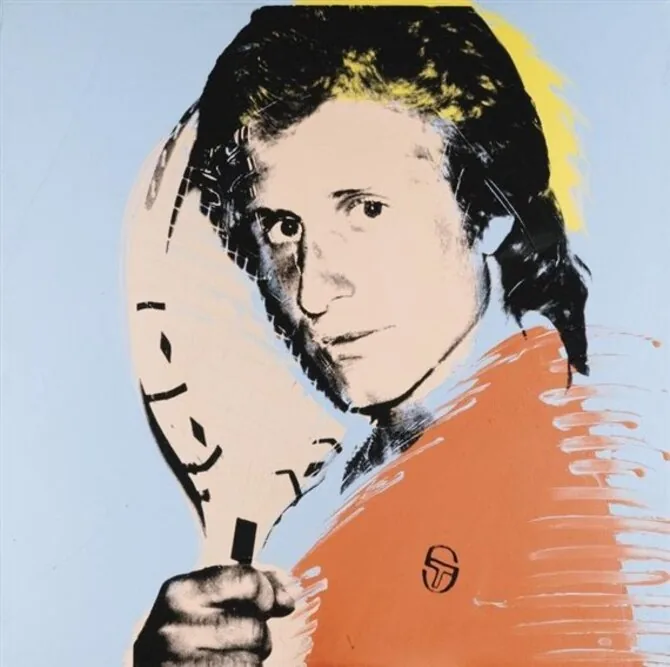
– The book pays a lot of attention to his relationship with A. Warhol. Did he really paint a portrait of V. Gerulaitis? And was their connection really that strong?
– Yes, I looked for information, and indeed A. Warhol painted a portrait of V. Gerulaitis. Their relationship occupies an important place in the book. There is also a discussion about painting that portrait after V. Gerulaitis’s heaviest career defeat, as he himself said, and a victory that was theoretically the greatest but he valued it less. A. Warhol, at least judging by the book, helped him put everything in his head, saying – why are you worried about winning a weak Australian Open, after many years everyone will remember you as a champion and no one will remember what kind of tournament it was or how it looked.
– What surprised you most in this book? I was interested that he played guitar himself, wanted to be a rock musician, but admitted he played badly: “I became a tennis player out of frustration, out of forced necessity. It was the closest to rock music I could get.”
– They said about him that he was the biggest rocker among tennis players and the best tennis player among rockers. I had heard about his inclination to rock. What probably surprised me most was his circle of acquaintances, quite close acquaintances. Starting from M. Jagger, A. Warhol, ending with Playboy cover girls. And you realize he felt absolutely at home in those companies, in his place.
– He was a womanizer. The book even lists the traits and nationalities of women he liked most: “I like Italians and their generous forms, Swedes and their feigned shyness, Brazilians, Spaniards, Americans. Without them, I wouldn’t have learned to seduce others. But I adore French women: they know how to elegantly say ‘no’ and classically – ‘yes.’ What were his relationships with women? Was attachment, a relationship with one woman, not for him?
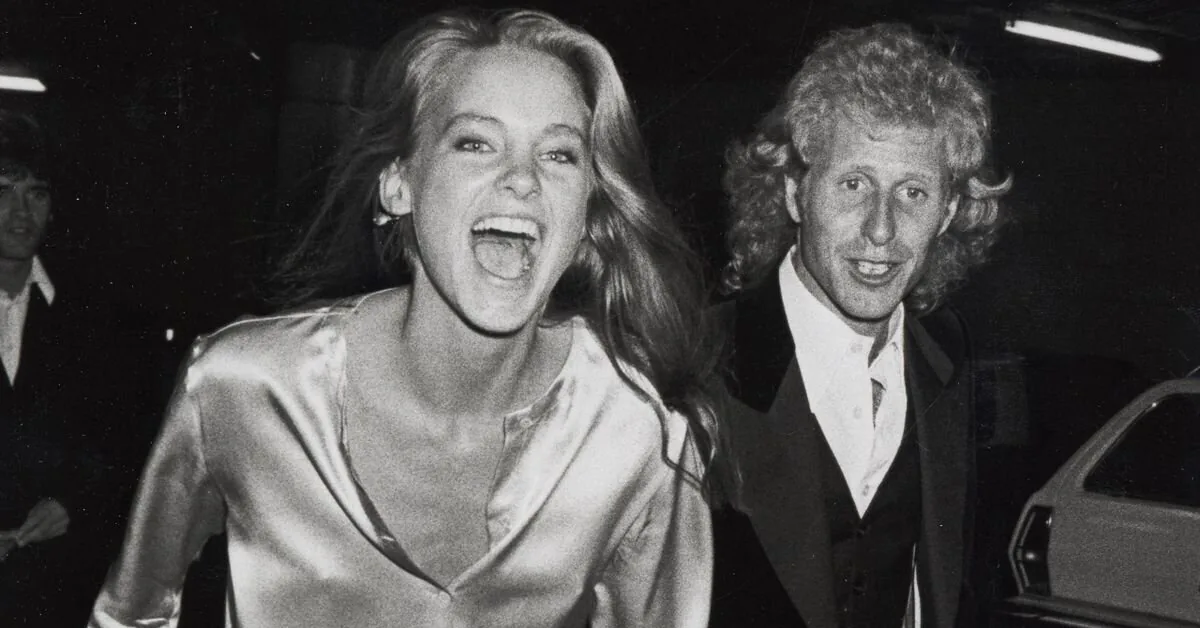
– Judging by the book, there was one woman who gets more attention. That is Janet Jones, who became the wife of hockey player Wayne Gretzky. And looking through photo archives, googling… You can definitely see his special relationship with beautiful women. Many photos with one or several of them. It was a very important part of his life.