


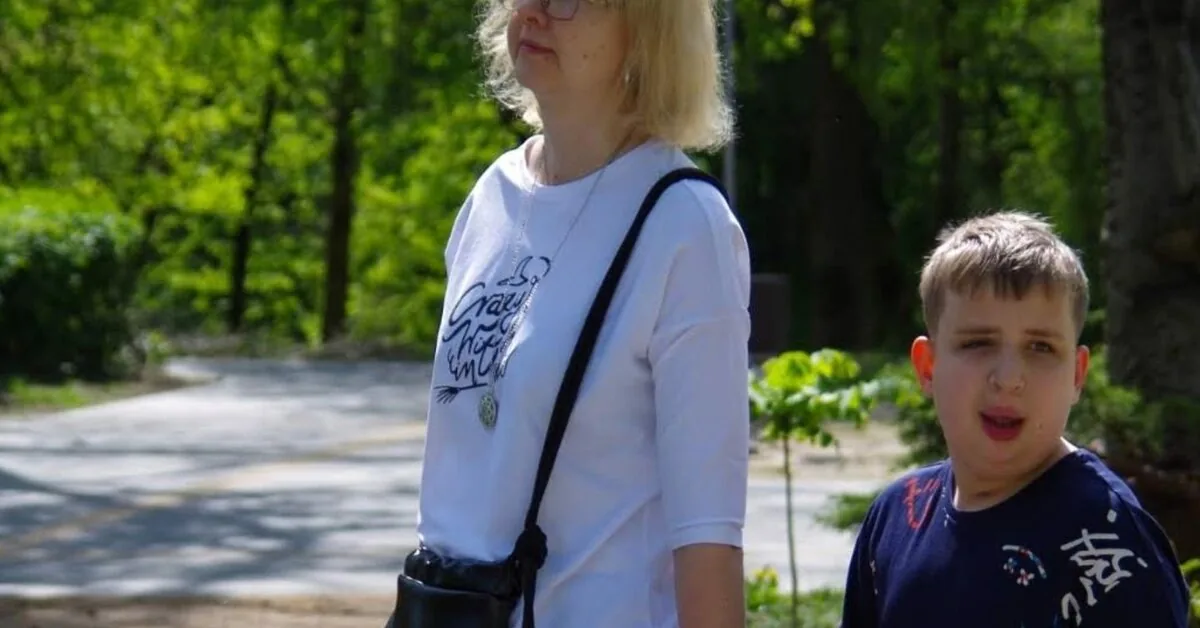
Lina and her husband learned about their son’s congenital heart disease when he was still unborn – in the seventh month of pregnancy.
Read more Lithuania and 20 other countries propose urgently convening a meeting on the situation in Ceuta
“Of course, I immediately started reading about congenital diseases. I found out that various heart surgeries are needed for them – some more severe, others less so. That there are cases where the condition can be stabilized and later the person lives a calm life.
In our case, unfortunately, by the seventh month of waiting it was clear that our son had a complex disease. At that time, they talked about transposition of the great arteries, but as soon as he was born, two more defects were diagnosed,” Lina told the story of her son.
In our case, unfortunately, by the seventh month of waiting it was clear that our son had a complex disease.
Three congenital heart diseases meant that Lina and her son Edvard spent the first three months of the baby’s life in the hospital, and even in the first three years at home they were not very frequent visitors – so they always rejoiced when they could return from the hospital and be together.
“The doctors said that three staged surgeries would be needed, and in the future – it is unclear when – after them the heart condition would start to worsen, and a transplant would be necessary,” Lina recalled the heavy uncertainty. She added that it is difficult for doctors to predict exactly because such surgeries have only been performed for a short time.
According to the woman, we should thank the skilled Lithuanian doctors that these surgeries are performed in our country, because, for example, in the United States such cases are not even operated on. Since the surgeries started quite recently, the children who have undergone them are now being monitored.
Edvard’s condition deteriorated quickly
Lina says that unfortunately her son’s condition began to deteriorate quickly. “After one of the surgeries, Edvard caught sepsis and spent more than 90 days in intensive care. It was difficult for the doctors to treat him because the process was very slow. After that, my son’s heart simply started to expand, enlarge, and severe heart failure developed. Then the doctors said he needed to be put on the heart transplant waiting list,” Lina spoke about the unending difficult trials.
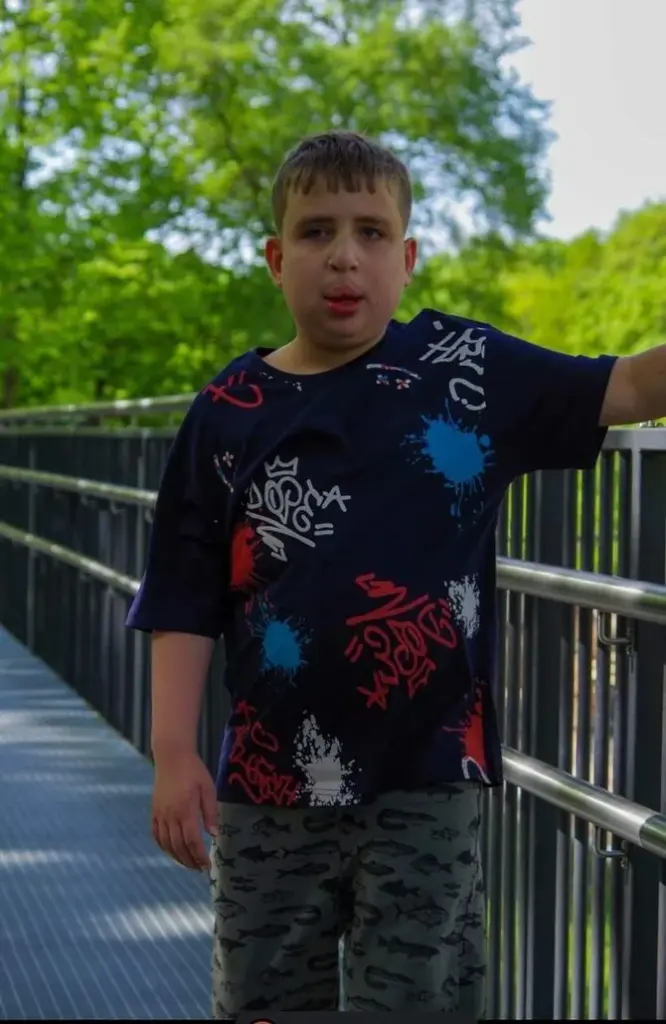
On one hand, the news was shocking, on the other hand, Lina confesses, raising a child with such diagnoses, you have two paths – either constantly worry about every little thing and pull your hair out, or pull yourself together and think that it is bad, hard, but worse would be death: “We simply chose to wait, trust the doctors and the universe. To live each day hoping that the day will come when it will be better.”
Little Edvard waited for a year. The mother does not hide that it was a very difficult time. “We had to be almost glued to the phone because a call from the hospital saying a potential donor had appeared could come at any time. We had to get to the hospital within 4 hours at most in such a case. Luckily, we are from Vilnius, so it is not difficult to get to Santaros Clinics.
Running was out of the question; it was hard for Lina’s son to walk faster.
But what does that mean? No trips abroad, no going far away. Even when we were in another city, say at grandparents’ in Zarasai, we always had packed suitcases, always ready,” Lina recalled the tense period. It was also difficult because of her son’s condition.
Edvard often had shortness of breath, so he moved very little and gained weight. Running was out of the question; it was hard for Lina’s son to walk faster or move more intensely – he mostly sat and played with toys.
The fateful call
Asked what feelings came after receiving the fateful call after a year, Lina says it is hard to describe, but there was no fear left: “We just knew that if he got a heart, there was hope he would survive, and if he didn’t – he would simply die. There was no other option.”
Lina insists that she and her husband knew they had to pull themselves together, believe, and do what was necessary, what was possible: “If you constantly hystericize, you will exhaust yourself and unsettle others. And, by the way, waiting was also a very strange thing. We all know what it means to get an organ. Yes, there are living donors when a kidney or bone marrow is transplanted.
But we were waiting for a heart, in other words, we understood that for Edvard to get a heart, someone had to die. One event stuck with me very much. Once at Santaros Clinics, I went to the chapel and tried to pray. But I stood there, looked at the cross, and left. Because I realized that praying: ‘God, please give my son a heart’ means the same as asking for someone to die so that my son can survive.”
Edvard’s mother insists that surviving such things is really very hard, but they simply decided to leave it in the hands of the universe, fate.
When she received the fateful call, Lina was going about her daily affairs – she had to go to a manicurist and then meet her sister: “After the call that a donor might have appeared, my legs and arms gave out. I just realized that this could be the day when my son either dies or survives.”
Lina canceled everything but went to her sister because she had so many feelings that she probably couldn’t have driven right away.
After the call that a donor might have appeared, my legs and arms gave out.
Finally, the family received another call that “maybe” turned into a fact – Edvard had to come to Santaros Clinics for a heart transplant. It was November 25, Lina recalls, and the weather was very bad. The heart intended for little Edvard was transported from Latvia.
“Not long ago, at the 30th anniversary of the Transplantation Office, I had a chance to talk with the pilots who transported Edvard’s heart. The weather was really terrible. This day stuck with the pilot too. Only because of his professionalism and great experience was he able to land the military helicopter. The heart was delayed, although everything was already prepared for the surgery.
Edvard’s heart was transplanted almost at the last minute. But our wonderful doctors, who are absolutely top-level, succeeded. I am very grateful to them,” the mother thanked all the doctors involved in Edvard’s journey.
The first year after organ transplantation is the most difficult due to possible rejection. “Edvard’s oxygen levels never stabilized. When we went to visit him, we had to wear gowns, masks, etc., so as not to bring any infection. I lived with Edvard for ten years and now understand almost all the device readings.
Saturation – oxygen level – is very important. After the surgery, we saw it rose only to 88, which is not normal for a person. We asked the doctors, and they said: yes, we see it. But they couldn’t do anything immediately after the surgery. Later, after about two weeks, Edvard had another surgery because they suspected a clot,” Lina told her son’s story sensitively.
Read more At the Museum of Ancient Beekeeping – the proclamation of the «Bee Republic» with Valinskas
She herself worked as a teacher at school and says she will never forget those days when she waited for a call after another surgery while working. “Surgeons call in two cases – if something is very wrong or the person has died. Seeing the doctor’s name on the screen, time stopped, I held the receiver for so long… But his first words were: ‘Everything is fine.’ Then I sighed with relief that he was alive.”
After receiving a heart, Edvard himself became a donor
After the second surgery, Edvard noticeably improved, recovered, and could already run like other children: “He could do a lot. But since he had to undergo 15–17 anesthesias in the first year of life because his heart needed constant care, his development was very delayed. Until his death at age ten, he did not speak. Of course, there were all kinds of difficulties. Raising him was not easy, but he was our son.”
Seeing the doctor’s name on the screen, time stopped, I held the receiver for so long…
After the heart surgery performed when Edvard was three, he lived another seven years. Lina does not hide that after the surgery, even if things improved compared to the previous stage, sadness began because her son’s condition gradually worsened – due to immunosuppression he was constantly plagued by infections, autism was later diagnosed, and two years before his death – epilepsy.
And when I asked the doctors how epilepsy would affect the heart, they told me – we don’t know because this situation is unusual,” Edvard’s mother recalled.
Lina said she made every effort to find out how people with epilepsy feel – what symptoms they experience, how they feel after a seizure – since Edvard did not speak. The mother says that over time it became clear that seizures exhausted her son greatly – his face paled, and dark circles formed under his eyes.
Lina admits she was overwhelmed with great despair because they could not find the right medication and dosage to make her son feel better. It was also discussed that there are forms of epilepsy that do not respond to treatment. However, it was decided to change the treatment, but Edvard did not live to try it because he passed away.
I went along, but I already realized that Edvard died at home.
Edvard had several epileptic seizures after which Lina performed heart massage, and the ambulance usually arrived in time, but on the fateful day, although the mother tried to save her son, he did not recover: “Epilepsy probably caused cardiac arrest. It was half past four, the traffic was terrible. I resuscitated him for twenty minutes, and he did not recover. I realized that twenty minutes is too long for the brain without oxygen. The arriving medics restarted his heart with adrenaline, took him to the hospital, I went along, but I already realized that Edvard died at home.”
Coming to terms with the death of a child is never possible, Lina began to understand even in the ambulance: “Although the medics told me: this is a coma, it is unclear if he will wake up, my inside, my whole being already said – it’s over.”
In the morning, when she and her husband, after receiving the call, arrived at the hospital, they met the intensive care staff who had become like a second family over ten years. “They told us: we diagnose brain death. Then I strangely asked – is this it? As if to make it easier for the brain to accept the information,” Lina recalled the most painful moment.
A few moments later, a Transplantation Office employee approached Lina and her husband and said she understood how difficult this moment was and asked if they would agree to donate Edvard’s organs.
Lina does not hide that her first reaction was anger: “I thought, how many times have they cut him up in his life so that he could live, and now again? I didn’t say it out loud then. I just thought, how much more can they cut him? The pain was so great that my brain was not ready to think about others. You only think about your child and your pain.”
He said: we can’t act otherwise because we ourselves got such a chance.
Her husband was always with Lina all that time. The woman says that probably his voice brought her out of that overwhelming selfishness: “He said: we can’t act otherwise because we ourselves got such a chance. I just nodded my head and that was it.”
Edvard’s ten-year story is unique – the boy is one of four people in Lithuania’s transplantation history who received a donor and later became one himself.
We can be better to each other
Grief never replaces anything, Lina speaks openly – you lose your child, and that’s it: “It will never be the same as before. We create our life from details – from actions, from deeds, from words, achievements, victories, defeats. Children are like the foundation pieces of a puzzle. When a child leaves, the main piece falls out and a hole remains.”
Edvard’s mother insists that as the second year passes, the grief for her son is just as strong as in the first months: “But my husband and I are saved by our daughter, because of whom we now live.”
Today Lina speaks boldly about donation because having seen the whole process up close, she is simply angered by how many nonsense and myths people have invented about how supposedly people are cut alive or killed.
“Edvard lived for ten years, and all those years I communicated with doctors. Every surgeon tried to do everything possible to make his life better, to make it easier for him. And to think that doctors cut living people or kill for the rich, in my opinion, crosses all imaginable boundaries of reason – from ethics to morality.
Moreover, it must be understood that it does not matter what position you are in the queue to receive a donor organ. People often misunderstand this very much. If a person is first in line, for example, for a heart, it does not mean that they will be the first to get it transplanted. The organ and recipient must meet many criteria, many tests are performed.
If the organ does not fit even by some criteria, it will not be transplanted because there is a high risk of rejection, and it will be transplanted to the one whose indicators are most suitable, considering that particular organ. I myself saw what a responsible and complicated process it is, so I get very angry when I hear such nonsense,” Lina named one of the reasons why she decided to speak openly about donation.
We could simply see the person in the human, love, help.
Lina, who raised Edvard, today also draws attention to society’s attitude – both towards the sick and towards each other. The woman says she felt how society reacts when seeing a sick child, what painful comments she has to hear.
Finally, once she read a thought from a mother raising a child with a disability – that she would want her child to leave this world before her because after her death he would simply be unwanted, no one would take care of him.
All that we chase today – material things and many other things – are actually worthless: “We could simply see the person in the human, love, help. Especially in such geopolitical times as we live now. If a person falls on the street, many immediately think – maybe drunk. It doesn’t matter – let’s help the person, lift them up. Or maybe it’s the heart, maybe a disease? Each of us can help each other, see more broadly, be better. Donation reminds us of that. At least let’s not talk nonsense if we don’t fully understand.”