








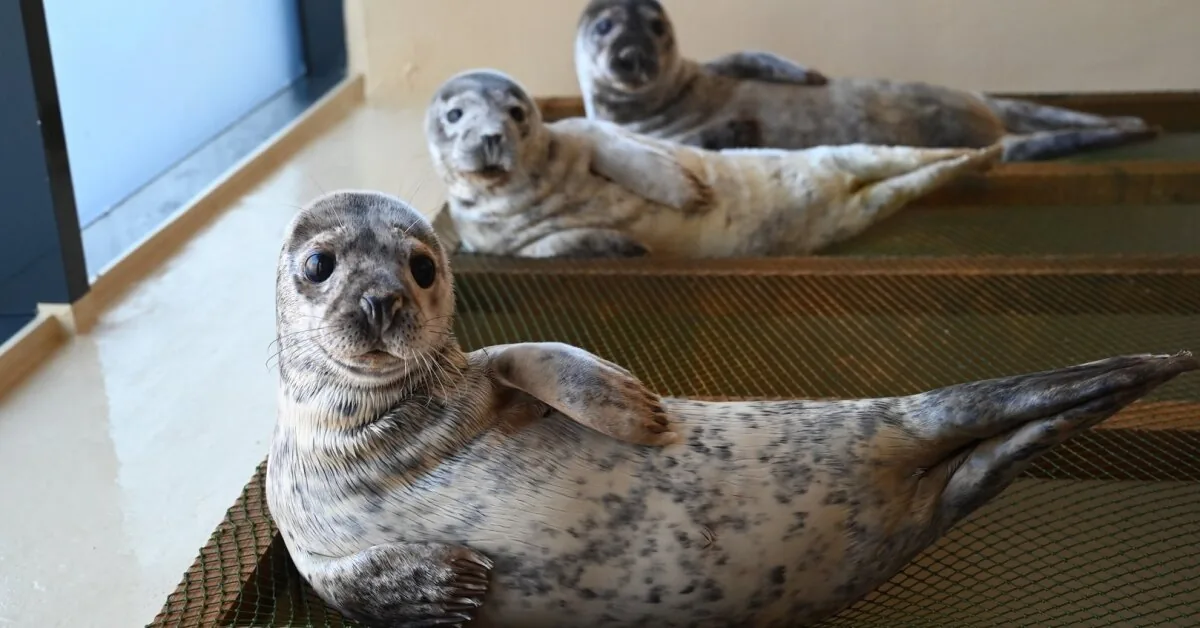
The first seal pup was brought in on March 29 – Palm Sunday. According to biologist Pavel Kulikov, who takes care of the animals, compared to previous years, the weakened pups appeared on the coast later, after the western winds intensified. In total, 11 weakened seal pups were brought to the Baltic Sea Animal Rehabilitation Center, three of which did not survive, according to a press release from the Lithuanian Sea Museum.
Read more This is what happens to your body during every flight: why do we feel different on a plane?
The seal pups were found all along the Lithuanian coast: from Būtingė to Nida. They weighed between 10 and 15 kg. Specialists say that a newborn seal pup weighs 13–14 kg, which shows that the found pups were very exhausted and emaciated.
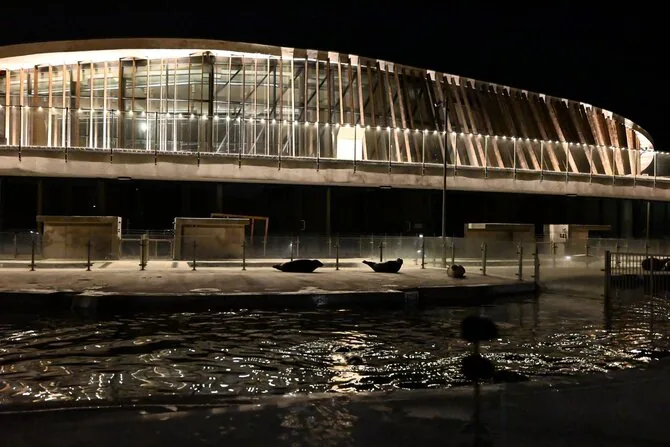
At the Baltic Sea Animal Rehabilitation Center, the animals are initially housed in enclosed indoor rooms with small pools. They receive necessary treatment and, if needed, surgery. All animals are dehydrated, with visible injuries or bite marks. They are given appropriate treatment and undergo various tests. The animals are fed every 3 hours with a puree made from herring, saline solution, vitamins, lecithin, lineks, and fish oil. As their condition improves, they begin to be fed fish. When they can swallow the given fish in water on their own, they are moved to outdoor pools: initially living alone, then moving to larger pools where they learn to compete for fish with other peers. After four months, the entire group is ready to live in the sea.
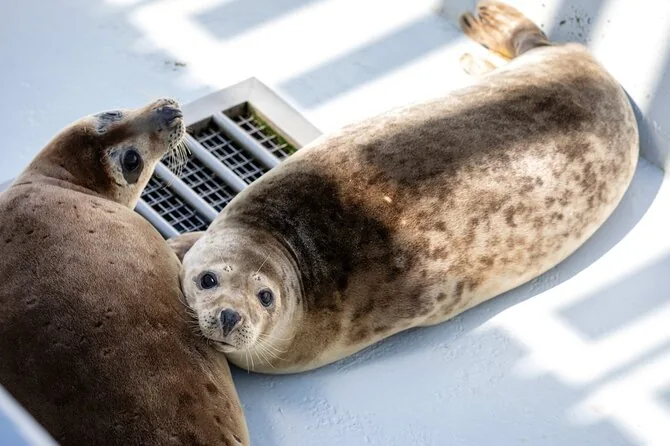
The museum’s chief biologist Laura Lupeikaitė-Kuncienė, a doctoral student at Klaipėda University studying the movement of rehabilitated seals in the Baltic Sea based on data from transmitters attached to them, is pleased that these seals will also be released with satellite transmitters.
“Using satellite transmitters, the research team tracked 30 gray seal pups rehabilitated in previous years and observed that once released, they widely disperse throughout the Baltic Sea and often haul out on shores in UNESCO protected areas,” says Laura. “Now I will continue to study how rehabilitated gray seals use UNESCO biosphere reserves and whether these areas contribute to their successful adaptation in the natural environment after release.”
The Lithuanian Sea Museum has been rehabilitating Baltic gray seal pups for 36 years. In recent years, more than 20 weakened pups are cared for annually. Baltic gray seals (Halichoerus grypus macrorhychus) are a species listed in the Lithuanian Red Book. These seals have lived in the Baltic Sea for 10,000 years.
Read more A powerful crater formed in Poland – attention to the «Kh-101» missile: why is it dangerous?