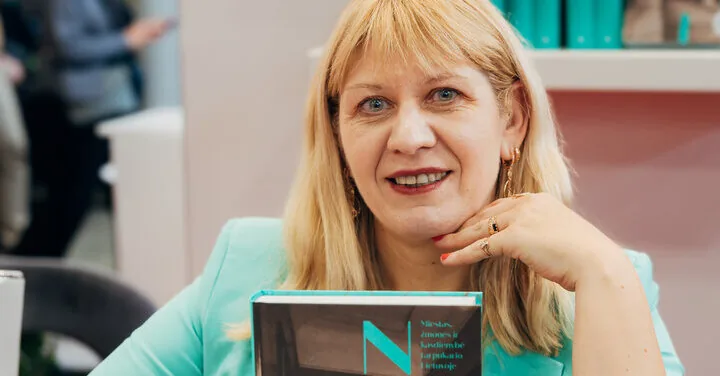
Having written books about President Antanas Smetona and the closest people around him, I. Jakubavičienė in her new book “Homes. City, People and Everyday Life in Interwar Lithuania” explores the everyday life of interwar Kaunas. The historian opens the doors to the homes and apartments of the temporary capital – from the salon to the maid’s room. The heroes of the book, and at the same time co-authors, are the people who lived here, created homes and everyday life. The historian supplemented their memories and testimonies with research by architectural historians and the press of that time.
Read more From July – changes for heavy transport: here’s what will change
“Home stories are usually united by love – connections, aspirations to create something valuable and leave a part of oneself to future generations. I believe that the historical, vivid, and sometimes emotional narrative compiled from various sources will help to feel what the word ‘home’ meant back then, and perhaps allow a better understanding of what it means to us today,” says the historian.
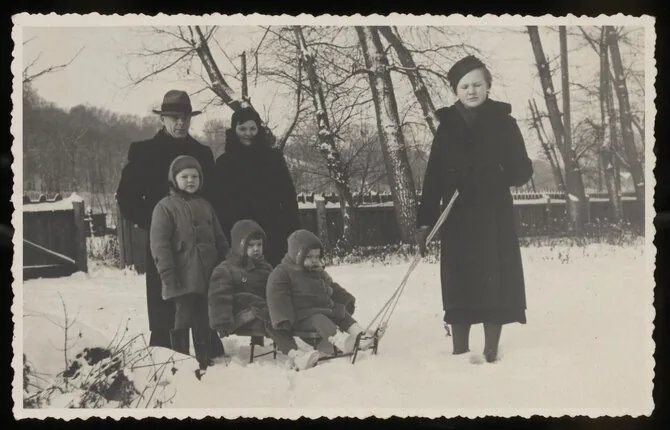
Questions for the author of “Homes. City, People and Everyday Life in Interwar Lithuania,” Dr. I. Jakubavičienė, were asked by Laisvė Radzevičienė.
– What does home mean to you, as a woman and historian?
– Home is a very close, familiar, and at the same time – intimate space. We say: everywhere is good, but home is best. My family and I create our home ourselves, and at the same time, we feel safe and cozy in it – “like at home.”
For me, as a historian, the homes and their inhabitants of interwar Kaunas became an object of study: I wanted to learn more about how homes were built, designed, what hopes their owners associated with their homes, how the personalities of the owners, the spirit of the era, and many other things were reflected in the homes. However, I did not aim to write another book about Kaunas modernism or its individual buildings. I wrote a book about homes and their spirit, their creation and life in them, about the owners and household helpers, about the preserved memories and emotions of homes.
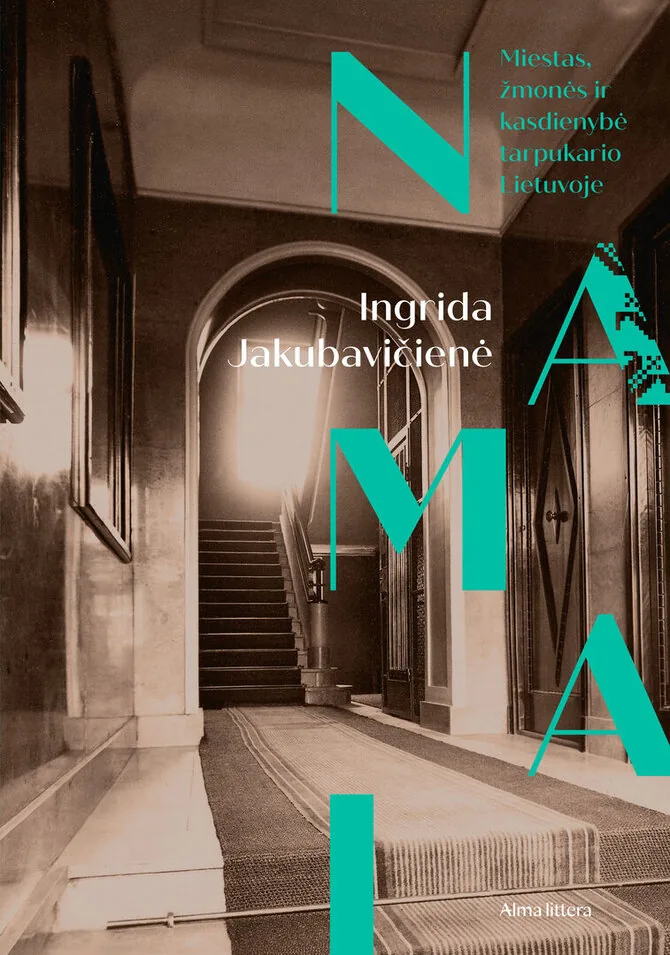
– It is said that home stories can tell about the state no less than political events. Does each era clearly reflect in homes, everyday life, lifestyle?
– Indeed, the history of everyday life is an excellent source when we want to understand what and how people lived in one or another era. Political events do not always arise from the will of the citizens; they are often determined by the positive or negative decisions of a handful of political elites, sometimes imposed by foreign states. Meanwhile, people create their homes and everyday life independently, often taking into account national-cultural aspects, natural, economic, and cultural conditions.
For example, in the interwar period, people wanted to live as close to the city center as possible, while now the aim is to escape as far as possible to the suburbs. In the interwar period, it was popular to create according to the spirit of national modernism, using national elements in modern architecture or interiors, whereas now authorial interiors are created, combining the views of the interior designer and the homeowner. A reflection of interwar everyday life could also be the preserved but now insignificant maid’s rooms designed next to kitchens or staircases intended only for servants.
– It seems that the fashion of combining national motifs in interiors came from the interwar period. It looks like it is returning – today Lithuanian interwar furniture and antique woven bedspreads are fashionable again… How would you describe the aesthetic of Kaunas life at that time?
– Usually, there were no luxury items in the homes of intellectuals because they consciously sought to decorate the interior with works of contemporary Lithuanian artists gifted by friends, family photos, and symbols of statehood – Vytis, portraits of dukes, views of Vilnius. The press suggested remembering that Lithuanian-ness of the environment was important in a Lithuanian home, so it was recommended to support local industry more and buy folk art products. However, we cannot say that national elements dominated in the homes of Kaunas residents.
Only families who had achieved material well-being could order unique Lithuanian furniture or handmade carpets, original paintings by artists. Meanwhile, tablecloths and bedspreads woven by mothers or grandmothers brought from the countryside became excellent accents of nationality in many homes during the interwar period. It is beautiful that the tradition is returning.
– In your book, Kaunas transforms from a “run-down provincial backwater” into a modern European city. This transformation of Kaunas is often emphasized. Did you manage to uncover the secret of how the city succeeded?
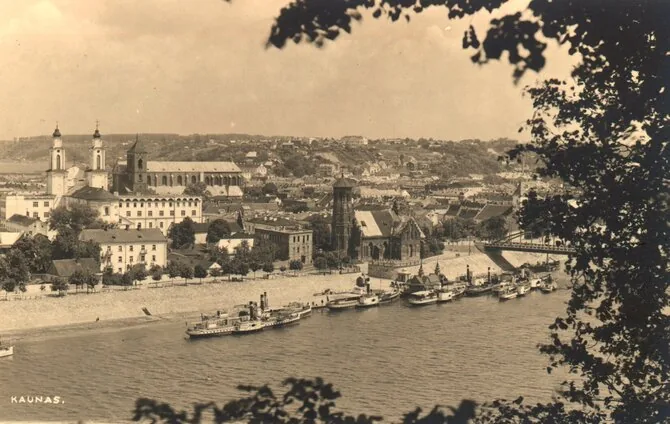
– Not in a year, but over a decade, Kaunas really managed to become the most important big city in the country from a run-down backwater, to get rid of dirty streets with puddle ditches, broken fences, and livestock kept in the middle of the city. It succeeded because the status of the temporary capital required immediate changes. Especially from 1921, when foreign envoys began to arrive in the capital, and the news about the poor condition of the city quickly spread across Europe. First, it was necessary to introduce water supply and sewage systems because until then, supplying water for family needs was one of the hardest tasks – only a few houses had local water supply and sewage.
The secret of Kaunas’s success was the joint unified effort of local government, the central state authorities, and the city’s residents.
– How much did the city residents themselves contribute to creating a modern city?
– As today, so then, both sides were important for the developing city: both the residents and the city authorities. The most important thing was that one side properly led, and the other tried to implement the set requirements. The city began to change noticeably when the local government started to announce strict rules to the residents and property owners. The rules and quite large fines for non-compliance quickly forced residents to repair fences, paint houses, register dogs, and property owners understood that they would have to hire janitors to take care of yards and streets.
Most local government regulations proved effective. Perhaps only one, the requirement raised at the end of the 4th decade to demolish wooden houses in the city center and build brick buildings instead, caused a new apartment crisis – in March 1939, after losing the Klaipėda region, Lithuanians and Jews fleeing from there flocked to the city. Meanwhile, the construction of new houses in Kaunas was delayed, and there was a shortage of rental apartments. From a long-term perspective, this requirement was correct, but at the time it caused the indignation of many city residents.
– Did anything surprise you personally while researching interwar everyday life? Did you learn something you did not know?
– I myself found it very interesting to explore the topic of household helpers, which has not been widely described until now. It was interesting to read memoirs that wrote about maids, nannies, house cooks, or hired music teachers. In the book, I tell about these very important household helpers. Maids were young women aged 17–20 who came to the city from the countryside, who after working for a few years, saving money, seeing city life, and learning a lot, returned to their villages, where they usually married successfully. However, there were also those who did not start families and lived their whole lives with one family. It was very interesting to explore the St. Zita society, which united maids – something similar to today’s trade unions.
Read more Russian propagandists targeted Zelenska again: claim she fled abroad
In the book, I also talk about the complicated relationships of maids with domineering house mistresses. It is hard to imagine how physically and emotionally exhausting this work was: the maid had to both work and live in the same house all the time.
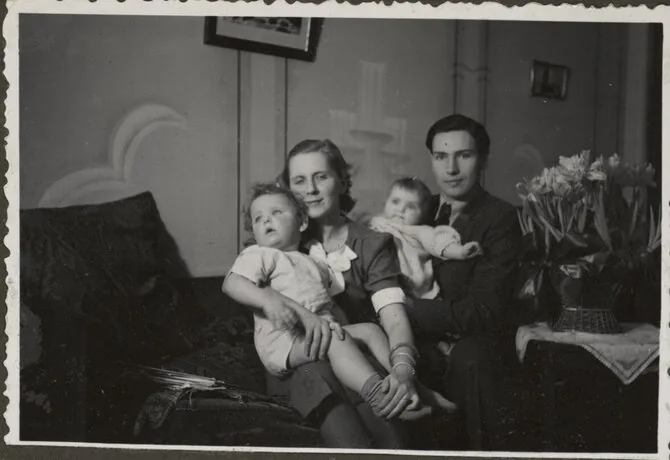
The topic of maids has been pushed aside until now. When writing about intellectual families, it seems as if there is a reluctance to see those girls, as if they never existed, as if hiring a maid was wrong. However, maids existed, they worked a lot, had to adapt well to the family’s peculiarities, properly follow the mistress’s instructions, learn to navigate the city, and knew where to buy coffee, and where – vegetables or fish.
– Were there districts in Kaunas where certain social groups tended to live?
– Certain districts existed. Apartments in the city center and Žaliakalnis were expensive, so wealthy businessmen, property owners, high-ranking civil servants, or company directors lived there. Meanwhile, the further from the city center, the cheaper the land plots were, and workers and middle-income families built houses there. Separate workers’ districts formed, for example, Šančiai or Vilijampolė. Colonies of cheap houses without amenities developed on the slopes of Žaliakalnis, named “Brazil” and “Argentina.”
– What could the home interior say about the family’s status and values? What did a typical intellectual’s apartment in Kaunas look like?
– Looking through preserved photos, we can say that the home interior can reveal a lot about the owners’ hobbies, education, financial capabilities, and values. In the book, I write about Lithuanians’ relationship with property and how a person creates their identity while creating a home. One can clearly feel the emotional difference when memoirs describe a rented apartment and recall an owned one. A person feels like an owner only when they can manage the dwelling. In this way, through the home as property, through the wealth and objects in it, we seem to extend our personality. In general, we create homes not so much by furnishing them with things we like but by wanting to become part of the home ourselves. Therefore, homes reflect their owners and their identity better than anything else.
A typical intellectual’s apartment had a salon, bedroom, children’s room, kitchen, sometimes also a study or dining room. Furniture and interior details were often eclectic, especially in the early 3rd decade when after World War I, everything was very scarce, and people were happy just to get a table or bed. Rented dwellings were furnished, and one had to get used to the furniture even if it was unsatisfactory. This encouraged seeking opportunities to build one’s own home. Only from the mid-4th decade did more designed houses appear in Kaunas, where the architect created the entire interior. Furniture sets and style unity were characteristic only of homes of the high social class.
– Is it true that it was recommended to have two separate bedrooms for the husband and wife? Where did this recommendation come from?
– Indeed, in many home descriptions, I found that the husband and wife had separate bedrooms, and if the bedroom was shared, two separate beds were placed in it. It was important to rest in the bedroom; it was written that quality rest is possible only when sleeping separately. Looking through magazines published in the 3rd–4th decades, we find exactly photos of separate bedrooms, but this could be discussed more widely only in the 4th decade when thousands of new apartments were built. Meanwhile, throughout the 3rd decade, when apartments were scarce, families often could not have separate bedrooms. Often, people slept in salons or common rooms, separating the bed only with a screen.
– While researching children’s rooms, did you learn how children were raised back then? Did interwar families spend more time together than today?
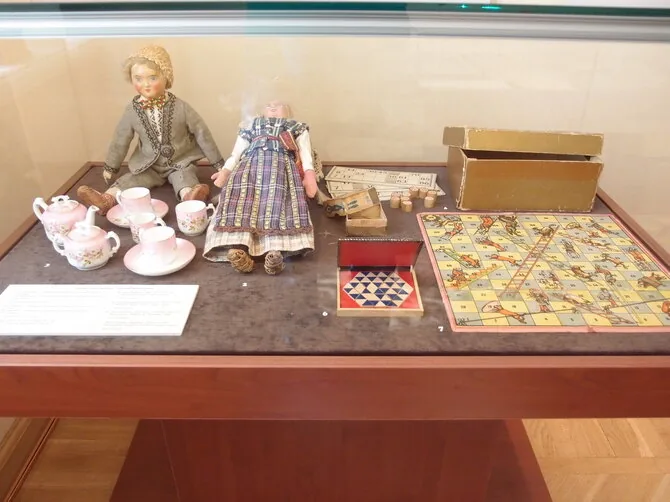
– Writing about children’s rooms, I tried to provide more information about child-rearing and attitudes towards children at that time. The children’s room was important; it had to fit the child’s belongings, rest, and play areas. Great attention was paid to children’s education in intellectual families: children’s books were bought, private foreign language and music teachers were hired. Children in the interwar period read a lot of Western classics, starting with A. Dumas’s “The Three Musketeers,” D. Defoe’s “Robinson Crusoe,” and ending with K. May’s “Winnetou” or J. Verne’s “Around the World in 80 Days.” Board games were also popular in the interwar period: “Bingo,” lotto, “Ladders.” Girls played with dolls, boys wanted to swing on rocking horses and later, inspired by stories about Indians, shoot bows and arrows.
– Your book uses many memoirs. Why are personal testimonies so important for history? What do you think historians will want to learn about us in a hundred years?
– Diaries are the most valuable for historians; the fresh information recorded on the day is the most accurate, reflecting the emotions and relationship of the person with the described things. Memoir books are also very necessary. However, it should be understood that a person wrote memoirs from a great time distance, so they are often very selective, overgrown with emotions of later years. On the other hand, from a certain time distance, one can focus more on specific things, for example, describing what communication with family members meant in childhood, how household helpers were treated, what the children’s room looked like, how the family celebrated Easter or Christmas.
People liked to write diaries in the interwar period, but the Soviet occupation and deportations lost many notebooks. In today’s technological age, we write less by hand, and less time remains for self-reflection, thinking about our day, home. We care much more about seeing how a hundred more or less known people we follow live and what they do, but who often have no connection with us.
Perhaps in a hundred years, artificial intelligence, having a lot of information about the lives of contemporary people, will be able to generate detailed answers and images of how everything was. Otherwise, it is hard to say what historians will study: there will be no surviving paper letters or diaries, but there is hope that newspapers, television, and radio recordings capturing state and public life events will survive.
– Did your long-standing interest in the interwar period, its personalities’ lives and stories influence the creation of your book in any way?
– The life, homes, and everyday life of interwar families were not a new topic for me, as I have already published books about the families of President Antanas Smetona and Sofija Smetonienė and Juozas Tūbelis and Jadvyga Tūbelienė. While preparing these books, I also wrote about how important owning a home was to them, what their home life and everyday life looked like.
However, a more important inspiration was the book “Maids for Everything” by Polish author Joanna Kuciel-Frydryszak, which revealed the situation of maids in interwar Poland. I wanted to delve more into how many maids worked in Kaunas, what kind of women chose this work, how their relationships with house owners developed. Therefore, in the book “Homes,” I wanted to show homes with all the people living in them – both owners and helpers.
Read more In Belarus – orange danger due to an unusual phenomenon