This is reported on its website by the Ukrainian military intelligence GUR.
“Russia continues to carry out a targeted ethnocide policy aimed at destroying Ukrainian identity and replacing the local population with Russians, migrants from Central Asia, the North Caucasus, and other regions,” emphasized the Ukrainian military intelligence.
Read more 70-year-old debut novelist: unexpectedly attracted 2.5 million readers
Demographic disaster
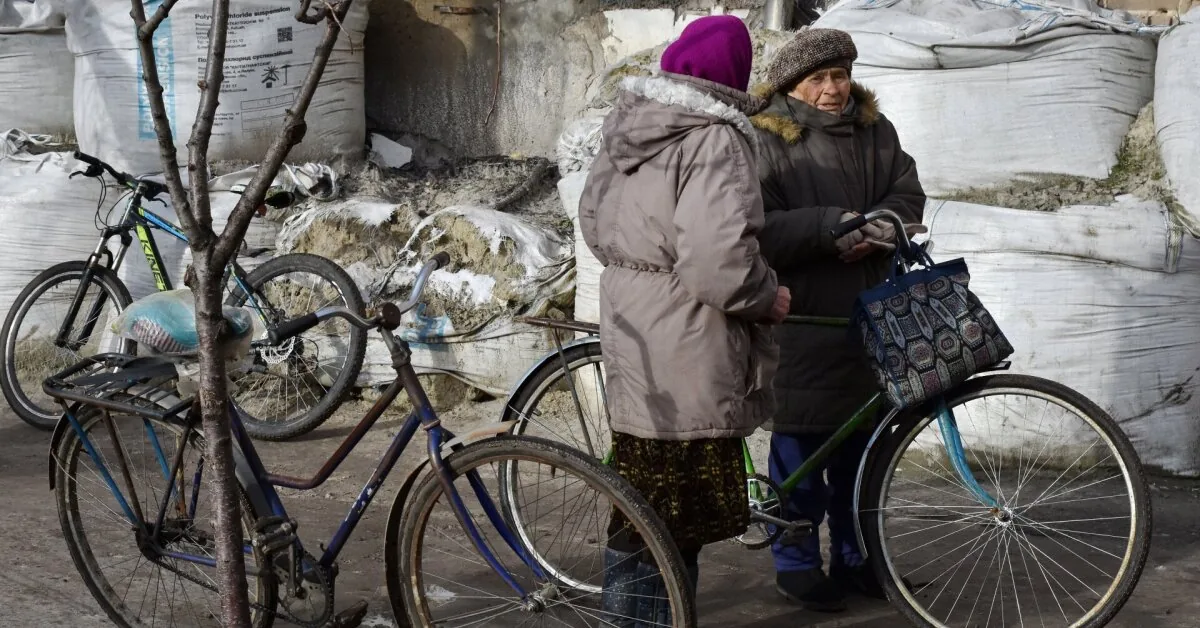
It is noted that Russia has brought the situation of the population in the occupied territories of Ukraine to a catastrophic state.
“Birth rates are extremely low, and mortality is extraordinarily high, and these indicators significantly exceed even the average Russian figures,” the report states.
In 2025, the natural population growth in the occupied part of Donetsk region was -9.9%. This is 2.4 times worse than the overall indicator in Russia itself.
“The scale of demographic losses caused by Russia in the occupied territories of Eastern Ukraine speaks for itself: over 10 years, the population of Donbas has decreased by almost a third. In 2001, about 7.37 million people lived in Donetsk and Luhansk regions combined, and at the beginning of 2024, about 3.75 million people remained there,” the intelligence stated.
Thus, as emphasized by GUR, the critical situation in the occupied territories caused by Russia’s war against Ukraine is characterized by a constant migration of the Ukrainian population from the occupation zone, driven by several factors – active military actions, a sharp deterioration in the quality of medical and other social services, repression, forced Russification and mobilization into the Russian occupying army, as well as a lack of protection of property rights.
Population replacement
The intelligence also emphasizes that Russia is actively bringing its citizens into the occupied territories of Ukraine, aiming to ultimately completely change their ethnic composition. The relocation of Russians to the occupied regions in eastern and southern Ukraine is carried out using various special programs, benefits, financial and career incentives.
“As of July 2026, 200–300 thousand ethnic Russians live in occupied Crimea and Sevastopol. The aggressor’s plans until 2042 include relocating another 130 thousand Russians to Sevastopol alone,” the report states.
Moreover, according to 2024 data, 200 thousand ethnic Russians lived in the occupied parts of Donetsk, Luhansk, Zaporizhzhia, and Kherson regions, as well as about 100 thousand labor migrants from Central Asia and the Caucasus.
“Since the beginning of 2026 alone, about 10 thousand such ‘labor migrants’ have been registered in the temporarily occupied territories of Donetsk region,” added GUR.
How Russians are encouraged to relocate
It is noted that most ethnic Russians illegally relocated to the occupied territories of Ukraine are persons sent from Russia who “work” in Russian-controlled occupation administrations, repressive apparatuses, and budgetary “institutions.”
For example, Russian healthcare workers, teachers, and builders are sent to the occupied lands.
“To encourage Russians to move to the temporarily occupied territories, the aggressor state has created a system of financial incentives,” noted GUR and added that persons sent to the occupied territories of Ukraine receive double salaries, as well as compensation for housing rent – up to 7,210 rubles per day.
Daily allowances amount to 8,480 rubles. During one month of assignment, the so-called Russian “official” can receive more than 470 thousand rubles (more than 5 thousand dollars), which is more than 8 times the average salary in Russia itself.
Read more Bankai are making changes in the regions: named the districts where they will expand