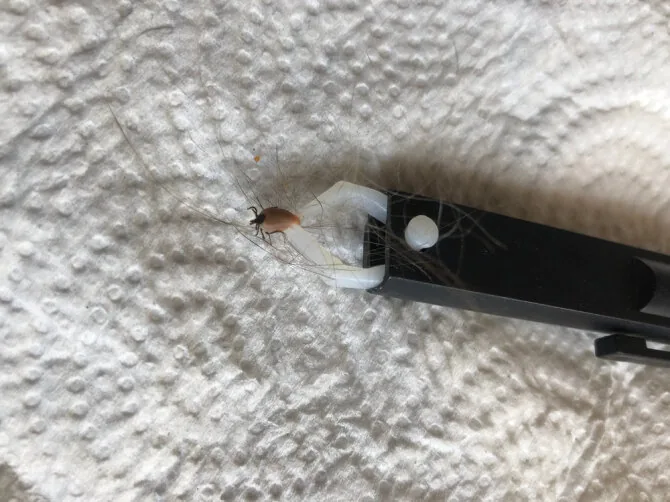
Tick-borne encephalitis is a natural focal viral disease, which people most often contract from the bite of an infected tick. This is especially relevant in Lithuania, where the incidence rates of tick-borne encephalitis are among the highest in Europe.
Read more The Kremlin resorted to new tactics in the occupied regions
More about this disease, its transmission methods, consequences for human health, and how to protect yourself – in the press release from LSMU Kaunas Hospital.
Early tick season
Although many still associate ticks with spring, their active season begins as soon as the weather warms up and can last until late autumn. When the average daily air temperature reaches 5-7 °C, ticks become more active, so people should remain vigilant.
Experts point out that due to the warming climate, their active period is lengthening, so the risk of encountering ticks remains high for most of the year.
According to data from the National Public Health Center, 642 cases of tick-borne encephalitis were registered in Lithuania in 2025. Although this is less than the record 807 cases in 2024, the incidence still remains significantly higher than in 2023, when 377 cases were recorded.
However, the risk of contracting tick-borne encephalitis arises not only from tick bites. Although such cases are much rarer, infection can also occur by consuming thermally unprocessed milk or dairy products from infected animals. In such cases, the infection is transmitted even without direct contact with a tick. Still, normal milk heating destroys the virus.
Course and symptoms of tick-borne encephalitis
Symptoms of tick-borne encephalitis usually appear in two stages. Initially, symptoms resembling viral illnesses may occur – fever, weakness, headaches, bone and muscle pain. This phase typically lasts about five days.
Later, the condition may improve, giving the impression that the illness has ended. However, feeling better should not stop one from continuing to monitor their health. Improvement, which can last from one day to a month, does not necessarily mean recovery.
As the disease progresses and the second wave begins, the central nervous system may be affected. Then inflammatory changes in the cerebrospinal fluid may occur, movement coordination may be impaired, muscle weakness may appear, and in severe cases – even consciousness disturbances or partial paralysis.
Infectious disease specialist Vytautas Griška points out that the course of tick-borne encephalitis can vary greatly – not all patients experience the most severe form of the disease.
“Consciousness disturbances or various paralyses develop in about one-tenth of patients. About half of those affected experience a moderate form of the disease – meningoencephalitis, during which the nervous system is affected and coordination disorders may appear. Still, even the milder form of the disease, presenting with fever, headache, nausea, can severely worsen a person’s condition,” says the doctor.
Tick-borne encephalitis is insidious not only because of possible nervous system damage but also because there is still no specific treatment that can destroy the virus causing this disease.
“Currently, only symptomatic treatment is available – infusion therapy, medications for pain, fever, or nausea. Early rehabilitation during the recovery period is very important to help restore lost functions. In severe cases, treatment in an intensive care unit or even artificial lung ventilation may be required,” notes V. Griška.
Tick-borne encephalitis or Lyme disease?
When talking about tick-borne diseases, it is important not to confuse tick-borne encephalitis with Lyme disease. Although both infections are transmitted by ticks, their causative agents, disease course, treatment, and protective measures differ.
One of the main differences is the causative agent. Tick-borne encephalitis is caused by a virus transmitted by ticks, which can damage the human nervous system, affecting the meninges, brain, or spinal cord. Treatment for this disease is only symptomatic and for possible complications. Lyme disease, on the other hand, is caused by bacteria that can affect the skin, joints, nervous system, or heart. Since it is a bacterial infection, it is treated with antibiotics.
The symptoms of these diseases also differ. People often think that if no redness appears after a tick bite, there is no cause for concern. However, spreading, ring-shaped skin redness is more characteristic of Lyme disease. In the case of tick-borne encephalitis, such a symptom usually does not appear – the disease often begins with symptoms similar to a viral infection.
Read more 70-year-old debut novelist: unexpectedly attracted 2.5 million readers
The only weapon – vaccine
Tick-borne encephalitis can have long-term consequences that change a person’s daily life and quality of life. Therefore, it is especially important not only to be aware of the risk but also to take preventive measures before encountering the disease.
Vaccination remains the most effective protective measure for both adults and children. This is especially relevant in summer when children and teenagers go to camps, trips, and hikes, and spend more leisure time playing outdoors. These summer adventures bring much joy but also increase the likelihood of encountering ticks.
To allow immunity to develop, vaccination is recommended before the active tick season begins. However, it is not worth risking and waiting for the perfect time to get vaccinated.
“Ideally, vaccination should start during the cold season. However, considering that the tick season extends until late autumn, if the winter period is missed, one should not wait for the next year – it is better to get vaccinated as early as possible,” says the doctor.
Vaccination process
To develop long-term immunity, usually three doses of the tick-borne encephalitis vaccine are required. Those who decide to get vaccinated can choose the standard or accelerated vaccination schedule.
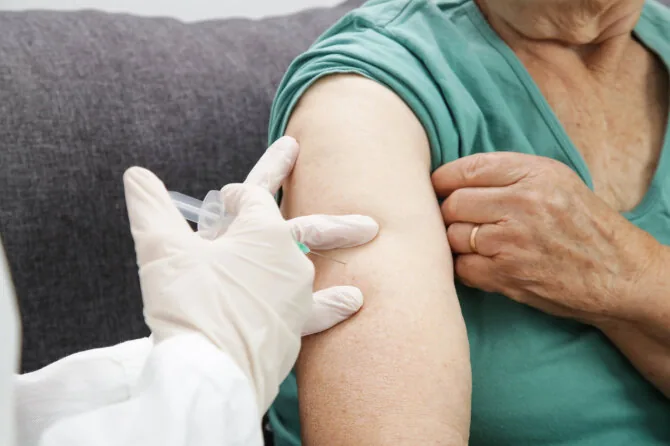
The standard tick-borne encephalitis vaccination schedule consists of three doses. The first dose can be given at any time. The second dose is given 1-3 months later, and the third dose 5-12 months after the second dose. It is important to note that after completing the primary vaccination, booster doses are needed to maintain the developed immunity.
For those seeking faster protection, an accelerated vaccination schedule may be applied. In this case, the second dose is given just 7-14 days after the first, and the third dose 5-12 months later.
The doctor emphasizes that regardless of the chosen vaccination schedule, their effectiveness does not differ.
“The accelerated vaccination schedule is often chosen during the warm season when a person seeks faster antibody formation due to the ongoing risk of contracting tick-borne encephalitis. However, the accelerated vaccination schedule is just as effective as the standard one,” says the infectious disease specialist.
To maintain the developed immunity, revaccination is necessary. The first booster dose is given three years after the third vaccine dose. Later, revaccination is recommended every five years for those under 60 years old, and every three years for those aged 60 and over.
Additional preventive measures
To reduce the risk of contracting tick-borne diseases, it is important not to forget other protective measures. Although vaccines against tick-borne encephalitis are the most effective protection against this disease, when in nature, it is also necessary to wear appropriate clothing, use repellents, and remember to check the body.
When spending time outdoors, especially in forested areas, choose clothing that covers the body as much as possible – long-sleeved shirts, long pants, closed shoes. It is recommended that the clothing be light-colored – this helps to spot ticks more easily.
Repellents are another additional protective measure that can reduce the risk of tick bites. It is important to use them according to the manufacturer’s instructions and remember that their effect weakens over time.
After each visit to nature, it is worth carefully inspecting the body, especially those areas where ticks most often attach – armpits, groin, neck, and head areas.
Timely chosen preventive measures can help avoid serious health problems.