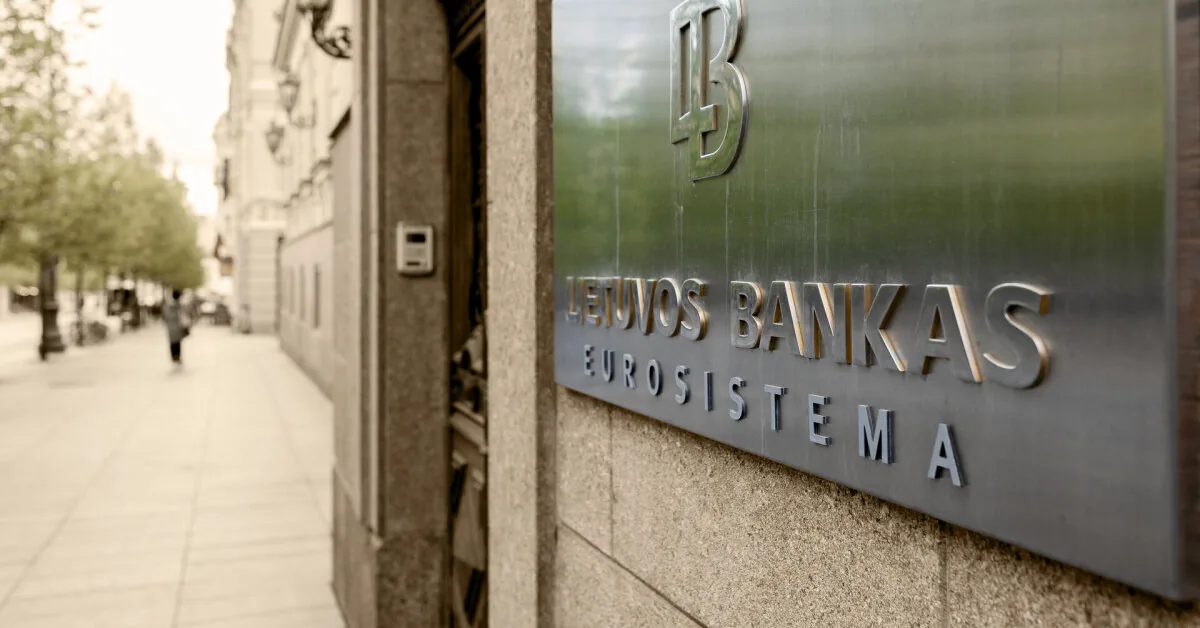
“We are increasingly using digital channels for everyday banking services, but for some residents, the ability to consult in person or perform certain transactions at a bank branch remains very important. Therefore, we aim to ensure that physical financial services are available not only in major cities but also in regions. It is gratifying that together with banks we have managed to find a solution that will allow even more municipalities to achieve this goal,” says Gediminas Šimkus, Chairman of the Board of the Bank of Lithuania.
Read more As the weather cools down – time for hearty stews: two recipes that will surprise with their flavors
Changes are planned in the municipalities of Pakruojis, Zarasai, Ignalina, Trakai, Šakiai, Pagėgiai, Rietavas, Prienai districts, Kazlų Rūda, and Kalvarija. Banks have already approached the municipalities for cooperation.
The Bank of Lithuania emphasizes that the involvement of municipalities will be important in finding suitable premises for bank operations that meet security and physical accessibility requirements, and once services begin, informing residents about new opportunities to use them.
Currently, there are 154 bank branches and their alternatives operating in 45 municipalities in Lithuania. Considering also the ring municipalities, most of whose administrative centers are located in urban areas, physical access to bank services is considered ensured in 49 out of 60 municipalities. This means that about 95% of bank clients can reach at least one physical bank service point.
Besides the mentioned ten municipalities, there is no physical bank branch in the Neringa municipality either. It has just over 5,000 residents, of whom fewer than 3,000 are clients of banks with physical branches in the country. According to the Bank of Lithuania’s assessment, considering the specifics and population of Neringa municipality, establishing a separate bank branch is currently not advisable.
Increasing access to financial services in regions is one of the goals of the Bank of Lithuania’s Payment Market Strategy until 2030. To achieve this, the Bank of Lithuania has in recent years assessed the situation, analyzed possible solutions, and together with banks sought ways to improve service accessibility.
At the beginning of 2026, with the mediation of the Bank of Lithuania and the involvement of the Širvintos district municipality, two banks’ branches with variable working hours started operating in the district. In two other municipalities – Šalčininkai district and Varėna district – consulting branches of one of the banks also began to operate periodically. This shows that the role of municipalities in this process is no less important than that of banks, and where municipalities engaged in dialogue, tangible results were achieved.
In the absence of opportunities to maintain a permanently operating bank branch, banks operating in the country actively seek and apply alternative forms of operation – for example, branches with variable working hours or consulting branches. This ensures periodic access to banking services in a specific location.
As banks expand the network of physical services in municipalities where there is currently no bank branch, it will become easier for residents to receive services both by pre-registration and – depending on the organization of the specific branch’s work – by arriving without registration.
The Bank of Lithuania aims for all residents arriving at a bank branch without prior registration to be served. However, a mystery shopper study conducted by the Bank of Lithuania last year showed that the possibility of entering a bank branch without prior registration can still pose difficulties.
Read more Chinese startup shakes up the US artificial intelligence sector
Opening additional branches will help improve service accessibility, but this alone is not enough. The Bank of Lithuania, having presented the study results to banks, urged them to take measures to improve the situation. Banks are already organizing employee training, strengthening their competencies, systematically analyzing customer feedback, and improving customer service models in physical branches.
Banks note that clients without prior registration are accepted even now. However, for some banks, lacking the ability to immediately serve all residents arriving without registration, priority is given to clients from socially vulnerable groups, in unforeseen urgent cases, or when a specific service is provided only at a bank branch.
During the mystery shopper study, it was evaluated how residents are served when arriving at a bank without prior registration seeking consultation about opening a payment account, required documents, and bank service packages offered. The mystery clients did not seek urgent help – they aimed to receive general information about the services provided by banks.
Nine out of ten mystery clients were accepted for consultation when arriving without prior registration. In cases where clients were not served immediately, bank employees helped to register for a consultation, which was usually scheduled within the next 1–3 days.
Most mystery clients received detailed or sufficient information about the payment account opening process and required documents. However, there were cases where bank employees’ answers were too general or insufficiently informative.
About half of the cases involved bank employees actively exploring clients’ needs and inquiring about their payment service usage habits. However, situations were also recorded where employees lacked initiative to better understand the client’s needs.
The study also showed that in regions, bank employees devoted more time and provided more detailed consultations to mystery clients arriving without prior registration than in big cities.
The Bank of Lithuania will continue to monitor how banks succeed in improving customer service and access to physical services. It plans to repeat the mystery shopper study, which will show whether the implemented changes have yielded real results.
Read more Three fire trucks rushed to a multi-storey garage: a parked BMW caught fire