More travel adventures can be found on the blog “After the Trip” and on this blog’s Instagram account.
Read more Investigation launched into E. Jean Carroll, who accused Donald Trump of assault
And so – by mid-April I was already in that greenery – the greenest of the green São Miguel (São Miguel) island.
Day 1. A long way to the middle of the Atlantic
The flight from Vilnius to Ponta Delgada was not one of those “quickly flew and already drinking sangria”. The Azores are quite far from mainland Europe, so the journey on the route Vilnius–Oslo–Lisbon–Ponta Delgada took the whole day. And with a bit of stress at Lisbon airport, when the chance to catch the next plane was hanging by a thread. Luckily, everything ended well and late in the evening I successfully reached our temporary home on São Miguel island, in the small village of Remedios, where Aleksandras and dinner were already waiting for us.
Day 2. Volcano crater lakes, abandoned hotel, and swimming in the Atlantic
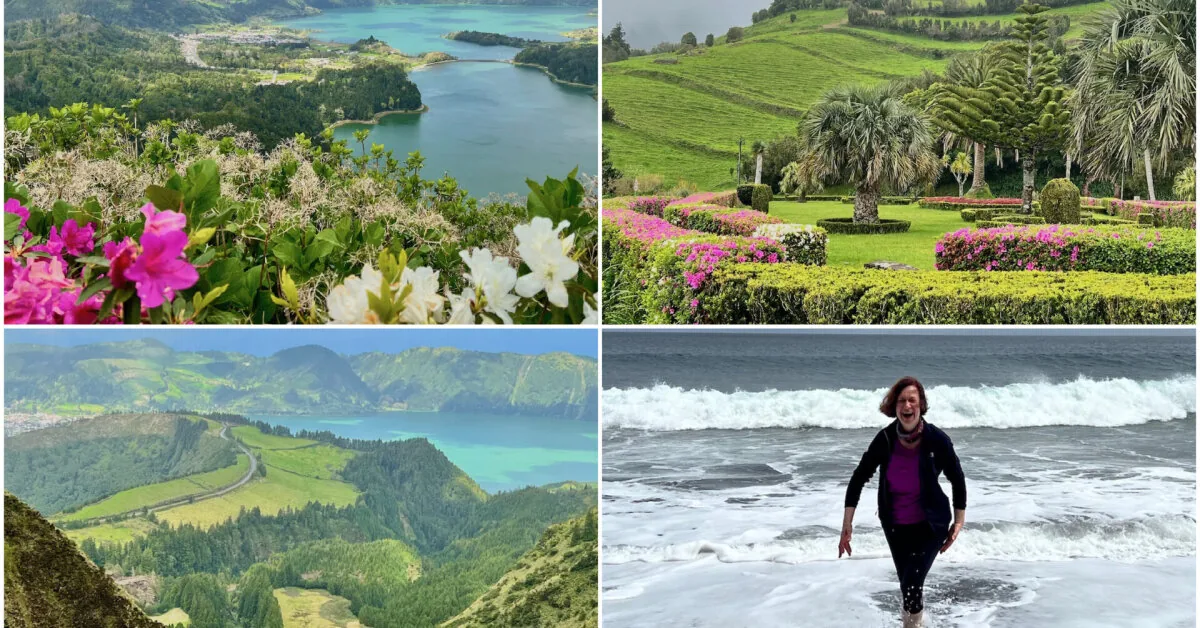
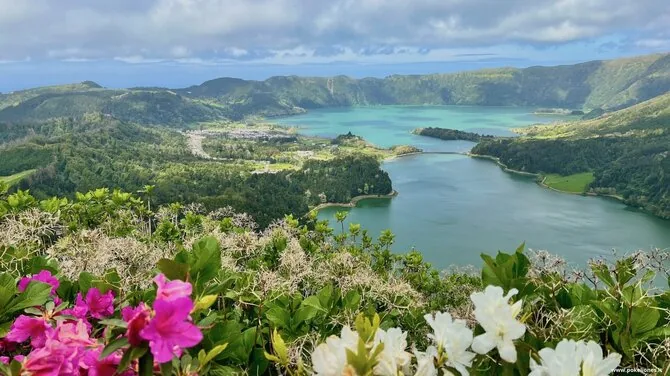
The sun is shining through the windows in the morning. Our house is somehow strangely situated on a slope and has several (I never counted) terraces, so it’s hard to decide where to drink the morning coffee. Since the weather forecast promises us a very rainy week, today – the only sunny day – our leader – guide Ignas changes the preliminary plans and we choose a hike around the famous Sete Cidades (Seven Cities) lake – one of the most impressive places in the entire Azores archipelago.
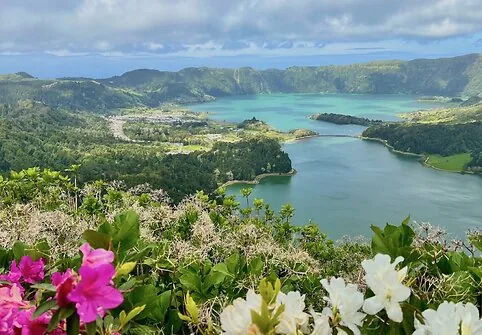
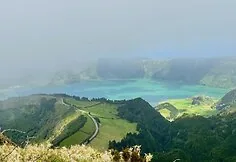
Sete Cidades is a huge volcanic crater with two lakes – one looks blue, the other green. Locals tell a legend about lovers whose tears created lakes of different colors. Scientists have a less romantic explanation – the color difference is due to light reflections and different lake depths. But the legend sounds better.
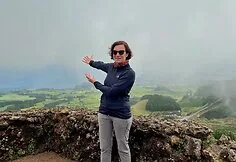
We enjoyed the sun on the terrace of our temporary home, and after driving a few dozen kilometers, the parking lot greeted us with a wind that knocked us off our feet. At first, while walking through the forest, it didn’t bother much, but as we climbed higher, when we were supposed to start admiring the views, the wind intensified so much that it literally knocked us down and tried to blow us away.
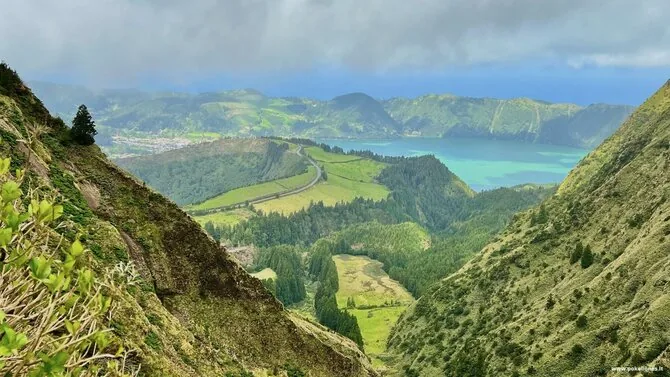
Fortunately, it was hard to see well where – the raging wind couldn’t disperse the clouds, so instead of the impressive lakes below, we only saw clouds. And here we could appreciate the decision not to walk 20 km around the crater, but to shorten the route to 14 km and split it into parts.
So after some driving and walking, the views already pleased the eyes. We spent a good half-day driving and walking around the lakes, admiring their views from various sides, even descending and driving along the road separating them, and visited the small Sete Cidades village.
Still, we decided that the lakes look most beautiful from the Miradouro Candelaria viewpoint.
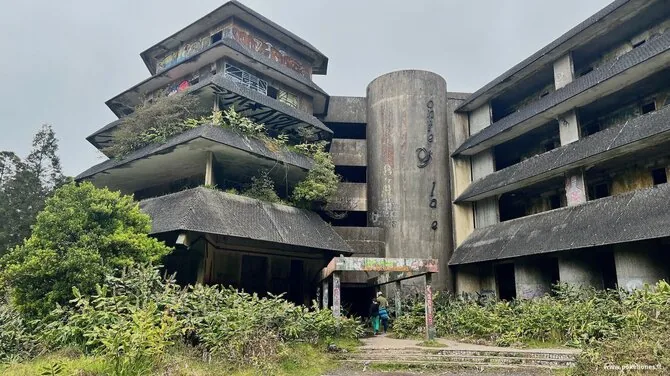
Nearby, we also wandered into the ruins of the abandoned “Monte Palace” hotel. This luxury hotel was opened in 1989 but operated for only a year and a half – there were too few tourists, and the location was too remote. Now it looks like a set for a post-apocalyptic film: broken windows, graffiti, and some of the most beautiful views of the Sete Cidades lakes.
This luxury hotel was opened in 1989 but operated for only a year and a half.
On the way, we saw an old Roman-style aqueduct, completely overgrown with moss and grass – an illustration that plants thrive everywhere in the Azores – just leave something unattended, and it will soon be overtaken by vegetation.
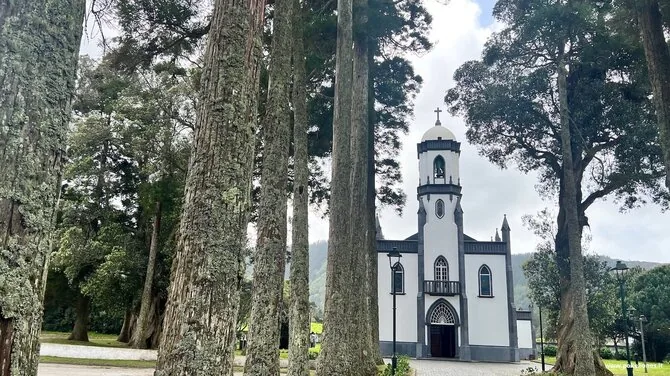
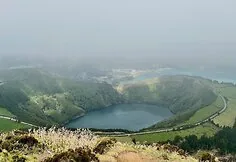
Later, we traveled to Lagoa de Santiago – another volcanic lake surrounded by dense greenery.
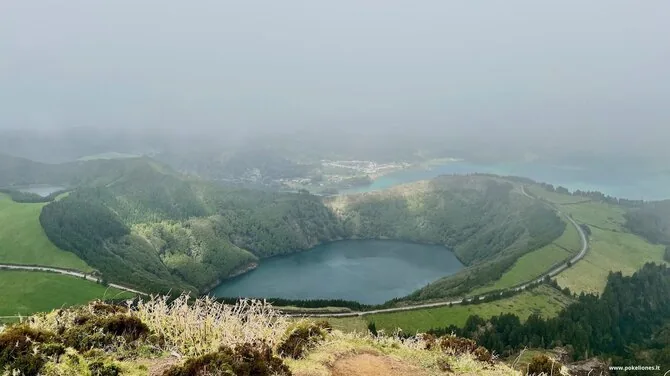
And after all the hikes, the Ponta da Ferraria thermal pools in the Atlantic Ocean awaited us. However, when we visited, it was high tide, so we couldn’t really enjoy the water temperature, and the waves were crashing so much that I felt more like in a washing machine than a spa. Fortunately, there is a convenient entrance and ropes attached to the rocks to help stay in the water and avoid being thrown against the rocks.
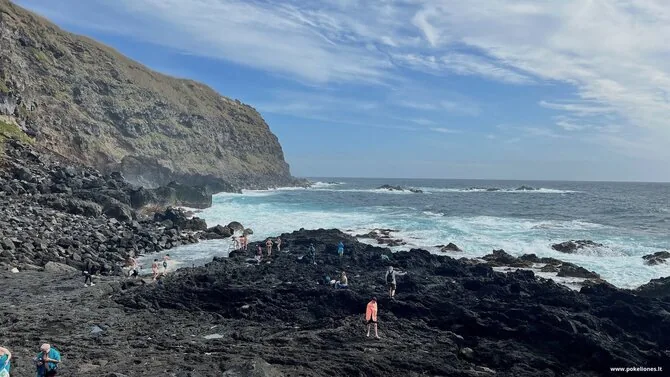
The path to these pools is not easy – due to a previous landslide, cars must be left much higher, and you have to descend (and after swimming – climb back up) on a fairly steep path on foot.
Day 3. Nordeste – a day of contrasts
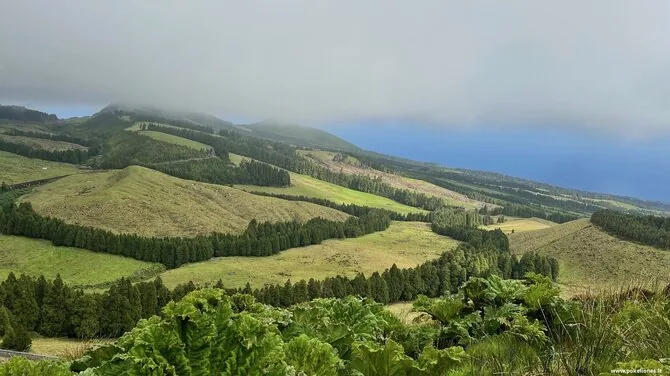
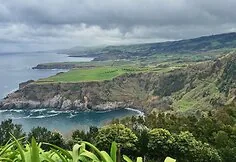
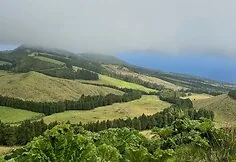
On the third day, we traveled to the eastern part of the island – the Nordeste region, famous for its green hills, steep coasts, and viewpoints overlooking the rocky Atlantic shores.
The morning did not promise anything good – it rained annoyingly and persistently. Fortunately, at first, we had to walk on an asphalt road. It wouldn’t be pleasant in good weather, but now – quite nice. And it’s good that there are many viewpoints with full infrastructure and shelters along the way, under one of which we could eat our lunch dry.
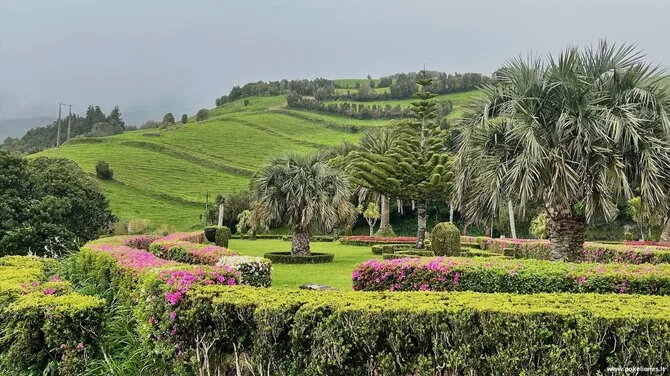
After them, the rain calms down, and we start descending to the ocean on steep and not-so-steep paths. Here, the trekking pole bought at the local “Decathlon” comes in handy, helping not to slip on the wet path.
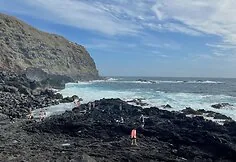
When we reach the Atlantic coast, the sky clears up completely. I pose wading into the ocean and don’t notice how a sneaky wave hits me on the backside. Oops… Luckily, the color and shape of my pants are such that you can’t even tell if they are dry or wet.
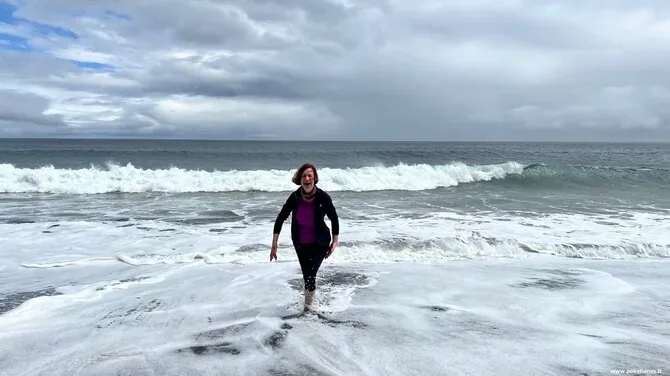
For a while, we walk along the Atlantic coast – sometimes over stones, sometimes on a path through invasive bamboo thickets. We wondered – are those bamboos or sugar canes? “ChatGPT” convinced us that they are indeed bamboos.
It turned out to be quite an interesting walk. So natural and real. As a contrast to the later visited Ribeira dos Caldeiros park – well-maintained and groomed, with beautiful waterfalls and tropical plants. The park was established in the 19th century and is now considered one of the most beautiful on São Miguel island. It’s nice to walk through it on a warm, sunny day. Yes, a few hours passed, and the weather changed drastically.
And if at the beginning of the hike we looked from the viewpoint and didn’t see much, from Miradouro da Pedra dos Estorninhos we could already admire the rocky Atlantic coasts.
For the end of the day – another contrast. The atmosphere of the last visited Rabo de Peixe town is quite different from others in the Azores, although at first glance it looks charming with its colorful houses. The town is somewhat famous for fishing, but much more for social problems and its history, which inspired the Netflix series “Turn of the Tide”.
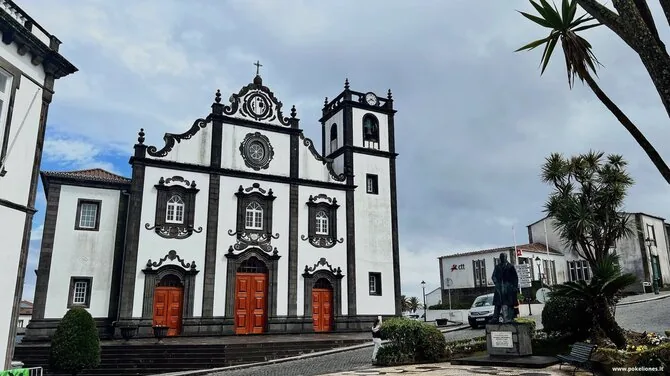
The peaceful, secluded town life changed drastically in 2001 when waves washed several hundred kilograms of cocaine onto its shore, transported by a ship from Colombia. The series tells the story of several friends, and there were many and varied here. We drove through the town’s streets, but we didn’t feel like getting out and walking around. And the residents seen on the streets seemed, well, let’s say, a bit strange.
Day 4. Azores exotica – tea and pineapples
The Azores are the only place in Europe where tea is still commercially grown. The Gorreana tea plantation has thrived since 1883 and is considered the oldest in Europe. We started the day with a small hike in the tea plantation. The view of the green tea terraces and the Atlantic Ocean resembles something between Japan and Ireland.
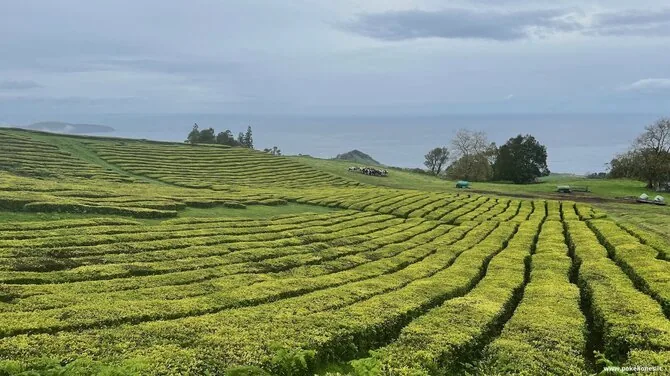
After the hike, we stopped at a tea processing company-shop-cafe. Some old machinery is still used here, and the tea is produced without pesticides – we could see the devices operating here on site, and the history is told through filmed material. After drinking tea and buying some tea leaves, we continued. While we were here, the weather outside changed probably three times.
We stopped at the Miradouro de Santa Iria viewpoint, which offers one of the most famous views of the São Miguel coast.
Next – the town of Ribeira Grande, founded in the 16th century and for a long time an important trade center in the northern part of the island. But we were more interested not in the town itself but in the Atlantic Ocean coasts, the impressive cliffs.
Read more Rokas Adomaitis achieved a career best in the second stage of the «Tour of Lithuania» race
The view of the green tea terraces and the Atlantic Ocean resembles something between Japan and Ireland.
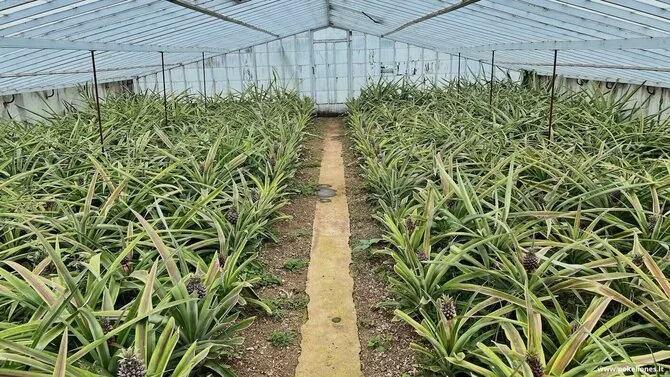
Later, we visited another place unique to the Azores – the Santo António pineapple plantation, where these fruits, unusual for Europe, have been grown since 1911. Azorean pineapples grow in greenhouses, and the whole process takes almost two years. When we heard how many times they are transplanted and how they are cared for – the price seemed very low. In supermarkets, local pineapples are smaller than we are used to but much sweeter.
Day 5. Forest like from a fantasy movie and whales in the Atlantic
It rained again at night, so the little stream running past our house revived. In the morning, it gurgled so loudly that before opening my eyes, I imagined it was pouring rain outside. Luckily, it was not true, as a very busy day awaited us.
The first stop – a walk to Lagoa do Congro. The trail leading to this lake impressed me, or rather, it was not a trail but a forest that looked like from a fantasy movie: huge trees, moss-covered stones, bushes covered with dewy flowers. And everything is immersed in a gentle mist. It reminded me of the climb to the Tiger’s Nest monastery in Bhutan – one stage of the trail there led through a similar forest.
Like from a fantasy movie.
The Lagoa do Congro itself is a small volcanic lake surrounded by dense vegetation. Due to moisture and mist, the place looks almost mystical, and with such enchanting calmness – you don’t even want to talk. It seems I could sit for half a day watching the reflections playing in its greenish water.
But we have to go, Vila Franca do Campo awaits us. It was once the first capital of São Miguel, but in the 16th century, most of the town was destroyed by an earthquake and landslides.
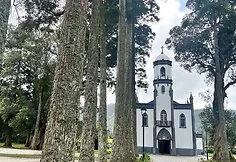
Now the town is famous not only for its history but also for small cakes called Queijadas de Vila Franca do Campo, an impressive church with a view of Ponta Delgada. The town greeted us solemnly – several streets were covered with peculiar carpets made of tree bark and some colorful details. Obviously, a solemn procession was expected.
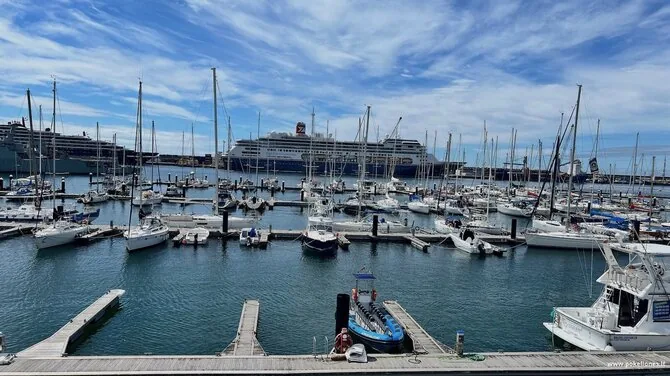
We didn’t wait for it because time was pressing – we had to hurry to the port of Ponta Delgada, from where we sailed to watch whales and dolphins. The Azores are considered one of the best places in Europe to watch whales – more than 20 species of whales and dolphins can be seen around the islands. We sailed with scientist biologists from “Futurisimo”. After a short briefing, we received rubber jackets and pants and boarded a small catamaran.
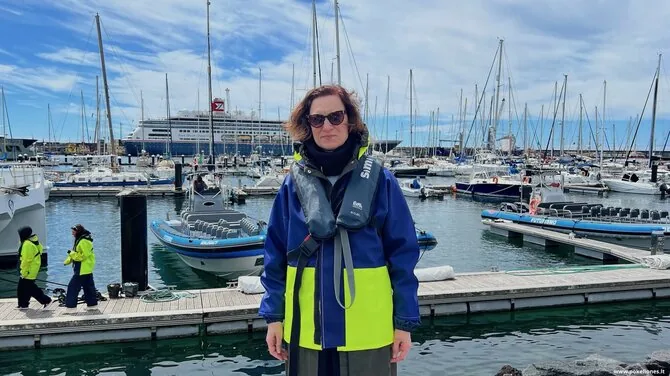
Although the ocean looked relatively calm, cutting through the waves at high speed felt like sitting on a jumping horse. I pressed my feet hard against the boat’s bottom to absorb the shocks with my legs and bounce less with my seat.
Far from the shore, we finally stopped. The biologist accompanying us reported that their colleagues warned from the shore – somewhere nearby underwater is a large animal. We looked around hoping to see a water spout, as this is the first sign that a whale is about to surface for air. Aha, there it is! And after a few moments, a dark back appeared among the waves. We were lucky! Enthusiasm filled us because I must admit that when setting out, I had little hope of seeing these giants.
Our catamaran was simply surrounded by dolphins!
Fortunately, the weather spoiled us today – the sun was shining, and floating on the waves without going fast, you don’t even feel the wind, so with the rubber outfit, it was already getting too hot, and I had to unzip.
And yes, here and there a spout appeared, and after it – the whale’s back. I tried to film the surroundings with my phone but kept failing to capture the appearing animal – either I forgot to start recording or turned the phone away from the spout. Well, no need, I will record these moments with my eyes and keep them in memory.
On the way back, we unexpectedly stopped again. Wow! Our catamaran was simply surrounded by dolphins! And it seems they want to show us how beautiful and agile they are. How else to explain them diving and even jumping out of the water right next to the catamaran’s side? Extremely impressive! The trip really exceeded expectations.
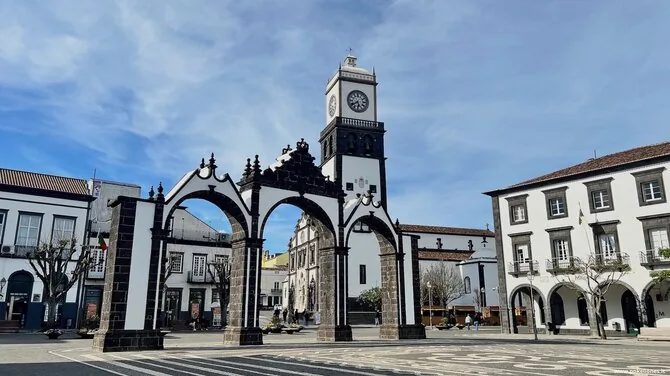
After the boat trip, we returned to Ponta Delgada. It is the largest city in the Azores (you can realistically walk through it in half an hour) and the main center of São Miguel island. It began to grow in the 16th century when it became an important trade point in the Atlantic. Now the city is famous for its black and white Portuguese buildings, small cozy squares, and a very calm pace of life. We walked here on a Sunday afternoon, maybe that’s why the city seemed sleepy, with more life felt only on the coast, in the port area.
Day 6. Lagoa do Fogo and the geothermal side of the Azores
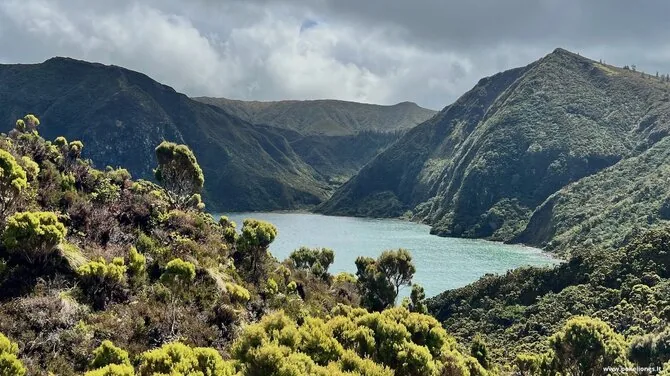
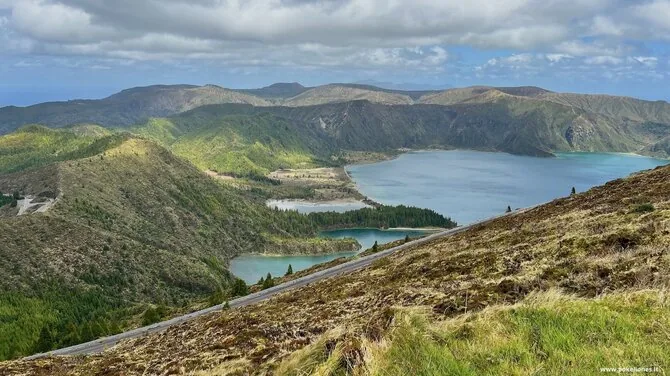
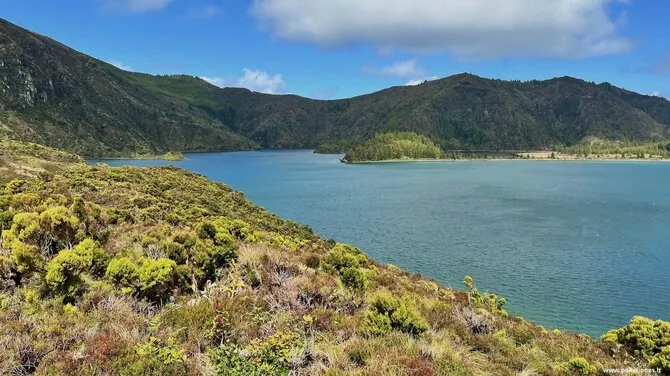
On the sixth day, a hike around Lagoa do Fogo awaited us – the most famous Azores lake. Lagoa do Fogo means “Lake of Fire”. It also formed in a volcanic crater and is now a protected natural area. The water here looks almost neon, and it is surrounded by green slopes.
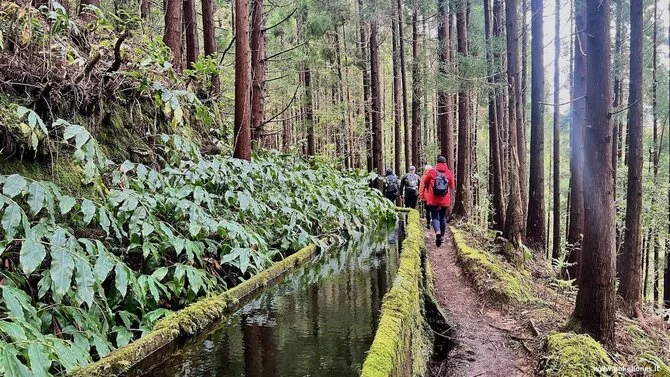
The approach to the lake is through a forest, next to Madeira-like levadas full of water. The forest is again impressive, and the trail is wide, quite civilized. Sun, but also strong wind. In a more open place, a gust of wind blew my hat off my head and threw it far down the levada below. I could only wave goodbye to it – it served faithfully for many years. It seems that sacrificing hats to the wind is becoming a tradition – one might still be fluttering somewhere on the slopes of Patagonia.
The first view of the lake makes you gasp. But the fierce wind discourages the idea of stopping here for lunch. We continue along the trail by the lake, enjoying the sun, and occasionally stepping out to more open viewpoints to admire the lake again and again. Of course, and to take the nth photo.
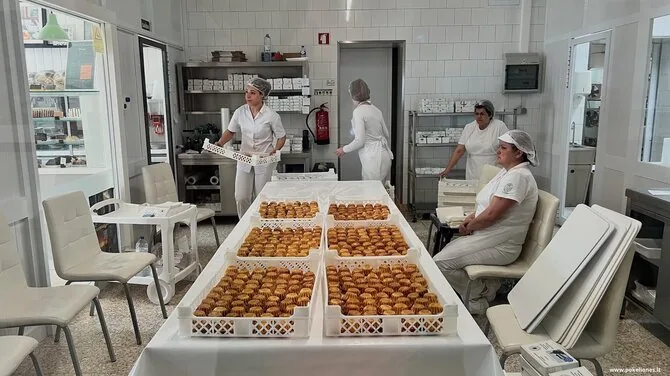
After the hike, we felt we deserved to try the famous Queijadas de Vila Franca do Campo cakes at a local bakery pointed out by Ignas. The cakes are really tasty, and you can even see how carefully the women make them. After a beautiful hike, tasty cakes on a sunny terrace – very good.
Then – another look, now from above, at Lagoa do Fogo.
But if you rest, then rest. In the evening, we traveled to the Furnas region, famous for geysers and hot springs. White steam rising from the ground, bubbling hot water springs – the Furnas area is one of the most active geothermal regions in the Azores. In Europe, you can probably see more only in Iceland.
The Poca da Dona Beija thermal pools seemed quite cozy – warm brownish water, tropical plants – a very proper blend of natural nature and civilization comforts.
Day 7. Waterfalls and the last hike
The last active day was dedicated to a hike to the Salto do Prego and Salto do Cagarrão waterfalls. The trail started in Povoação – a small, very green village that looked like a miniature model from above.
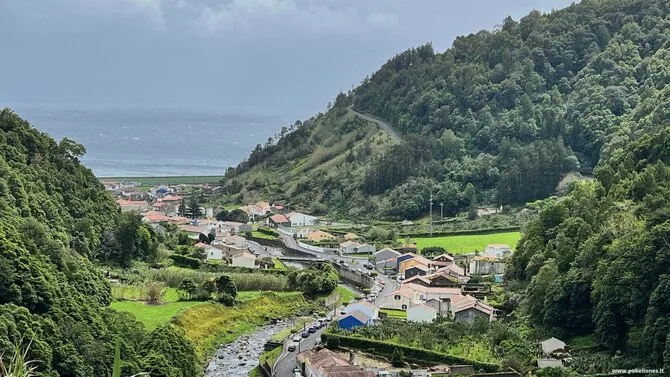
The route led through forests, small bridges, and narrow paths. It was quite a pleasant walk with many ups and downs, and again the trekking pole came in handy because some parts were quite slippery. The trail was quite wet after the rain, so we walked through mud for a good part of the route. And the waterfalls, of course, were charming. At one of them, you can even swim, but none of us wanted to.
The overall memory from this day – that muddy trail. Of course, there were beautiful views: forest, huge tree ferns, waterfalls. But there was much more trail than impressive views.
Day 8. Farewell to the Azores
The last day – not even a day, just a few morning hours, after which a flight to Lisbon awaited. I will spend a couple more days there.
The Azores left a feeling – it seems I spent a week in a place where everything happens slower, quieter, and somehow more real. There are no big cities, noisy resorts, but there are volcanoes, the Atlantic, hot springs, tea plantations, and such real, I would say, dramatic nature. As I write, a few weeks after the trip, I already notice that memories of muddy trails or rainy mornings are fading in my mind, and impressive natural views are becoming clearer.
Some tips for those preparing to visit the Azores:
- June, July – the most beautiful views, best weather, but also many tourists, difficult parking;
- all the most beautiful places can be seen simply by driving around the island by car, if you want to feel it better – you should walk;
- accept the changing weather, and when leaving in the morning be prepared for practically all seasons, no matter what the forecast says;
- the island is not large (length – 64 km, width 8−14 km), so it is most convenient to stay in one place and travel around the island, I would choose to stay somewhere near Ponta Delgada, in the middle;
- the roads are good, sometimes narrow or steep, hairpin bends can be a bit of a challenge for less experienced drivers.
More travel adventures can be found on the blog “After the Trip” and on this blog’s Instagram account.
Read more Warns tourists: huge fines in Spain, Italy, and Portugal for this mistake