

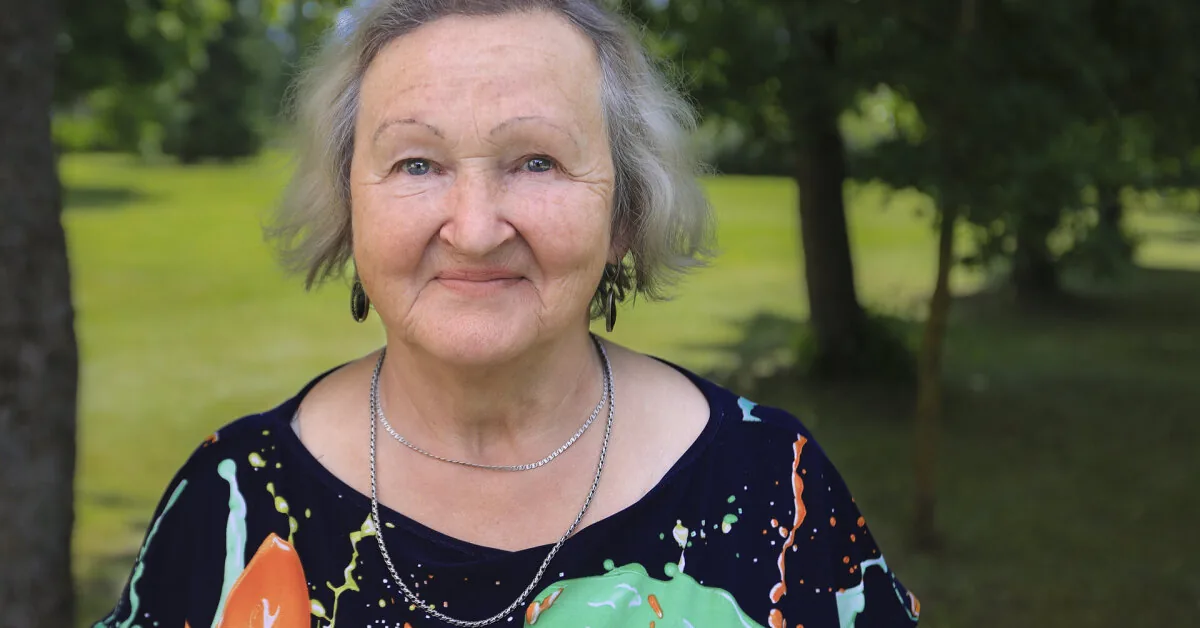
We meet with E. Dedelienė, who has been leading the community for nine years, at the former school, which now houses a kindergarten, library, and eldership. Next to it is the central part of the town – the cherry blossom park with a place for events. This is where the town’s anniversary program will take place.
Read more Swimming in the lake ended in fright for Ilona: «I could hardly hear anything with one ear»
We talked with the chairwoman of the Kurkliai community about the final preparations for the celebration, the cultural habits and needs of the town’s residents, cucumbers and cherry blossoms, why the Cultural Center is less popular than the funeral hall, and local landmarks.
– Elena, Kurkliai will soon celebrate its 500th anniversary, so I guess all the residents are now busy preparing for this celebration?
– Our town is very neat and beautiful, but of course, on the occasion of the anniversary, everyone is tidying up and beautifying even more. The festive program is already arranged, only details remain. We will start with a mass at the church, sung by the choir “Ave Verum” from St. Casimir’s Church in Vilnius. After the service, the festive program will take place in the cherry blossom park, with concerts by Edmundas Kučinskas, “Patruliai,” “Tautinis brandas,” and several village bands. So during those days, Kurkliai will not only be bustling but really lively.
We hope to welcome not only guests but also Kurkliai residents returning home for the celebrations. Many people live abroad, so, as I heard, many have already planned their vacations and will fly in specially with children or alone for the anniversary. We’ve been talking about it for a year, spreading the word, so people know and plan.
– On my way to you, I saw new information boards installed in the town.
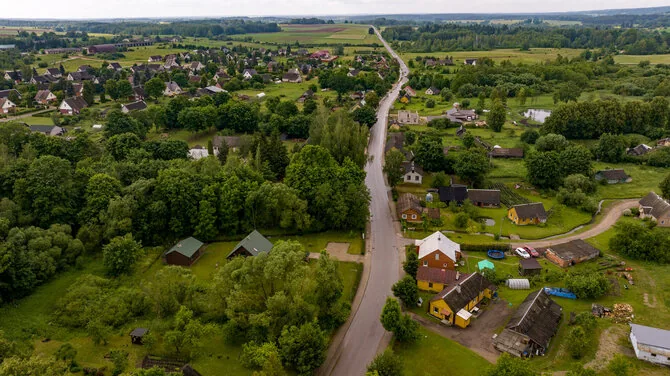
– Yes, this idea was born a few years ago by a historian who bought a homestead in our town. She collected historical material about Kurkliai, old photos, people’s memories, prepared informational stands, and donated them to the town. So now we have four stands presenting the history of Kurkliai, residents, important buildings, and events. Did you know that Kurkliai has long been the cucumber capital?
– I thought Kėdainiai was famous for that.
– No, it was Kurkliai at first. The land here is quite poor, so the local Jews taught the residents how to grow cucumbers. This trend then spread from us to Kėdainiai. I myself am from Kavarskas – seven kilometers from Kurkliai, but I often visited here as a child. Since then, I remember the spring gardens covered with cellophane film, and under them – cucumbers. You can’t imagine how everything looked here back then. People in the Soviet era made a living this way: walls rose, new districts, beautiful houses.
– Are cucumbers still popular in Kurkliai?
– Of course, how could Kurkliai be without cucumbers?.. My family has been eating fresh cucumbers for a long time. Of course, the first ones were grown in greenhouses, but there are also outdoor ones, everywhere…
– What else can Kurkliai boast about?
– We have a very good and large quarry. By the way, for the celebration, we received a beautiful stone from there as a gift, which will be unveiled in our cherry blossom park for the anniversary. A few words from the legend will be inscribed on it, and a frog sculpture will be placed – it is the symbol of our town.
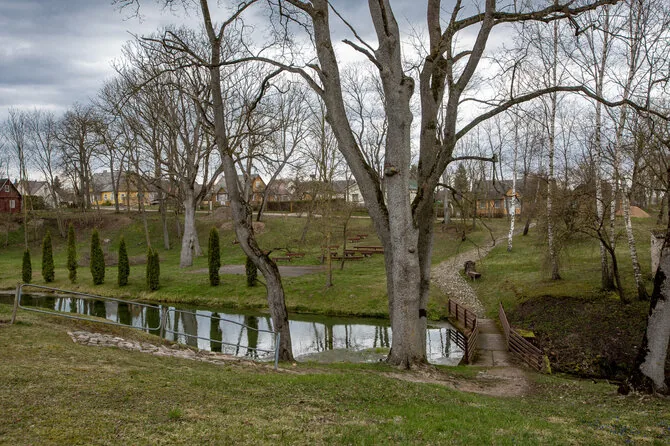
– How did it happen that a cherry blossom park was created in Kurkliai – just like in Vilnius, only not as big yet?
– It was due to connections with the Japanese. Our compatriot Steponas Kairys – a politician, public figure, and signatory of the Act of February 16 – maintained relations with the Japanese and wrote three books about this country. By the way, a book about S. Kairys himself was recently published in Japan.
The Japanese encouraged us to establish the cherry blossom park. We planted the first trees in spring 2022, and every year we planted new ones. Now we have 65 cherry trees – quite a lot.
In this park, we also have a gazebo, a children’s playground, and benches for events – we wrote various projects for all this.
– This year Kurkliai became one of Lithuania’s small cultural capitals – where does such creative ambition come from in a town with just over two hundred permanent residents?
– Of course, it is related to the town’s anniversary – such an occasion had to be marked somehow. The district municipality encouraged us to write the project and helped with the application. We are an active community, so maybe that’s why we receive support from the district.
We were delighted to receive the title of small cultural capital, but it also became worrying – after all, it is a commitment, concerns, work…
We were delighted to receive the title of small cultural capital, but it also became worrying – after all, it is a commitment, concerns, work… We work day and night now, sleepless – new ideas keep coming to mind. For example, during the celebration, it will be possible to buy ice cream and juices made from cucumbers in Kurkliai, people will be able to ride a limousine, etc. We have come up with all kinds of attractions.
– Is the entire anniversary program concentrated on one day, or do you celebrate throughout the year?
– We started the cultural capital program on February 16, commemorated March 11, celebrated Shrovetide, Mother’s and Father’s Days. So there are quite a few events. Later, we will hold the Feast of the Assumption, the Pakruojis community will come at the end of September, and we will have joint ensemble evenings.
– Do you have your own group in the community?
– Yes. We sing various repertoires. Our group has been active for more than a decade, and we call ourselves “We Are Still Young.” Six women and two men – all young pensioners (laughs). We are often invited to various celebrations and events. Last year, we performed at the Troškūnai nursing home, the Družai community, and of course, we often sing for our own people in Kurkliai.
– What does this small cultural capital title and the anniversary itself mean to the residents?
– It is a great uplift and joy for all of us to be noticed and appreciated. The anniversary encourages us to improve ourselves, as we expect many guests, so we want to welcome and see them off nicely. Most importantly, these events will show what we can do, what we have, and what we lack. Where and what we can do ourselves, and where we need others’ help. It will be an opportunity to look more closely at ourselves.
The anniversary encourages us to improve ourselves, as we expect many guests, so we want to welcome and see them off nicely.
Read more The US ambassador’s megayacht appeared in Venice: locals went crazy
We already see that people have improved themselves and are tidying their surroundings. Walk through the town, and you will see: it is hard to find an abandoned, untidy homestead. Even those where no one lives anymore are still maintained. For many years, we have been organizing a contest for the most beautiful homestead, appreciating the most well-kept and tidy ones. But people do it naturally and without any incentives.
– But attracting attention to a small town near popular traveler and tourist spots like Anykščiai is probably not an easy task?
– Anykščiai is nearby, but so are Ukmergė and Utena. So we are glad to live near a good road. Our biggest achievement is that a bus runs through us once a week from Anykščiai to Ukmergė. This is a great relief for people without their own cars. After all, errands constantly arise in both Anykščiai and Ukmergė.
And we certainly do not lack travelers’ attention, as many pass through Kurkliai on their way to Anykščiai, Puntukas, or the upside-down houses. During the warm season, from Friday afternoon to Sunday evening, our main street is full of cars. Sometimes it is even hard to cross – car after car. We are satisfied – some stop, look around, walk, and the vendors are happy about that too.
– But besides the store, is there anything in Kurkliai worth stopping for?
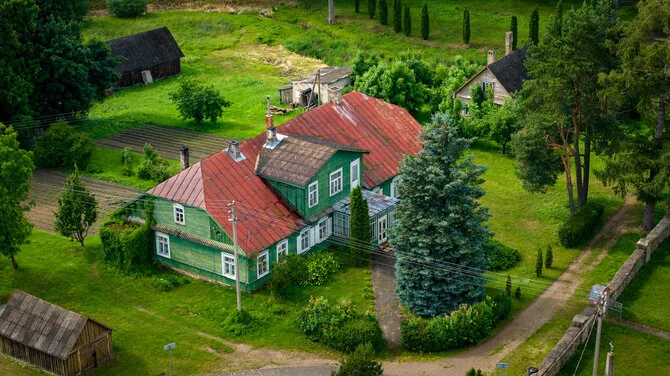
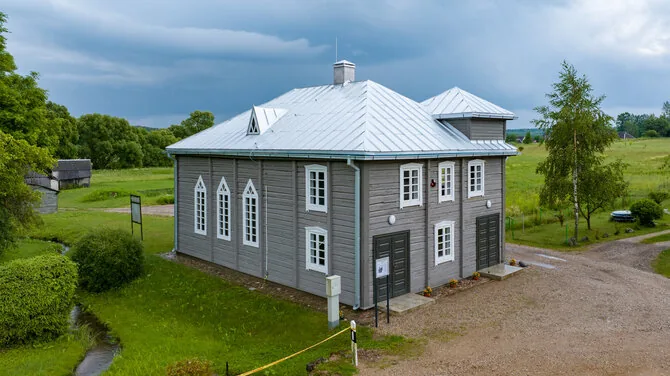
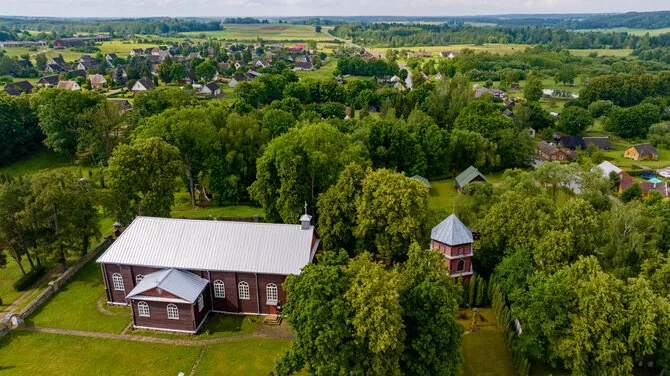
– Of course! We have a church, a beautiful and renovated synagogue where exhibitions are constantly held. There is also an educational homestead where llamas and fallow deer are raised; you can observe these animals and even stay overnight near them. Canoeing is also popular, as the Virinta river flows through us. Many tourists come for that.
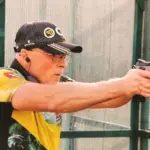
Nearby, we have a quite popular shooting range “Zala arms”: competitions and casual shooting take place here. Moreover, they manufacture ammunition and export it abroad. So they are one of the employers and sponsors of our events.
– The celebration is one thing, but what is everyday life like in Kurkliai?
– Everything is quite simple and everyday. Our people like to walk and take care of their surroundings – you can do that from morning till evening.
– And what about cultural life?
– Without the community, there would be nothing here. True, many events, meetings, exhibitions, and fairs take place in our library. Exhibitions are also opened in the synagogue.
We also have a beautifully renovated Cultural Center with a large hall, but it is not very active. Of course, events sometimes take place. And at the bottom of the Cultural Center, there is a very neat, beautiful, well-equipped funeral hall.
– Is it more popular than the Cultural Center?
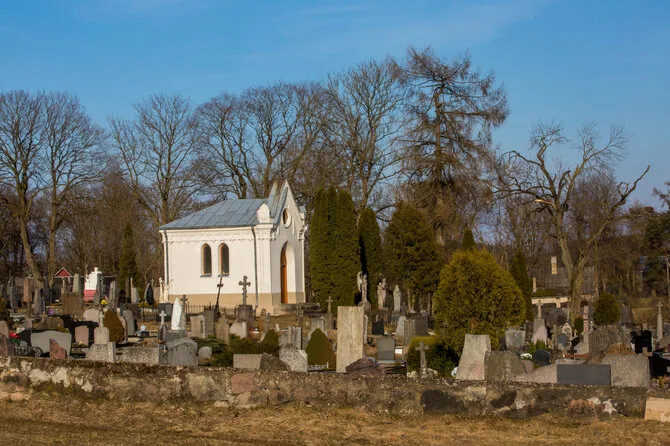
– To be honest, there is quite a lot of activity there. Not long ago, there were even four funerals in one week. Such is the sad reality of the town – most people are elderly, so they gradually pass away. It is no coincidence that we have two cemeteries…
– Back to cultural events. For example, does cinema reach Kurkliai?
– It used to be brought and shown in the old Cultural Center hall, but that was a long time ago. Of course, various performers come – ensembles, village bands, youth groups. They tour from one Cultural Center to another – so some entertainment reaches us. But honestly, it is too little; there should be much more.
– Do people willingly attend events?
– Not really. We have to keep encouraging, inviting, and even calling specifically. When we organize community events, we sometimes prepare invitations. Our group is inventive – we come up with all sorts of things. Sometimes we just have gatherings with treats – any occasion to get together, socialize, and talk. That is also a cultural event.
There is another problem with events: various performers contact the Cultural Center offering to come and perform but immediately say – we will come if you gather a certain number of people, otherwise, we won’t. And where to gather those people when most of us are pensioners? That’s why more popular groups bypass us.
Sometimes, of course, people organize themselves, and then events happen. But that is very rare. More often, we do it ourselves. Or we go to Anykščiai – many things happen there: in the Cultural Center, art center, library, and elsewhere. So if there is a desire, we organize trips together. If you miss an event, you soon hear – why don’t we go… So the need is definitely there.
– Do you have youth?
– Very few. Mostly pensioners and working people live in the town. But when youth are needed for events, sometimes we manage to invite them. Of course, you have to communicate with them personally, invite, and interest them.
There is no longer a school in Kurkliai, so students go either to Kavarskas or Anykščiai. Some parents even take their children to kindergarten in Anykščiai. And that is understandable – there are clubs and many more activities in the city.
– What do you think will remain in Kurkliai after the anniversary and the cultural capital year end?
– It definitely won’t be the end. We will live as we have lived. However, there may be an incentive to do something new and unexpected. After all, connections between people will not break off when the year ends. Life will not end with the cultural capital program.
– Do you still have many untapped opportunities and potential?
– We do too little with children. We have youth who dance social dances in Anykščiai. I think it would be nice to organize their performance for the local residents.
I am about to finish my work as the community chairwoman, but I won’t go far – I will still remain part of this community. So, I believe, we will come up with many more ideas.
In 2026, the Media Support Fund allocated 25 thousand euros in partial funding for the project “The Invisible Side of Culture.”
Read more 3 Lithuanian stones that will make you gasp: one of them weighs more than 500 tons