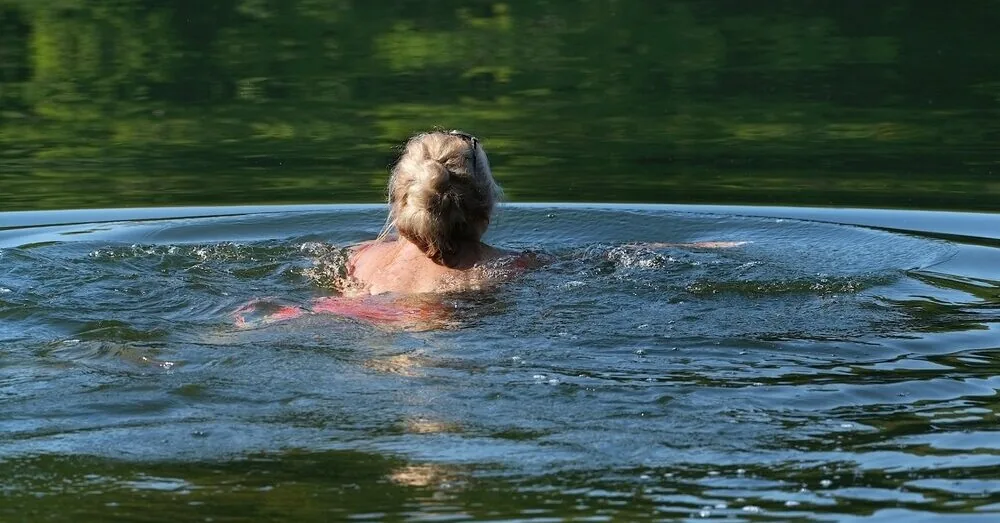
Ilona told that one day in June she swam in the lake for a longer time. But when she got out onto the shore, she suddenly felt that one ear was strongly blocked.
Read more The US ambassador’s megayacht appeared in Venice: locals went crazy
“At first I hoped that the water that got into the ear would soon drain out, but I could practically hear nothing with one ear. Later it started to hurt. Of course, I immediately went to the doctor. It took more than a day for my hearing to fully recover, but it scared me a lot. I didn’t think this could happen after swimming,” the middle-aged woman told 15min.
Earwax in the ear can swell
According to Dr. A. Kuzminienė, associate professor at the Lithuanian University of Health Sciences, water sometimes simply remains trapped in the external ear canal after swimming.
“This happens more often to people whose ear canal is narrower or has accumulated earwax. Earwax can swell and partially or fully block the canal. While the water does not drain, it acts as an obstacle to sound transmission, so it may seem that the ear is blocked or hearing is worse,” the otorhinolaryngologist explains the reasons.

Most often, such hearing impairment is not dangerous. Once the water drains, hearing usually recovers quickly.
However, it does not always end with just a temporary blockage. Water that remains in the ear for a longer time can create favorable conditions for inflammation to develop.
“A moist environment creates favorable conditions for bacteria and fungi to multiply, so the so-called swimmer’s ear – inflammation of the external ear – can develop. Chronic skin diseases of the ear, such as eczema, may flare up or worsen due to water exposure. If the patient’s eardrum was perforated before water entered, the water can cause acute middle ear inflammation, suppuration, pain, and other signs typical of inflammation,” the doctor warns about possible complications.
Safe ways to remove water
If you feel ear blockage, it is first worth waiting a bit, as water usually drains out on its own. If the problem persists, you can tilt your head towards the blocked ear, open your mouth wide several times, gently pull the ear lobe, or lie down on that side for a few minutes.
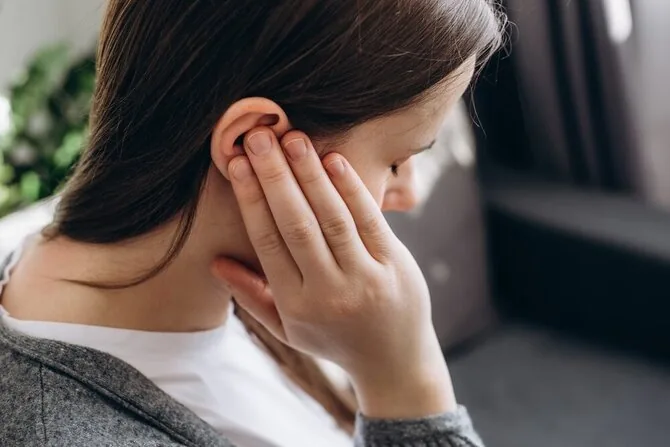
According to Dr. A. Kuzminienė, yawning can help because the jaw joint is near the ear canal.
“If the water does not drain this way, you can use a hairdryer and, from about 30 cm away from the ear, gently evaporate it with a mild, i.e., medium temperature airflow,” the otorhinolaryngologist recommends another method.
Read more 3 Lithuanian stones that will make you gasp: one of them weighs more than 500 tons
Trying to remove water with a cotton swab, hairpin, or other object will not help. The doctor warns – this can only push earwax deeper or damage the ear canal.
Signs that should not be ignored
If the blockage passes within a few hours and the ear does not hurt, there is usually no need to worry. However, if hearing does not recover within 24 hours, it is recommended to consult a doctor and find out the cause.
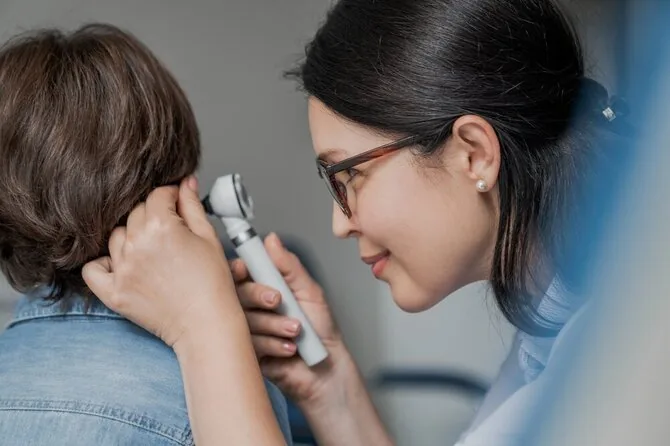
You should not delay either if the ear remains blocked for more than a day or two, severe or increasing pain appears, itching, discharge, fever, or hearing continues to worsen.
Alcohol or various home remedies can irritate the ear and harm it, especially if the eardrum is damaged.
During the examination, the doctor assesses whether there is an earwax plug, inflammation, or other problems in the ear canal. If necessary, the ear is safely cleaned, and if inflammation is detected, treatment is prescribed.
“You should not experiment on your own. Not all ear drops are suitable for every case, and alcohol or various home remedies can irritate or even harm the ear, especially if the eardrum is damaged,” Dr. A. Kuzminienė points out.
If after swimming the ear is only blocked but does not hurt and there is no discharge, it is usually enough to let the water drain naturally.
What to do to prevent this from happening again?
For people who often have water trapped in their ears, the otorhinolaryngologist recommends using special earplugs while swimming. After getting out of the water, the ears should be dried with a towel, but water should be allowed to drain on its own.
Another important thing the doctor advises to pay attention to is not to clean ears too zealously with cotton swabs. “Earwax is not dirt. It naturally protects the ear from moisture and infections. Therefore, frequent cleaning can sometimes do more harm than good,” emphasizes the otorhinolaryngologist.