









Interpreted Differently
A netizen shared WHO forecasts on her Facebook account but mistakenly linked them to vaccines.
“The World Health Organization warns that by 2050, the number of cancer cases will nearly double – from about 20 million new cases per year now to almost 35 million.
In many countries, about one in three people (and in some places – nearly one in two men) have cancer, and these numbers are rapidly increasing.
While an aging population and lifestyle factors play an important role, many ask the complex question: how much of this surge is related to the mass introduction of mRNA and other vaccines in recent years?
There are increasing reports of turbo cancer cases and aggressive cases in younger people,” she said.
Although the woman did not specifically state that she was talking about COVID-19 vaccines, the mention of mRNA (which is actually written this way in English, Lithuanian iRNR) technology clearly indicates that these are the ones meant.
The WHO report, which the netizen is most likely referring to, contains no assumptions that the rising number of cancer cases is related to vaccines introduced in recent years. On the contrary, vaccination generally may help prevent certain types of cancer, and COVID-19 vaccines prevent disease complications.
“Turbo Cancer”
First of all, there is no such term as “turbo cancer” in medicine – it is a concept invented by conspiracy theorists and vaccine opponents. The myth that mRNA and other COVID-19 vaccines cause rapid cancer is quite popular in Lithuania as well.
One of the originators and spreaders of this myth is family doctor Charles Hoffe, who became popular during the pandemic and was considered by the College of Physicians and Surgeons of Canada for spreading false information about COVID-19 measures and vaccines.
In 2022, the British Columbia College of Physicians and Surgeons issued a statement saying that family doctor Ch. Hoffe from Lytton was sanctioned for “posting statements on social media and other digital platforms that were misleading, incorrect, and directed against vaccines, treatments, and public measures related to COVID-19.”
His invented term “turbo cancer” was so popular with netizens that it soon spread worldwide.
Although the mystical “turbo cancer” does not exist, scientists agree that the pandemic likely influenced the development and diagnosis of oncological diseases. This may explain the observed increase in cancer cases, which conspiracy theorists manipulate.
Also read: What is the “turbo cancer” that conspiracy theorists talk about?
WHO Warning
The organization recently indeed urged urgent action as it forecasts that by 2050, the number of new cancer cases will nearly double.
According to its report, this disease claims more than 26,000 lives daily, with about 20.6 million new cases and nearly 10 million deaths registered annually. Cancer remains the second leading cause of death worldwide after cardiovascular diseases.
As of 2024, the highest number of cases (50.7%) and deaths (56.5%) from cancer were recorded in Asia, as it is home to the largest share of the world’s population. The situation in Europe is disproportionate: although it has only about 9% of the world’s population, it accounts for 21% of all cases and 20% of deaths. In many African countries and parts of Asia, cancer is less common, but disproportionately many people die from it.
Lung cancer remains the leading cause of cancer death worldwide. Lung, prostate, and colorectal cancers are among the most common types in men, while breast, lung, and colorectal cancers are most common in women.
WHO made similar forecasts in 2024, predicting that by 2050, more than 35 million new cancer cases would be registered – 77% more than in 2022.
The American Cancer Society also predicted that in 2025, more than 2 million new cancer cases would be diagnosed in the US alone.
Risk Factors
A risk factor is anything that can increase the likelihood that a person will develop a certain disease.
Read more «Disabled» another 13 Russian ships: «Each will become blind and deaf»
WHO emphasizes that tobacco, alcohol, unhealthy diet, lack of physical activity, and air pollution are risk factors for cancer and other non-communicable diseases. The 2024 report highlights that cases are increasing due to an aging population and growing population size.
WHO’s latest report states that nearly four out of ten cancer cases could be prevented by controlling factors such as infections (HPV, hepatitis B and C, Helicobacter pylori), overweight, and insufficient physical activity.
“The nature of cancer is changing – it is increasingly influenced by rising levels of obesity, physical inactivity, unhealthy diet, and air pollution,” said Dr. Elisabete Weiderpass, director of WHO’s International Agency for Research on Cancer (IARC).
As noted by Stanford University School of Medicine, there is no single cause of cancer. Scientists believe cancer is caused by the interaction of many factors. These factors can be genetic, environmental, or related to the individual’s own body characteristics.
The Centers for Disease Control and Prevention CDC also lists key risk factors such as alcohol, family health history, human papillomavirus, obesity, and tobacco.
In 2023, foreign scientists discovered that the number of people under 50 diagnosed with cancer has increased worldwide. It is worth noting that this study analyzed data collected before the pandemic began, so the increase cannot be linked to COVID-19 vaccines.
An international research team indicated that the main risk factors causing cancer in this age group are poor diet, smoking, and alcohol.
Vaccines and Cancer
The latest WHO report notes that cancer cases related to infections are decreasing precisely because of increasing vaccination coverage, better sanitation, and hygiene. Thus, contrary to misinformation spreaders’ claims, certain vaccines contribute to reducing cancer cases.
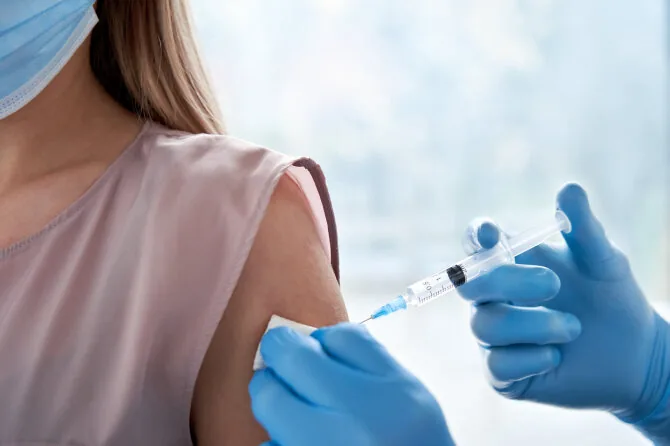
Meanwhile, doctors and scientists unanimously agree that coronavirus vaccines are safe and deny any links to cancer.
A relatively recent published analysis based on medical record data shows that people treated for certain types of cancer lived longer if they were vaccinated against COVID-19, compared to those who were not vaccinated.
COVID-19 vaccines were tested in large-scale clinical trials that helped identify the most common side effects but showed no connection between vaccines and cancer.
Later, safety monitoring systems recorded additional side effects when vaccines became widely available. Although few cancer patients participated in initial COVID-19 vaccine trials, scientists later studied safety in this group as well.
The global vaccine data network called the links a myth and assured that there is no biological mechanism by which these vaccines could cause cancer, as they do not contain live viruses.
The Fox Chase Cancer Center research institute found that COVID-19 vaccines are as safe for people with cancer as for those without.
The US National Cancer Institute also confirmed that there is no evidence that vaccines cause cancer or promote its recurrence or progression.
Data show that people with cancer are at high risk of severe COVID-19 complications. It has been proven that vaccines reduce the risk of hospitalization and death from the virus in people with cancer.
CDC also recommends COVID-19 vaccination for cancer patients and that people with moderately or severely weakened immune systems receive additional vaccine doses.
15min verdict: lacks context. WHO indeed forecasts an increase in cancer cases by 2050, but this is linked to an aging society and lifestyle factors, not vaccines. Scientific data show that vaccines are safe and recommended for cancer patients.
Publication prepared by 15min in cooperation with Meta, aiming to stop the spread of misleading news on social media. More about the program and its rules – here.
Read more Smoggy stormy weather: strong winds and heavy rains will rage in parts of Lithuania