According to officials, this is the fastest spreading outbreak in history.
Meanwhile, medical workers at Bunia Hospital declared a strike on Wednesday and became another group to leave their workplaces at the outbreak epicenter due to issues related to salaries. Healthcare professionals and other frontline workers fighting the virus barricaded themselves at the hospital entrance, complaining that they received no compensation despite working under difficult conditions.
According to the Ministry of Health of the DR Congo, a total of 753 patients remain isolated or hospitalized, while 366 have recovered. Contact tracing remains a challenge, as coverage of persons who had contact still reaches only 67 percent.
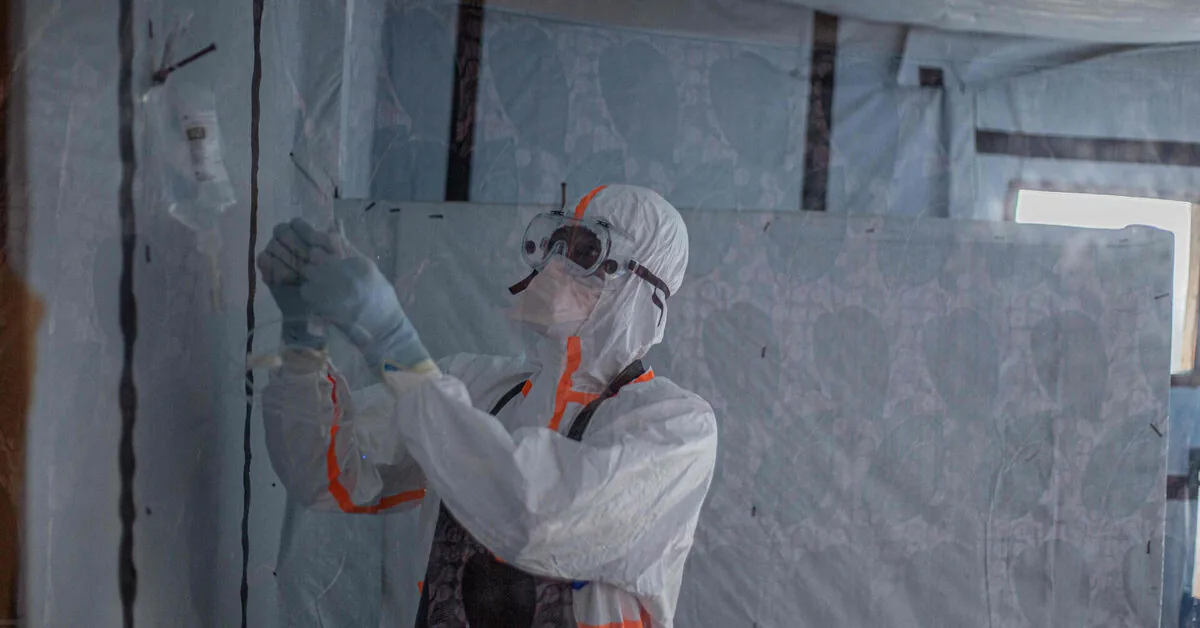
This Central African state has been fighting an Ebola outbreak caused by a rare Bundibugyo virus variant since May 15.
Two months after the outbreak began, it continues to spread faster than health officials can track, even as they expand their response. The World Health Organization (WHO) reported on Tuesday that at least 80 percent of new cases are linked to unknown transmission chains.
The main challenge is that health officials have not yet identified the outbreak’s “zero” patient, and due to armed conflicts and mining-related population movements, it is difficult to trace thousands of people who had contact with infected individuals.
Read more Special concert in Vilnius: famous Sylvain Cambreling and Eldbjørg Hemsing will perform on one stage
Many of the newly registered deaths are related to people who died in their communities without reaching healthcare facilities or receiving assistance, said WHO emergency health situations head Dr. Chikwe Ihekweazu on Tuesday, returning from Ituri in Bunia – the province most affected by the outbreak.
Medical workers are striking in various parts of Ituri. Some told The Associated Press that they have not received any pay since the start of the outbreak.
Efforts to combat the outbreak are also hampered by the lack of approved vaccines or treatments for the Bundibugyo virus, unlike the more common Zaire virus variant – for which a vaccine has been developed. The Zaire variant caused most of the last 16 disease outbreaks in DR Congo.
Registration recently began in Ituri for a highly anticipated study on two possible Ebola treatments.