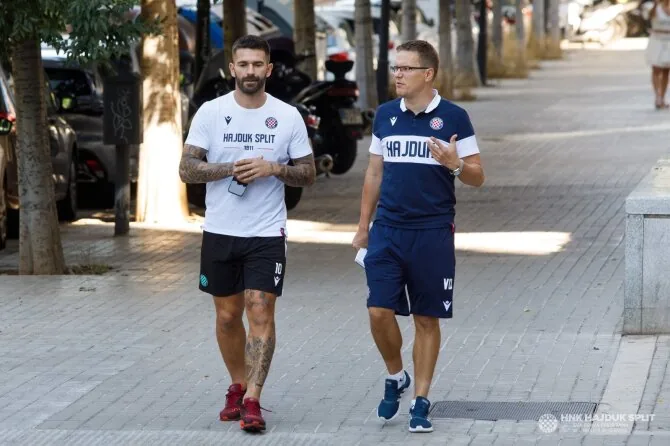
“Hajduk” was officially founded in 1911. The idea of the club came from four students from Split who were studying in Prague at the time and were fascinated by Czech football.
For a long time, the club became a symbol of resistance against the occupiers. The word “hajduk” in this region is associated with a freedom fighter (against the Ottoman Empire). The full club name – “Hrvatski Nogometni klub Hajduk Split” – contains the words “Croatian football club,” and the club’s logo features the red and white checkered motif of the Croatian coat of arms.
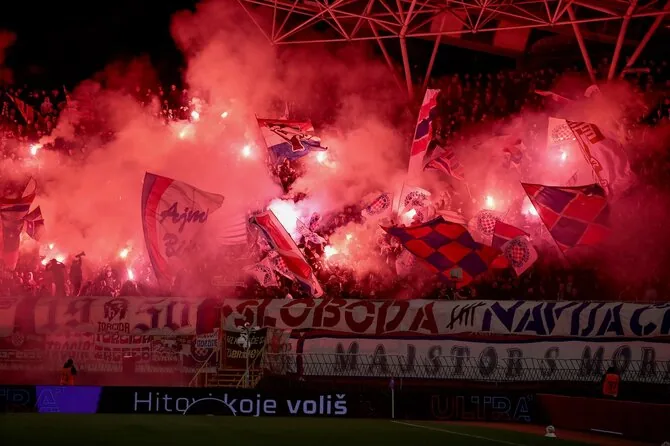
The “Hajduk” supporters’ group “Torcida” was founded in October 1950 and is considered one of the oldest organized football fan groups in Europe. Its name and first support traditions were inspired by the Brazilian fans who became famous at the 1950 World Cup.
The club’s significance to the city is also shown by the number of members – in 2026 it again exceeded 100,000. Therefore, “Hajduk” in Split is valued not only as a football team but also as an important part of the identity of the city and the entire Dalmatia region.
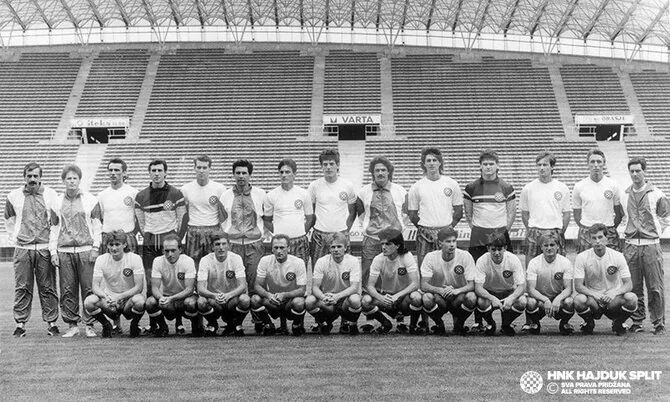
During Yugoslav times, “Hajduk” was among the big four – along with their main rival Zagreb’s “Dinamo” and the Belgrade giants “Partizan” and “Crvena zvezda.” The Split team was third in terms of championship titles won (7) and second in cup tournaments won (9) during that period. Counting two interwar titles, “Hajduk” became Yugoslav champion nine times.
In the 1970s and 1980s, the Split team was seen among the strongest European clubs.
“Hajduk” reached the European Champions Cup or Champions League quarterfinals three times – in 1976, 1980, and 1995. In 1973, the team played in the Cup Winners’ Cup semifinals, and in 1984 – in the UEFA Cup semifinals.
New times
In the independent Croatian championship, “Hajduk” won 3 of the first 4 titles but later ceded the leader position to Zagreb’s “Dinamo.” In total, “Hajduk” became Croatian champion 6 times and won the national cup 8 times.
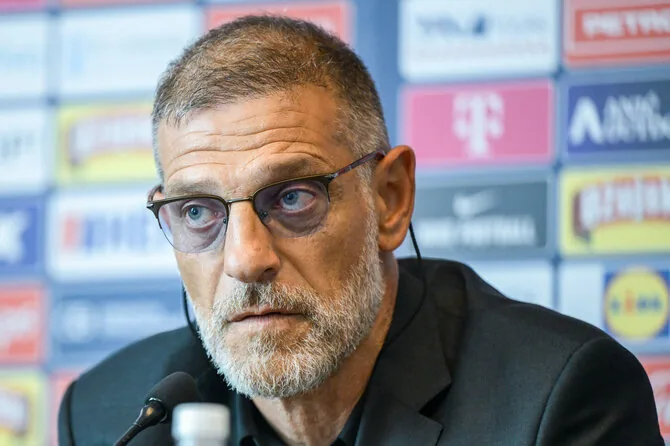
Previous generations of “Hajduk” were made famous by Robert Jarni, Alen Bokšić, Aljoša Asanović, Slaven Bilić, and Igor Štimac – footballers who later played in major European clubs, almost all of whom were part of the Croatian national team that won bronze at the 1998 World Cup.
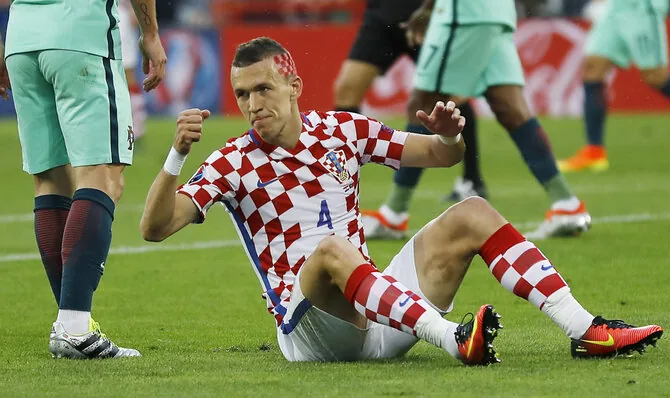
Later, stars of the Croatian national team such as Darijo Srna, Ivan Perišić, Danijel Subašić, Nikola Kalinić, Mario Pašalić, and Nikola Vlašić represented the “Hajduk” name.
However, with the best talents leaving abroad, the Croatian championship title has become like a mirage for “Hajduk” fans over the past two decades – it has not been won since 2005.
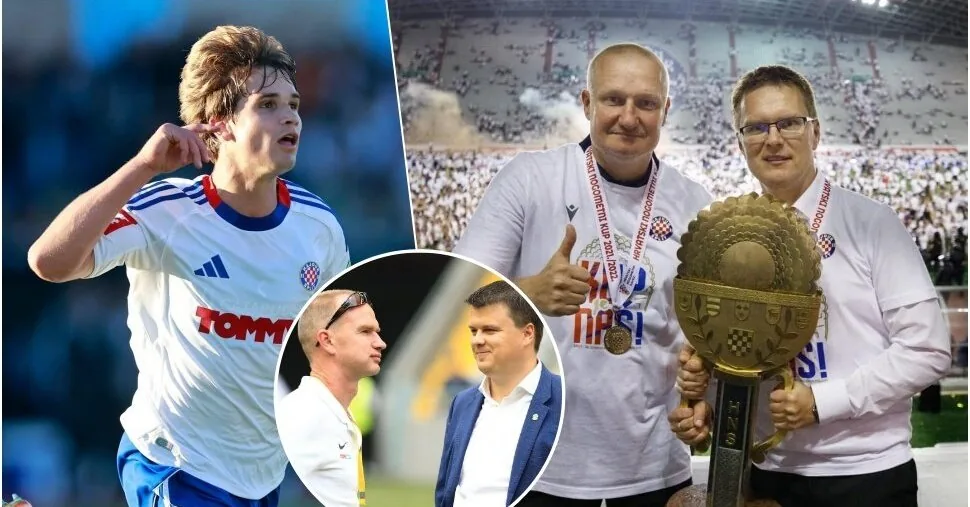
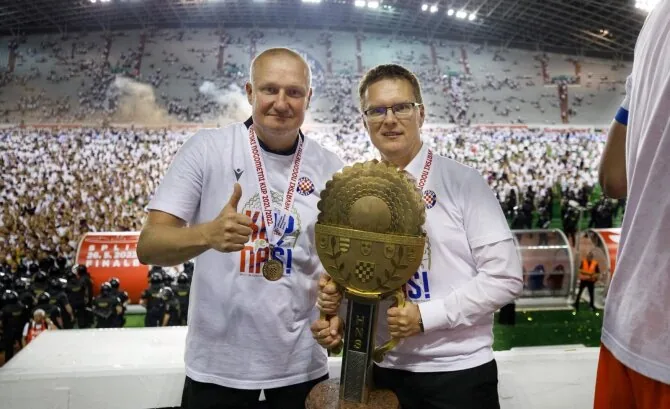
The last two club trophies are the Croatian Cups won in 2022 and 2023. The first of these two trophies was helped to be won by a Lithuanian duo – sports director Mindaugas Nikoličius and coach Valdas Dambrauskas.
“Hajduk” has also not been very successful recently in European tournaments. The last time the Split club participated in the main UEFA tournament stage was in the 2010–2011 Europa League. Since then, “Hajduk” has reached the last qualifying hurdle several times but has not returned to the main UEFA tournament stage.
One friendly match
“Žalgiris” and “Hajduk” have met once in a friendly match, but only the participants saw it. In June 2016, in the Slovenian town of Slovenske Konjice, the closed match was won by the Split team 2:1. Andrija Kaludjerović scored for Žalgiris at that time.
The “Žalgiris” and “Hajduk” pair will be the first official match between these clubs and the first meeting of the Split team with a Lithuanian club in UEFA tournaments. Until now, Lithuanian and Croatian clubs have met only twice in Europe – both times Lithuanian teams had to play against Zagreb’s “Dinamo.”
In the 2006 UEFA Champions League second qualifying round, Panevėžys “Ekranas” lost 9:3 on aggregate to “Dinamo.” In the 2014 Champions League second qualifying round, “Žalgiris” faced Zagreb’s “Dinamo.” Žalgiris lost 0:2 both in Zagreb and Vilnius and was eliminated with an aggregate score of 0:4.
Another encounter against “Dinamo” awaits Lithuanian representatives soon – on August 4 and 11, “Kauno Žalgiris” will play against “Dinamo” in the Champions League qualifiers.
Numerous Lithuanian connections
“Žalgiris” and “Hajduk” are connected by at least several current and former people.
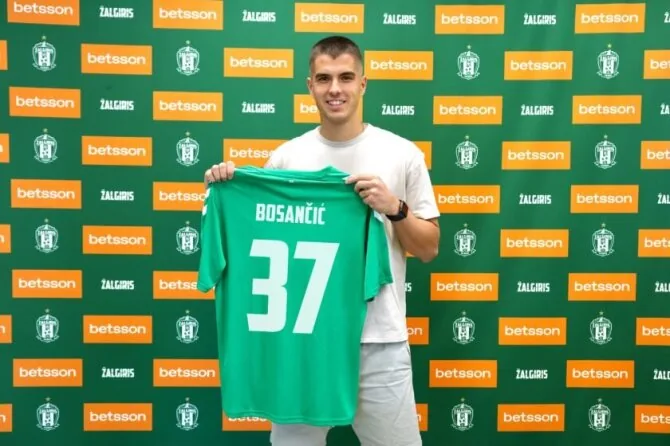
Two Žalgiris players started their careers in “Hajduk.” Defender Petar Bosančić was born in Split and spent several years in the “Hajduk” academy.
At 16, midfielder Marko Capan joined the “Hajduk” academy. In 2023, as captain, he led the Split youth team to the UEFA Youth League final and later played little in the main team. M. Capan moved to Vilnius precisely from “Hajduk.”
A significant career moment at “Hajduk” was had by former Žalgiris coach Valdas Dambrauskas. The Lithuanian coach took over the Split team in November 2021 and won the Croatian Cup and finished second in the championship in the 2021–2022 season.
He worked at the club together with former “Žalgiris” sports director Mindaugas Nikoličius. In January 2021, M. Nikoličius became “Hajduk” sports director and held this position for three and a half years – until May 2024.
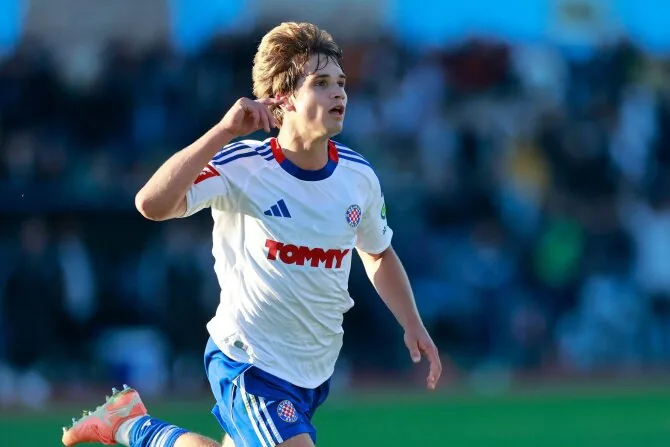
During the period of work of these two Lithuanians, Rokas Pukštas debuted in the main “Hajduk” team. The 21-year-old midfielder was born in the USA in a family of Lithuanian athletes. The footballer holds both US and Lithuanian passports but has so far represented the youth teams of his native country.
Coaching changes
High expectations and a lack of trophies did not allow “Hajduk” to have stability – in the past 10 years, 18 different coaches have led the Split club.
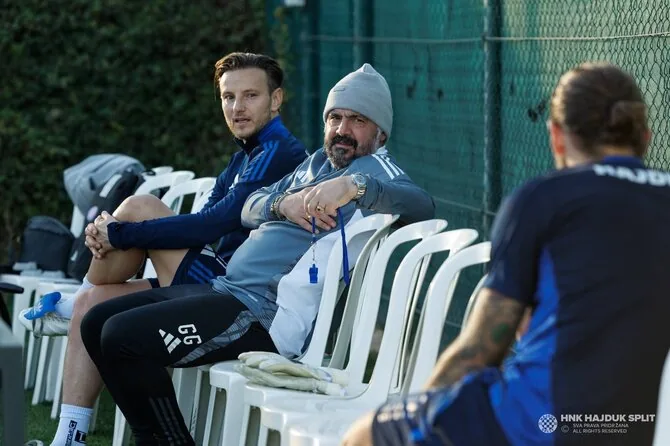
In the 2024-2025 season, the team was coached by Italian football legend Gennaro Gattuso, but he continued the trend – he lasted no more than one season.
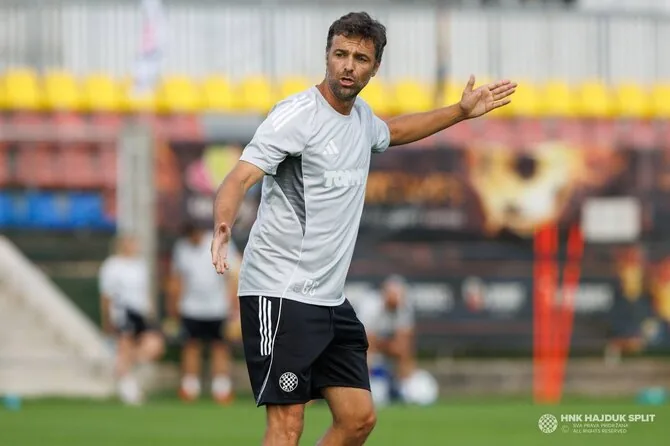
The current team coach, 42-year-old Gonzalo Garcia, who is working with “Hajduk” for the second consecutive season, is trying to change this trend. Born in Uruguay and raised in Spain, the player started his career in the Real Madrid system and later mostly played in the Netherlands.
As a coach, G. García previously worked in clubs in Denmark, the Netherlands, and Portugal, and in Croatia, he started with the modest Pula “Istra” team.
Young squad
The most important figure on the “Hajduk” team on the field is 32-year-old forward Marko Livaja. The Croatian, who has experience in the Italian (Milan “Inter,” Bergamo “Atalanta”), Spanish (“Las Palmas”), and Greek (Athens AEK) championships, returned to Split in 2021.
Since then, he has played more than 200 matches for “Hajduk,” scored over 100 goals, and become one of the most important symbols of the current team. With the Croatian national team, M. Livaja won bronze medals at the 2022 World Cup. Last season, the forward scored 9 goals and made 6 assists in the Croatian league.
He is one of the few team players over 30 years old. The average age of the starting lineups in the last 5 official matches for the “Hajduk” team was 24 years.
The team’s top scorer was Michele Šego, who came from the “Hajduk” academy. The 25-year-old player scored 13 goals and made 5 assists. This season, he has already scored in Europa League matches against “Pafos.”
R. Pukštas also plays an important role in the team; last season, he scored 9 goals in the Croatian championship and started the new season with a precise shot against “Varaždin.”
The team also has a Canadian national team player who played in the World Cup – 22-year-old Niko Sigur. He appeared in matches against Qatar and South Africa and started the round of 16 match against Morocco in the Canadian national team’s starting lineup.
In the summer, the Split team’s defense was strengthened by players who played last season in the Swiss, Dutch, French championships, and the second Spanish league. One of the most notable newcomers is Croatian youth national team midfielder Marin Šotiček, loaned from “Basel.”
Unsuccessful new start
In the 2025–2026 Croatian championship, the “Hajduk” team finished second but was 18 points behind champion Zagreb’s “Dinamo.” The previous season’s performance in Europe was also unsuccessful – in the second Conference League round, they lost after extra time to Tirana’s “Dinamo City.”
This year’s European season started for “Hajduk” in the Europa League qualifiers. In the first round, the Croats won 2:0 at home against “Žilina,” lost 1:2 away, and advanced to the next round with an aggregate score of 3:2.
In the second round, the Split team won 2:0 at home against the familiar “Pafos” to Žalgiris. However, they failed to maintain the lead in Cyprus. “Hajduk” conceded the second goal during added time, and in extra time, two more, losing 0:4. With an aggregate score of 2:4, the team was eliminated from the Europa League and entered the Conference League.
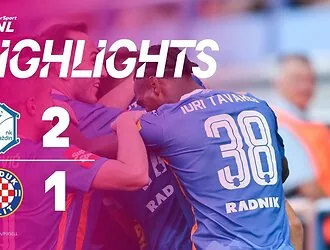
Over the weekend, “Hajduk” also started the Croatian championship with a defeat – losing 1:2 away to “Varaždin.” R. Pukštas equalized in the second half, and Marko Livaja missed a penalty at the end of the match.
VIDEO: VARAŽDIN vs HAJDUK 2:1 (Round 1, SuperSportHNL 26/27)
VARAŽDIN vs HAJDUK 2:1 (Round 1, SuperSportHNL 26/27)
Understand instantly
5 minutes and that’s it – Vilnius “Žalgiris” fans sold out tickets
From “Žalgiris” to Milan “Inter” – Lithuanian talent joined the Italian giant’s system
The first “Žalgiris” and Split “Hajduk” match will take place on August 6 from 8 p.m. at FK “Žalgiris” home stadium in Vilnius. Tickets for this match are sold out, and the match will be broadcast live on TV3 television.