This is especially relevant when choosing a higher-class SUV, which often becomes the only car at home. Such a model must be maneuverable in a tight yard, quietly glide on the highway, and fit holiday luggage. One impressive WLTP figure does not show all of this.
Range – just the beginning
According to the European Automobile Manufacturers Association (ACEA), in the first half of 2026, electric cars accounted for 20.7% of all new car registrations in the European Union. When more than one in five new cars is electric, buyers no longer make concessions just because of the electric drive. It simply has to be a good car.
Therefore, range today is just the start of the conversation. If the car is charged at home every night, it is more important daily whether it is convenient to seat children and if there is enough space for shopping. Fast charging power is significant on trips, but even then the driver cares not about the highest kilowatt number, but how many kilometers the car can additionally travel after one stop.
The WLTP figure is also worth evaluating as a comparison tool rather than a guarantee. In winter, driving on the highway, or choosing larger rims, the range will be lower. Before ordering a car, it is useful to check the data of the specific chosen version and honestly assess where it will be charged on a typical workday.
The name “GLC” obliges
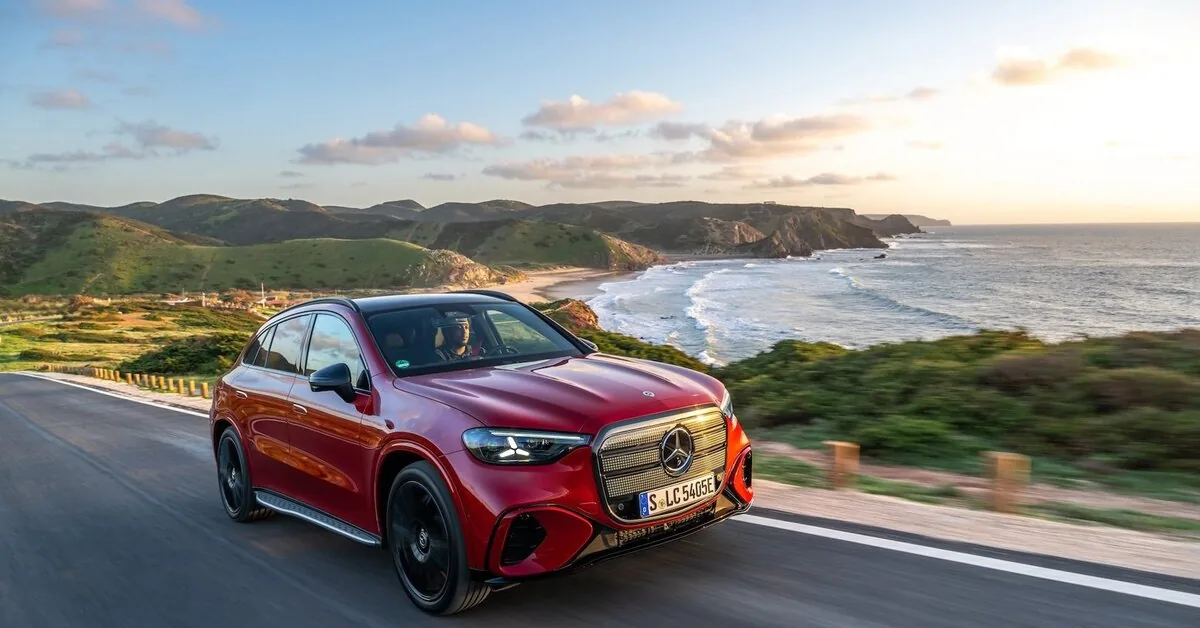
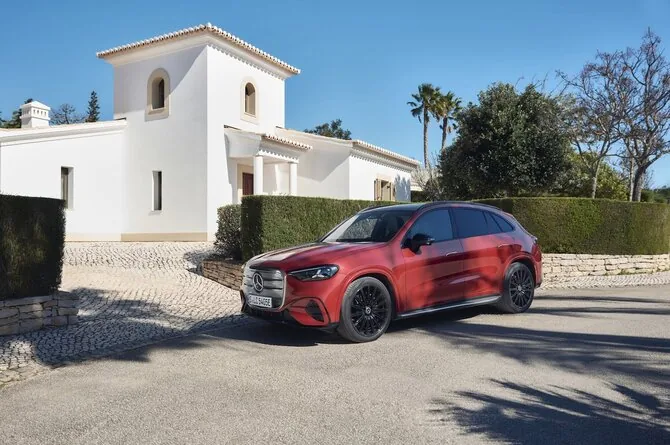
In this context, the important decision by Mercedes-Benz to give the electric model the “GLC” name. In 2024, the GLC was the best-selling family of models from the manufacturer worldwide, so the electric GLC cannot be just a technical experiment for a small group of enthusiasts. It must perform the same functions for which buyers chose the petrol, diesel, or plug-in hybrid version.
The well-known name helps the new model to be noticed but also creates very specific expectations. Ford experienced this twice: the four-door electric SUV Mustang Mach-E sparked debates not about the car’s qualities but about whether it suits the sports model name.


A similar reaction accompanied the electric Capri – a family SUV that took over the sporty coupe name. In both cases, the name became an additional burden: the car was evaluated not only by what it offers but also by what it is not.


It is no coincidence that some German manufacturers transfer familiar names to the electric era more cautiously. BMW uses “iX3” alongside “X3,” and Audi placed the electric “Q6 e-tron” next to the regular “Q5.” Mercedes-Benz chose a more straightforward path: it kept “GLC” as the main name for the electric model, so it carries the entire reputation of this name and the obligation to be not a niche electric car but a full-fledged family SUV.
The purpose of the new model is the same as the regular Mercedes-Benz GLC, but its technical base is created for electric drive. The 800-volt system at a suitable fast-charging station can replenish the battery with enough energy in ten minutes to travel about 300 km. On a long trip, stops can be planned according to passengers’ needs rather than the car’s.
Fast charging is just one of the conditions for a smooth trip. A family car also needs a comfortable rear seat, an easily accessible trunk, and a suspension that does not tire after several hours on the road. In these areas, technical features become everyday advantages.
The biggest advantage fits in the trunk
The electric Mercedes-Benz GLC’s trunk holds 570 liters, and under the front hood, there is an additional 128-liter storage compartment. The total capacity is 698 liters, while the new BMW iX3 offers 578 liters, and the Audi Q6 e-tron 590 liters. This is the first clear Mercedes-Benz advantage that a family will notice even before leaving the yard.
Read more LTOU revenue in the first half of the year grew to 37 million euros, EBITDA – to 12 million euros
The 128-liter front storage compartment is not just a nice number. It can hold charging cables, dirty shoes, or small travel items, and you don’t need to unload the main trunk to access them. When the car is full of people and things, such separation quickly becomes more useful than another screen function.
The second advantage becomes apparent when planning a trip with a camper or boat. The GLC 400 4MATIC can tow a braked trailer up to 2.4 tons, while the BMW iX3 50 xDrive limit is 2 tons. In this case, the 400 kg difference is not just theoretical – it can determine what trailer is allowed to be towed.
In terms of towing capacity, the GLC also has an equal competitor. The all-wheel-drive Audi Q6 e-tron quattro can also tow up to 2.4 tons. Towing a trailer will reduce the range in any case, so it is worth planning shorter stretches between charging stations before a longer trip.
Comfort is tested by bad asphalt
It is easy to compare luggage liters and towing kilograms, but the value of a higher-class car is often revealed by harder-to-measure qualities. After two hours on the road, it matters whether the seat is tiring, whether you can talk in the cabin without raising your voice, and how the suspension absorbs asphalt irregularities.
The electric GLC offers the “AIRMATIC” air suspension known from the S-Class, which can adapt in advance to the road profile. Levers, buttons, and rotary controls have also returned to the steering wheel. In the dark, on a rough road, or wearing gloves, a physical control is often more convenient than a function hidden in several screen menus.
Compared to the current internal combustion engine GLC, the new model’s wheelbase is 84 mm longer, giving passengers more space. Rear wheels that turn up to 4.5 degrees help to turn the longer car in a tight yard. Such additional equipment is useful not on rare occasions but almost daily.
More should be checked during the test drive
Such a car should not be tested only on a smooth bypass. More will be revealed by old town cobblestones, parking in a tight lot, and several accelerations merging onto the highway. It is worth seating a taller passenger in the back, securing a child seat, and checking whether both trunks open conveniently when hands are full.
Another practical check should be done not in the cabin but at home. For daily convenience, a permanent charging place is often more important than the highest public charging power. If the car’s battery is fully charged every morning, most drivers will need fast charging stations only on longer trips.
The value of an electric SUV is revealed when one car must meet all these daily needs. Larger luggage space, high towing capacity, and short charging time help adapt to very different family plans. This is exactly the versatility expected from this manufacturer’s best-selling SUV.
Read more Expensive diesel: how will the price per liter change in 2027 just because of taxes?