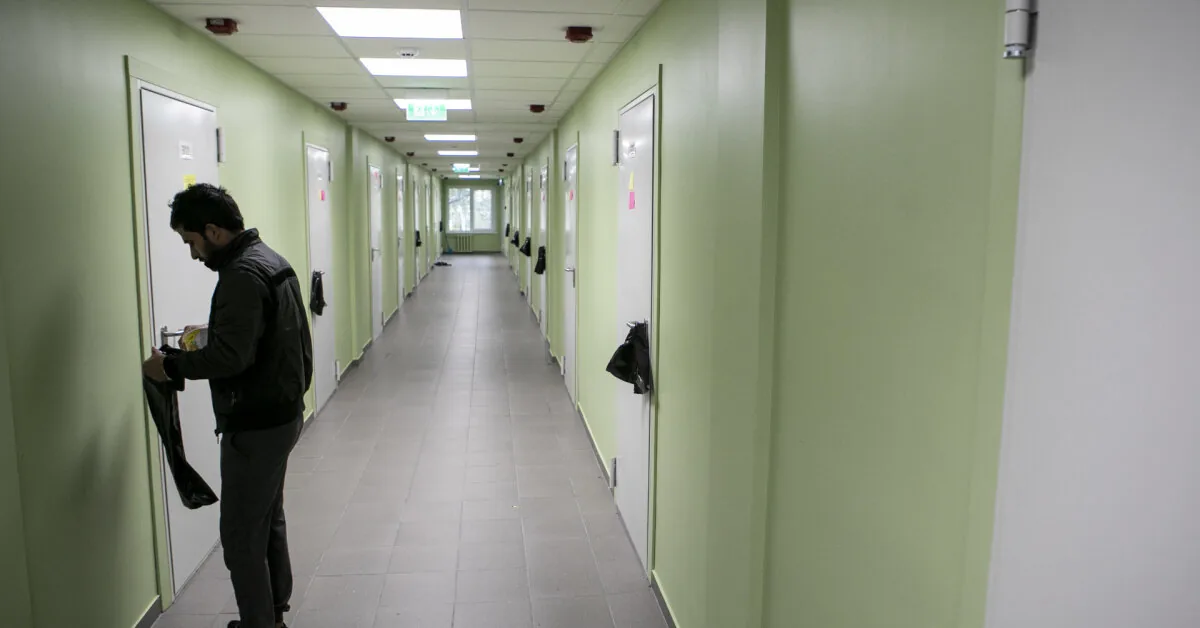
These shortcomings identified at the Reception and Integration Agency (PIIA) Pabradė reception center and the State Border Guard Service (VSAT) Foreigners Registration Center are shown in a report published this week by the Seimas Ombudsman’s Office.
Read more For air travelers – important changes: what changes await?
Both institutions promise to take the comments into account.
During inspections, it was found that some foreigners lacked clear information about their rights and obligations, the applicable regime, and the possibilities to submit complaints or requests. Information was not always provided systematically, in all relevant languages, or in a way understandable to foreigners.
According to the ombudsmen, the language barrier was especially evident when providing healthcare, psychological, and social services, where communication was mostly done using translation apps or with the help of other foreigners.
The ombudsmen positively evaluated that information for foreigners is provided not only in writing but also using digital tools – QR codes, the informational app “InfoDesk App,” and the translation app VERTIS.
However, during inspections, it was found that some foreigners were unaware of these tools, were not introduced to the possibility of downloading or using them, and some QR codes did not work or directed to information of varying scope in different languages.
According to the ombudsmen, it is necessary to ensure not only the preparation of information in various languages but also practical explanations about how to access it for each newly arrived person, which posting on notice boards or digital tools alone does not guarantee.
Seimas Ombudsman Erika Leonaitė emphasizes that the right to receive information is one of the most important guarantees protecting individuals from arbitrary restriction of freedom.
“Without it, a person practically cannot defend their rights, and limited access to mobile phones and other communication means further narrows the possibilities to contact relatives, non-governmental organizations, or other persons able to organize assistance,” E. Leonaitė stated in the announcement.
Movement freedom is intensively restricted, lack of clothes, dishes
The Seimas Ombudsman’s Office found cases during inspections where foreigners’ freedom of movement was restricted “especially intensively.”
According to the report, foreigners held under quarantine conditions were locked in rooms without the possibility to go outside for a walk, and the isolation period in some cases lasted longer than 48 hours.
Although the internal rules of the Foreigners Registration Center provide the possibility to walk outside three times a day for two hours each time, foreigners not in isolation told the ombudsmen that they could spend about one hour daily in the fresh air.
Some foreigners accommodated at the Pabradė reception center, for whom the court imposed an alternative preventive measure to detention, had never left the center’s territory because they either were not granted permission to go out or were not properly informed about the conditions under which such permissions could be granted.
Moreover, these foreigners’ freedom of movement was restricted as a collective punishment due to disorder and smoking in rooms and common areas.
The report also highlights that as the number of accommodated persons changes, challenges arise in ensuring proper material conditions. Migrants interviewed at the Pabradė reception center said they did not have seasonally appropriate clothes and footwear.
According to some staff, seasonal outerwear is issued to persons who submit requests, but the interviewed foreigners were unaware of this possibility. Other center staff said that the increased number of migrants led to a shortage of seasonal clothes in the warehouse.
According to the ombudsmen, many rooms and common areas are equipped with necessary furniture and appliances, but there was a lack of dishes, cooking utensils, and cups. Therefore, foreigners cooked food, prepared drinks, and consumed them using canned food tins.
The Seimas Ombudsman’s Office has provided the responsible institutions with several dozen recommendations to address the identified problems.
All shortcomings are planned to be eliminated by the end of next year
As stated in a comment provided to BNS by the Deputy Director of the Reception and Integration Agency, Eglė Renkauskienė, the agency responsibly assesses the identified circumstances to ensure that the conditions for receiving foreigners comply with national and international legal requirements.
According to the deputy director, the agency cooperates with VSAT, the Ministry of Social Security and Labour (SADM), and the Seimas Ombudsman’s Office, provides information on the implementation of recommendations, and seeks to consistently improve the conditions for receiving foreigners.
Read more In search of Kurtinaitis’ successor for the Lithuanian national team – two strategists say «no»
“It is planned that some organizational changes will be implemented in the near future, while more complex measures or infrastructural solutions will be completed by 2026 and the end of 2027,” said E. Renkauskienė.
She noted that to properly assess the recommendations provided by the ombudsmen and implement them consistently, a working group was formed consisting of PIIA specialists and experts from the SADM Foreigners Integration Group.
“The agency, according to its competence, together with SADM, has prepared an action plan for implementing the recommendations submitted to the Pabradė reception center. The measures and deadlines for implementing this plan were discussed on Friday at the ministry with representatives of SADM, the agency, and the Seimas Ombudsman’s Office,” said the PIIA deputy director.
According to her, Arabic, Urdu, and Pashto translators who come to the center in person have already been engaged to inform foreigners at the Pabradė reception center.
“Translators familiarize foreigners with the center’s internal rules, translate all necessary information related to their status when providing various social services,” said E. Renkauskienė.
Additionally, PIIA has implemented the VERTIS translation service management system, which offers services in more than 40 languages; free internet is available at the agency’s temporary accommodation sites, and residents can download the “InfoDesk App” designed for them.
“Informational leaflets about the agency and digital tools for foreigners in Russian, English, and Ukrainian were also delivered to Pabradė. The foreigners’ information procedure is being improved to ensure clearer information delivery in languages understandable to them,” noted the PIIA deputy director.
According to her, a procedure for organizing walks is currently being developed, and a schedule is being created to ensure that foreigners can regularly be outdoors, as far as the infrastructure and safety requirements of specific accommodation sites allow.
Foreigners accommodated at the Pabradė reception center are also provided with essential seasonal clothing, hygiene products, and necessary dishes.
“The warehouse ensures a sufficient stock and reserve. Residents inform staff in case of need due to unforeseen situations, and the items are issued additionally,” said E. Renkauskienė.
VSAT also confirmed to BNS that it has familiarized itself with the recommendations provided by the Seimas Ombudsman.
“The service is finalizing a plan of measures specifically related to the competence and responsibility of border guards to implement the recommendations,” stated VSAT.
The service still plans to present the draft of this document to the Seimas Ombudsman’s Office and discuss it together. Then the action plan would be approved by VSAT and implemented in the near future.
PIIA administers units located in Vilnius, Rukla, Girionys, and Pabradė. In June this year, 1.1 thousand foreigners lived in the agency’s accommodation sites, and 379 persons were receiving integration support in municipalities.
The agency provides accommodation and state support to unaccompanied minors, asylum seekers and recipients, migrants who entered the country illegally, victims of human trafficking, and displaced persons.
Additionally, the agency assesses and provides conclusions to the Migration Department regarding the vulnerability of arriving persons.
In turn, the Seimas Ombudsman’s Office conducts inspections in closed-type institutions implementing the European Convention against Torture and Other Cruel, Inhuman or Degrading Treatment or Punishment.
Read more A new conscript service model is starting: what is important to know?