The decision was initiated by the Ukrainian Ministry of Culture together with the Security Service of Ukraine (SBU) and the National Security and Defense Council’s Center for Combating Disinformation.
Read more Do you think only cholesterol matters? These 3 weekend habits can worsen another blood marker
Sanctions related to the series were applied to five Russian citizens and four organizations, including the “Animaccord” studio, which created “Masha and the Bear,” as well as its leaders, scriptwriters, directors, and producers.
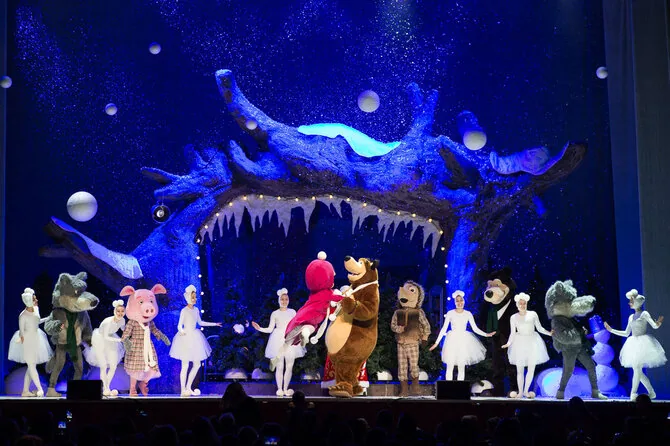
Ukrainian institutions state that content seemingly apolitical and aimed at children has been used by Russia for years to shape a positive image of the country abroad.
According to Ukraine’s Minister of Culture Tetiana Berezhna, Russia uses culture and entertainment content as a means of influence, and the revenues from international distribution contribute to Russia’s economic capacity to finance the war.
Advisor to the President of Ukraine on sanctions policy Vladyslav Vlasiuk emphasized the need to respond separately to Russian propaganda targeted at children and distributed through major international platforms.
The sanctions provide a legal basis to restrict access to this content in Ukraine and to appeal to international platforms, including Netflix and YouTube, requesting to cease cooperation with sanctioned entities, limit content monetization, and its distribution.
The decision was long sought
Ukrainian authorities justify sanctions against individuals related to the animated series “Masha and the Bear” by stating that this content, in their assessment, is used to improve Russia’s image abroad. The head of Ukraine’s Center for Combating Disinformation Andriy Kovalenko pointed out that the series is distributed internationally and primarily aimed at a children’s audience.
“The essence of this product is to form a positive opinion about Russia among children on different continents, as it has a global nature. It targets children who will later grow up to elect governments and determine their countries’ courses,” said A. Kovalenko.
According to him, the decision to take restrictive measures was not spontaneous – Ukraine has been addressing this issue and seeking sanctions for a longer period.
“Our international partners, especially the British, support such measures. We will cleanse the information space of this product, hopefully on a global scale as well,” added A. Kovalenko.
They remain reserved but angry
The Kremlin reacted mockingly to Ukraine’s decision and presented sanctions against the creators of “Masha and the Bear” as yet another example of Kyiv’s hostility towards Russia.
Asked about the sanctions, Kremlin press secretary Dmitry Peskov expressed frustration.
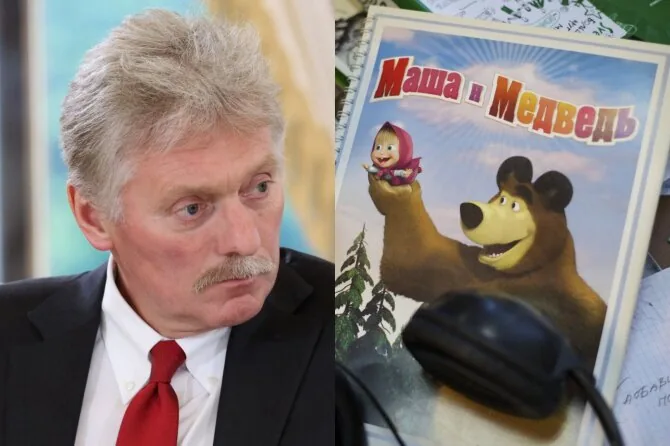
“Masha and the Bear” – these animated films have conquered the whole world. Without exaggeration, they have conquered the world with their kindness, their humanity, propaganda in the good sense of the word – truly propaganda of the best human qualities. And the fact that Ukraine has started a war even with animated cartoons probably just once again shows the nastiness of the Kyiv regime,” said D. Peskov.
Russia’s state news agency RIA Novosti, quoting Ukrainian officials, also emphasized that Kyiv allegedly fears the formation of a positive image of Russia among children but described the sanctions as practically ineffective.
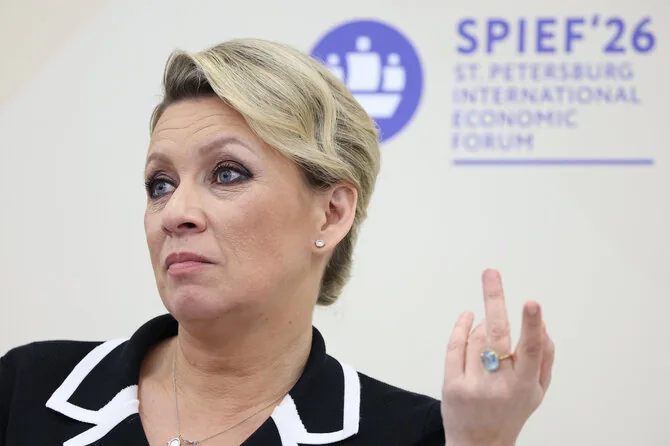
Maria Zakharova, spokesperson for the Russian Ministry of Foreign Affairs, also commented on the sanctions ironically. She told TASS agency that “apparently Zelensky thinks this is the only way to change the situation at the front.”
Deputy Chairman of the State Duma Committee on Family Protection Vitaly Milonov told the publication “Gazeta.ru” that Ukrainian residents will continue to watch the series, bypassing the established restrictions. He called “Masha and the Bear” a “really good, talented” creation.
First Deputy Chairwoman of the Federation Council Committee on International Affairs Yelena Perminova called the sanctions a “real cosmic stupidity” decision, stating that fighting an animated cartoon “will neither save Ukraine nor improve its catastrophic situation at the front.”
What’s wrong with the cartoon?
At the beginning of July this year, a scandal arose when Netflix acquired the rights to broadcast two more seasons of the Russian-made animated series “Masha and the Bear” and also extended the license to distribute the series in more than a hundred countries.
This company decision was criticized in Ukraine, where officials believe that the popular children’s series is not only entertainment content but also a tool of Russia’s so-called “soft power.”
Read more: Russia’s “soft power” penetrates the Netflix platform: “This is not an innocent children’s program”
By extending the license, the animated series will continue to be available to viewers in the United States, Canada, France, Portugal, the Nordic countries, and the Benelux states.
It will also be shown in several Asian countries, including India, Japan, South Korea, and Malaysia, as well as in the Middle East and Latin America.
Ukraine’s Center for Combating Disinformation (CCD) states that the series promotes a positive image of Russia through the bear character, while Masha’s behavior normalizes Soviet symbolism and militaristic themes – such a combination, experts believe, turns the “innocent” animation into an element of an information strategy.
Estonian Foreign Minister Margus Tsahkna openly called this series a propaganda tool aimed at young children.
“Russia fights not only with missiles but also with narratives. ‘Masha and the Bear’ is part of the Kremlin’s soft power – embedding pro-Kremlin and militaristic messages into children’s entertainment content and normalizing Russia’s aggression and imperial ambitions,” he wrote.
Symbols that catch the eye
The animated series centers on the bear character, which some analysts associate with a traditional symbol of Russia. The bear has been used for centuries to personify Russia both in Western political cartoons and in Russian culture and propaganda itself, so in the series it is often interpreted as an allegorical image of the country.
In “Masha and the Bear,” this animal is portrayed as a benevolent, caring, and peaceful character who looks after the little girl Masha. Critics argue that such an image, even without a direct political message, contributes to a more favorable image of Russia for the international audience.
The series has also faced criticism in the United Kingdom. More than 50 parliamentarians from six political parties appealed to the Culture Minister Lisa Nandy, urging a review of the broadcasting of “Masha and the Bear” on the Netflix and ITVX platforms.
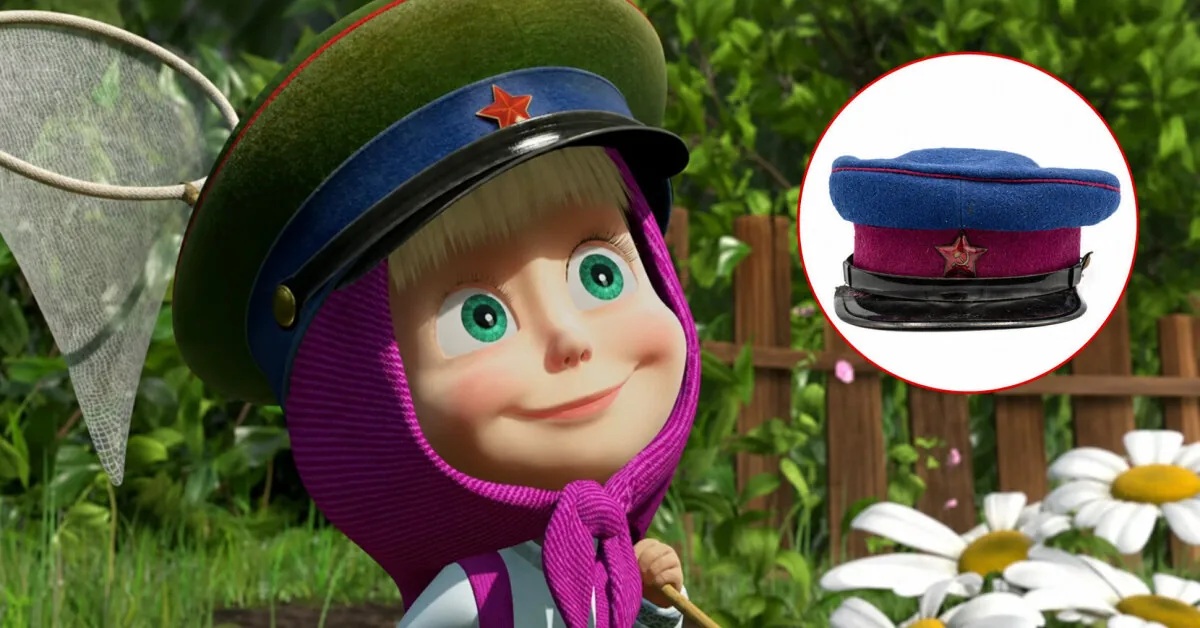
One of their main arguments is the episode “Border at the Castle” and a plot circulated on social media in 2015, in which Masha is depicted wearing a green military cap adorned with a red star and the inscription “Hooray, I’m in the army now!”.
According to the parliamentarians, this is the cap of a Soviet Union People’s Commissariat for Internal Affairs (NKVD) border guard – a symbol of a repressive institution responsible for mass deportations, executions, and the persecution of tens of millions of people.
Priit Hõbemägi, a lecturer at Tallinn University, has also stated that the bear may symbolize Russia, and the series itself helps create a more positive image of it in children’s minds.
British intelligence expert Anthony Glees, in turn, noted Masha’s character – she is small but very determined, aggressive, and constantly achieves more than expected for her size, so the expert saw parallels with the image of Russia created by Vladimir Putin.
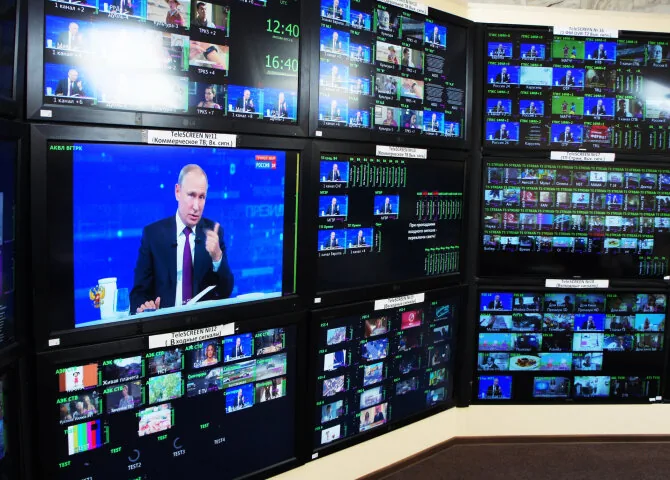
Soft power arising not from the state
Vladas Strukovas, an interdisciplinary researcher, curator, and professor at the University of Leeds working in London, who studies the intersections of art, media, technology, and visual culture, has conducted one of the most comprehensive analyses of “Masha and the Bear” and the question of whether this series can be considered a tool of Russian soft power.
He published an analysis titled “(Masha and) the Bear Diplomacy: Soft Power as World-building and Russian Non-governmental Agency”.
It proposes looking at the problem differently. There is no evidence that Oleg Kuzovkov’s and the “Animaccord” studio’s project was commissioned by the Russian state or that its content was coordinated with official Kremlin communication.
On the contrary, the series differs in many ways from traditional state propaganda: it does not contain narratives about Russia’s historical greatness or grievances, geopolitical signs are consciously pushed into the background, and the product itself is adapted to dozens of different languages and markets.
However, this does not mean the series has no political impact. Based on Joseph Nye’s concept of soft power, V. Strukovas emphasizes that influence does not necessarily have to be planned by the state.
Read more War in Ukraine. 6 scenarios: «The Telegraph» named how Putin can undermine NATO
Soft power works through attractiveness – through the ability to create positive associations that eventually become a natural part of the audience’s worldview.
In this respect, “Masha and the Bear” has achieved what official Russian public diplomacy often fails to do: it has engaged huge audiences outside Russia not with political slogans but with entertainment content.
V. Strukovas calls this mechanism “world-building.” The viewer does not receive a direct political message but gradually becomes involved in a fictional universe where a cultural product of Russian origin becomes familiar, fun, and non-threatening.
Thus, a background perception of Russian culture is formed – not through persuasion but through sympathy and habit. The series’ success also shows that such influence can be created not by state institutions but by private actors primarily pursuing commercial goals.
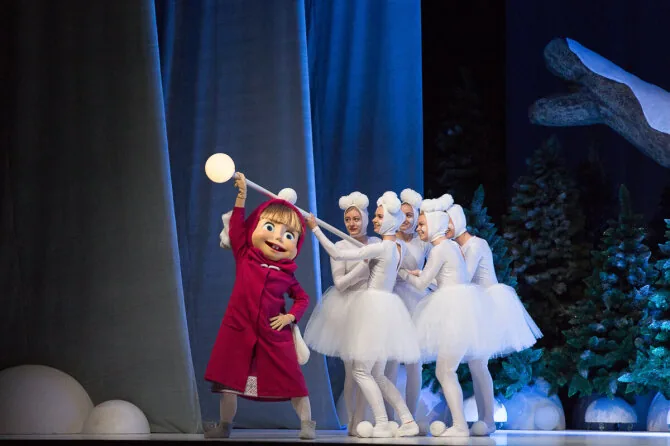
Therefore, according to the analyst, it is more accurate to call “Masha and the Bear” not a Kremlin soft power instrument but its effect.
The series does not necessarily consciously improve Russia’s reputation, but it helps normalize Russian cultural production as attractive, universal, and “just for kids.” This is especially evident in contrast to official Russian communication, which abroad often faces distrust and rejection.
V. Strukovas’ analysis also warns against two extremes. The claim that “it’s just animation and there is no politics here” ignores culture’s ability to shape a country’s image over time. But the opposite conclusion – that “Masha and the Bear” is a Kremlin operation against children – is also not supported by available evidence.
Thus, it would be more accurate to consider “Masha and the Bear” not as a propaganda tool created by the Kremlin but as an independent cultural product whose international success can create favorable associations for Russia and later be used for state soft power purposes.
School – a place of brainwashing
Russian historian and political scientist Dmitry Savin, when asked how consciously children in today’s Russia are chosen as a propaganda audience, suggests looking more broadly than just individual animated films or TV shows.
According to him, since the formation of the modern state, one of the most important institutions shaping the citizen and their relationship with the state has been the school. Education has always had not only an educational but also a nurturing function, so the state inevitably transmits certain value and ideological attitudes to children.
“If we talk about upbringing, it also means instilling certain ideological attitudes. Therefore, children’s films and animation, of course, can also perform such a function,” said D. Savin.
However, he is not inclined to automatically call “Masha and the Bear” a propaganda or ideological product. The historian said he is quite skeptical about the series itself, but primarily because of the moral and behavioral models transmitted to children, not because of proven political function.
“To say that ‘Masha and the Bear’ is really propaganda or a consciously created ideological product would be difficult,” he emphasized.
Children are shaped not by one cartoon but by the whole environment
According to D. Savin, it is more important to look at the broader informational and educational environment in which children grow up in Russia. As one of the most striking examples, he points to a history textbook included in Russian schools, associated with former Culture Minister Vladimir Medinsky.
According to the historian, it strongly forms a neo-Soviet perspective: the Soviet Union, especially the Stalinist period, is presented as a stage of state strengthening and development, the scale of repression and mass terror is downplayed or pushed to the margins, and the outside world is depicted through a prism of constant hostility towards Russia.
“The scheme is very simple: we worked peacefully, created, did not attack anyone, only defended ourselves, and there were always enemies around us,” summarized D. Savin this narrative.

He claims that such a worldview inevitably permeates broader cultural production – films, series, animation. This does not necessarily mean that every creator receives direct political instructions. Some attitudes and symbols appear because creators themselves live in the same ideological and cultural environment.
“When we talk about a dictatorship that already has certain elements of totalitarianism, such things inevitably appear – the tigers associated with Vladimir Putin, border guard caps, and Soviet songs in ‘Masha and the Bear.'”
Not necessarily because someone gave a specific order. It just becomes part of the environment in which people live,” explained the historian.
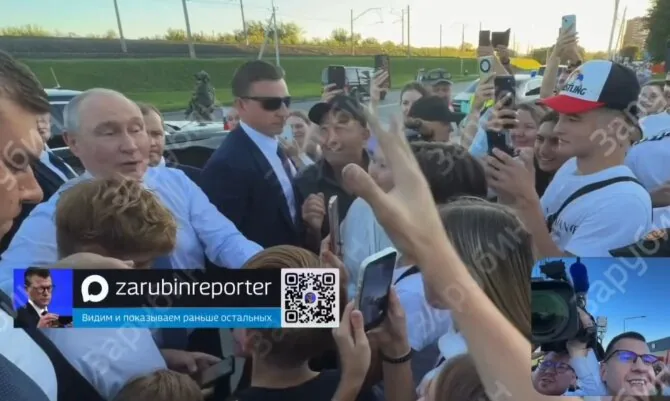
Legacy of a shared cultural space
However, the biggest problem, according to D. Savin, is not just “Masha and the Bear.” He believes that the discussion about one specific animated series overshadows a much broader phenomenon – the decades-long shared Russian and Ukrainian informational, linguistic, and cultural space.
Until 2014, the border between these countries was barely noticeable in many respects, not geographically but culturally. People worked in both states, actors and entertainment industry representatives moved between markets, and television productions were consumed on both sides of the border.
“The same goes for ‘Masha and the Bear.’ My acquaintances and friends in Western Ukraine say: patriotism is talked about a lot publicly, but at home, children still watch ‘Masha and the Bear.’ This shows that the shared informational and cultural space largely still exists,” said D. Savin.
According to him, bans on individual works do not solve the main problem. On the contrary, when state decisions focus on one animated character, the discussion easily turns into a caricature about the “war with Masha” or the “war with the Bear.”
“Such targeted decisions do not solve the problem and give it a comic, satirical shade. If the problem is considered serious, a strategy is needed that would be systematic, comprehensive, and cover the entire information space,” said the historian.
Indoctrination begins in infancy
D. Savin also rejects the assumption that propaganda is primarily aimed at adults and that children are supposedly left out. According to him, there is no unwritten “code” according to which propaganda would not touch children.
“Comprehensive propaganda, especially totalitarian, begins right from birth,” he said.
As a symbolic example of such indoctrination, the historian recalled photos published in Russia where newborns were dressed in Soviet-style attributes for May 9 celebrations – caps with red stars, hammer and sickle symbols.
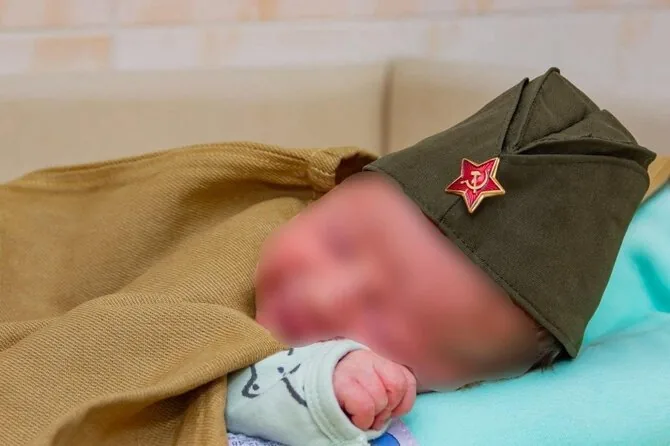
He includes in the same system dressing children in military uniforms, so-called May 9 marches, and other rituals in which children are involved long before they can understand their political meaning.
“Indoctrination begins when a child can barely speak or does not speak at all,” emphasized D. Savin.
Television, animation, and other entertainment in such a system can also be used to transmit values, but according to the historian, this is why it is dangerous to reduce the whole problem to one specific series.
The problem is not just “Masha and the Bear”
D. Savin’s position on this issue is twofold. On the one hand, he agrees that in Russia, the children’s audience is not protected from ideological influence, and education, television, and cultural production operate in an environment where neo-Soviet and militaristic narratives are increasingly entrenched.
On the other hand, he sees no sufficient basis to single out “Masha and the Bear” as a special Kremlin propaganda project.
If the Ukrainian authorities adhere to the principle that audiovisual production created in Russia under war conditions generally poses security and influence problems, then, according to D. Savin, a more logical approach would be consistent regulation applied to the entire category rather than banning individual series or films.
He claims that otherwise, a paradoxical situation arises: much attention is paid to one animated series, while at the same time audiences of various ages continue to consume large amounts of Russian crime series, entertainment shows, and other productions that for decades have maintained a shared post-Soviet cultural space.
Therefore, according to D. Savin, the question should not only be “Is ‘Masha and the Bear’ propaganda?” but much broader – how much cultural production created in Russia supports the shared information space and what impact it has on societies that politically and security-wise seek to distance themselves from Russia.