Lithuania has almost reached its 2030 public electric vehicle charging infrastructure target: at the beginning of July, there were 5,541 public access points in the country – about 92% of the planned 6,000. However, the national target itself shows that the public network should only make up a small part of the infrastructure: by the end of the decade, a total of 60,000 access points are planned in Lithuania, of which 54,000 are private.
This direction is already visible in practice – just using state funding, more than 20.8 thousand private access points were installed at the beginning of August. Therefore, the main question is increasingly not whether a station can be found in the city, but whether the car can be conveniently charged where it is parked daily, according to a press release from “Evioni”.
The shortage of public infrastructure is decreasing
The Lithuanian Energy Agency reports that at the beginning of July, there were 55,884 registered electric passenger cars in the country. This means that there are currently about ten cars per public access point. However, the total number of access points does not reveal their geographical distribution, power, occupancy, and operational reliability.
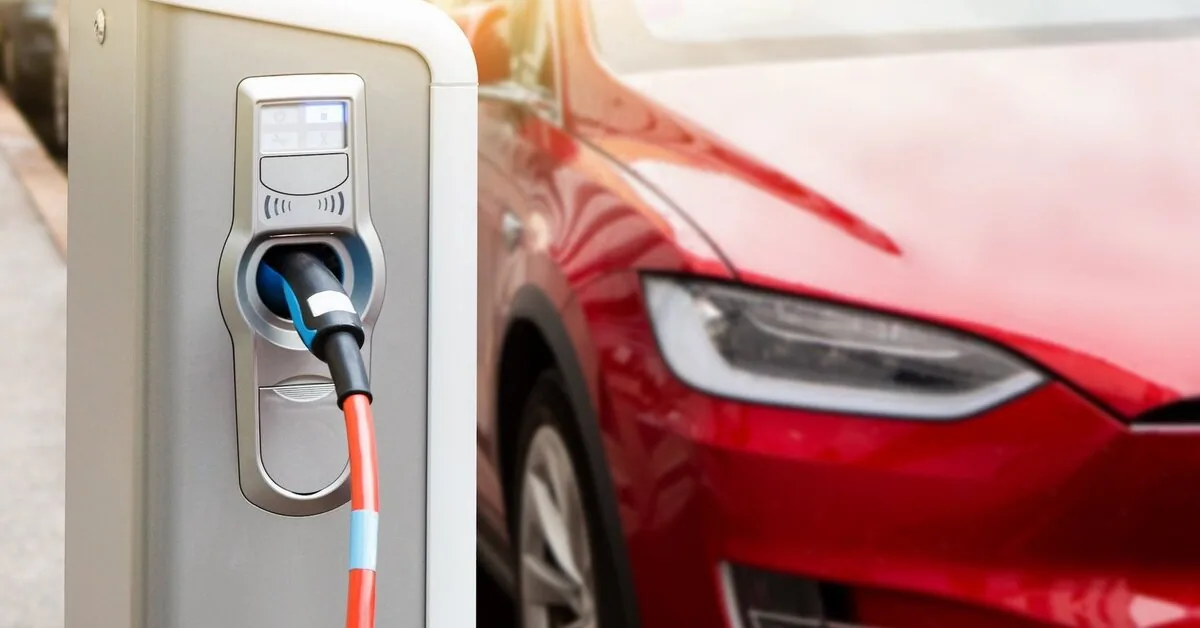
Electric vehicle charging is still often planned according to the gas station model: it is expected to drive to a special place, charge the car, and continue the journey. However, charging an electric car usually takes longer, and access points vary.
Therefore, infrastructure development is increasingly evaluated based on the ability to charge the car while it is parked – at home, at work, near a store, or another visited place.
The public network does not solve all charging needs
Although public stations receive the most public attention, publicly available figures show that they should only make up a small part of the infrastructure. By 2030, nine out of ten access points should operate at home, workplaces, and other private areas.
“Public and private infrastructure do not serve the same function. A fast charging network is necessary for trips, unexpected situations, and people who cannot charge their car at home. But it is most convenient to charge it daily when it is parked anyway,” says Ignas Petrikonis, head of the electric vehicle charging solutions company “Evioni”.
This is clearly seen in Norway. The country has almost 11,000 fast charging access points where cars can be charged simultaneously, but about 90% of electric car owners have the opportunity to charge them at home.
The change is already visible in Lithuania as well. At the beginning of August, just using state funding, more than 20.8 thousand private charging access points were installed in the country – almost four times more than registered public ones. The actual number of private access points may be even higher, as this statistic does not include stations installed without support.
Impulsive purchases by businesses cause inconvenience
According to support statistics, companies in Lithuania purchase about a quarter of all electric vehicles, and this causes a significant part of the problems. I. Petrikonis notes that some Lithuanian companies still first buy electric cars and only then start considering where to charge them. It is expected that employees will use city charging stations, and the company will be satisfied with receiving invoices for charging sessions.
In such cases, employees have to drive to a free station, wait, use services from different operators, and adjust to different tariffs. Moreover, in such cases, prices are disappointing because charging an electric car at public stations is significantly more expensive.
According to LEA calculations, in 2025, driving 100 km by electric car cost:
· 3.14 Eur when the car was charged at home at night tariff.
· 5.11 Eur using a public slow charging access point.
· 5.70 Eur using a public fast charging access point.
· 6.77 Eur using an ultra-fast charging access point.
Therefore, for companies, constant charging of vehicle fleets in the public network may mean not only lost employee time but also higher costs, which do not allow saving as much as usually planned.
The electric vehicle fleet in Lithuania has been growing by about 50% annually in recent years, so the ability to charge a car at the workplace, store, restaurant, or hotel may gradually become not an exceptional advantage but a usual expectation of customers and employees. When this happens will depend not only on the growth of the electric vehicle fleet but also on how quickly building owners and businesses expand the infrastructure.