- 150 Russian diplomats and their families sent back to Russia: embassy criticizes Germany
- “Everything that is not nailed down will be stolen”: where 1.2 billion for Ukrainian weapons disappeared over the year
- The Kremlin revealed itself: two reforms exposing the harsh Russian reality
All news about Russia’s invasion of Ukraine can be found HERE.
Tore 200 sq.km from Russia’s grasp: “The Telegraph” revealed how Ukraine managed it
10:59

The operation of the Armed Forces of Ukraine near Lyman may become one of the most important episodes of the land war. Ukrainian defenders recaptured more than 200 sq.km of territory, showing that even on a battlefield full of drones, armored vehicles and infantry remain a particularly important element, wrote military analyst and former British Army colonel Hamish de Bretton-Gordon in the opinion section of “The Telegraph”.
Read more Sex in a moving car in Thailand ended badly for a Russian vlogger: arrested at the airport
According to him, not only the size of the recaptured territory is important, but also the chosen method of operation. It seems that Ukrainian forces hid their intentions for several months while simultaneously preparing a complex offensive that involved armored vehicles, drones, electronic warfare means, camouflage, deception, and precision weapons.
This type of warfare model has recently faced harsh criticism due to the rapid development of drone systems, the expert noted.
Demanding Donbas but losing positions
H. de Bretton-Gordon noted that the contrast between Kremlin statements and the real situation on the front is particularly telling.
Over the weekend, Kremlin leader Vladimir Putin told US negotiators Steve Witkoff and Jared Kushner that transferring Donbas territory to Russia remains the main condition for ending the war. Meanwhile, Russian forces are under pressure in the Lyman area.
Moscow continues to demand concessions from Ukraine, the former colonel pointed out, although it itself has problems holding the captured territories. In his opinion, this only confirms the gap between Kremlin political rhetoric and the real situation on the battlefield.
He believes this could have significant diplomatic implications for Ukraine.
Drones cannot occupy territory
The operation near Lyman became a kind of refutation of the idea that modern war can be waged mainly using drones. Yes, agrees H. de Bretton-Gordon, drones have fundamentally changed the battlefield: they are used for reconnaissance, targeting, strikes against equipment and logistics, and allow destroying targets from a long distance.
“However, there is a fundamental limitation: a drone cannot independently occupy and hold territory. Soldiers are still needed for that,” emphasized the former colonel.
Ukrainian forces, he wrote, demonstrated that armored vehicles can operate even in an environment where drones have become an integral part of military actions.
“Tanks and other armored vehicles suffer losses, but the combination of electronic warfare, camouflage, deception, and support drones allows them to maneuver and support offensive operations,” explained the expert.
He added that armored forces do not operate alone: their actions are coordinated with the massive use of drones, artillery, and other weapons.
Ukraine demonstrated the power of combined military operations
According to the British analyst, Ukrainian soldiers essentially applied the classic principle of warfare: find the enemy’s weak spot, create an advantage there, and strike before the enemy can move reserves.
“Strike the enemy hard, strike fast, create surprise, and hit where it hurts,” H. de Bretton-Gordon described Ukraine’s operation near Lyman.
In his opinion, the result should not be seen as a simple tank victory over drones. Rather, it is a demonstration of the effectiveness of combined military forces, where armored vehicles, infantry, drones, electronic warfare, artillery, and aviation complement each other.
“The main conclusion is that the army of the future cannot be either the traditional armored army from the Cold War era or purely a ‘drone army.’ It must combine both components—and at the same time have enough personnel to occupy and hold territories,” the analyst emphasized.
May change Moscow’s plans
This Ukrainian victory poses problems for the Russian leadership. If the Russian army cannot form a sufficient number of combat forces using the current recruitment system, the Kremlin may potentially face the need to conduct a new wave of mobilization, writes H. de Bretton-Gordon.
For Kremlin leader Vladimir Putin, this would be a “serious political risk,” as new mobilization could show how costly the war is for Russian society.
“At the same time, the results of Ukrainian operations should serve as a signal to Western countries. The United States and European states should not rely on the assumption that Russia inevitably wins on the battlefield. Premature concessions to Moscow may only give the Kremlin time to recover and prepare for a new phase of the war,” warned the author.
10:12

Such a strike has never happened before: two Russian gas giants attacked 3000 km away
10:11

Ukraine’s Special Operations Forces (SOF) stated that they carried out the deepest strike into Russian territory since the start of the war, hitting two large gas infrastructure facilities located more than 3000 kilometers from the Ukrainian border.
It is reported that the strike targeted two Russian gas condensate industry “giants” – the Novy Urengoy and Purovsky plants in the Yamal-Nenets Autonomous Okrug, one of the main oil and gas production regions in northern Russia.
“For the first time! A record defeat since the start of the war: SOF struck critically important Russian plants located 3000 km away,” the forces’ representatives posted on social media.
“SOF drones traveled more than 3000 kilometers to the target. Until now, this territory was considered completely safe rear for the aggressor,” added the Special Operations Forces.
Reports of a possible attack appeared Wednesday evening. The Telegram channel “Astra,” linked to Russian security services, reported that drones struck Yamal for the first time and that a fire broke out at the Novy Urengoy industrial facility.
The governor of the Yamal-Nenets region, Dmitry Artyukov, confirmed the attack, saying: “Today a drone attack was repelled against one of the industrial facilities in Novy Urengoy. A fire broke out due to fallen drone debris.”
D. Artyukov said there were no casualties or injuries, and authorities are assessing the damage.
This strike was carried out as Ukraine intensified attacks on Russian oil and gas infrastructure to disrupt Moscow’s main source of war revenue.
According to SOF, the two plants hit on Wednesday are “critical” to Russia’s gas condensate industry.
SOF data shows that the Novy Urengoy plant has a capacity of 19.5 million tons of raw materials per year, while the Purovsky plant processed 13.4 million tons of gas condensate in 2025.
Receiving daily response
President Volodymyr Zelensky said Thursday that Ukrainian forces struck eight Russian infrastructure facilities “serving the war.”
“Russia continues daily acts of terror against Ukraine. And every day it receives a proper response. Thanks to every soldier, everyone who ensures our long-range strikes and their accuracy,” added V. Zelensky.
Lavrov threatens the West: what Germany really did
09:06

Russian Foreign Minister Sergey Lavrov called Germany’s reaction to the attempted attack at Leipzig/Halle airport almost a declaration of war on Russia.
Speaking about the closure of Russian diplomatic missions, he drew parallels with the eve of World War II, accused German Chancellor Friedrich Merz of not learning history lessons, and saw signs of a revived Nazism in the country’s politics. However, Lavrov’s loud statements are based on distorted facts and misleading historical comparisons.
“In general, this is essentially the start of a real war. The consulate was expelled from Bonn… Russian Houses are being closed in Berlin. I remember that before the start of World War II, more precisely the Great Patriotic War, the Germans also closed their diplomatic missions… They want war again. (…)
He (Friedrich Merz, –15min) is basically preparing to declare war on us. History lessons have not been learned at all. It turned out that these metastases of Nazism are manifesting again. This is a dangerous phenomenon. I think the Russian leadership will draw appropriate conclusions,” said Russia’s foreign minister Sergey Lavrov.
Russian political scientist and historian Dmitry Savin, commenting to 15min, assessed Lavrov’s statement as a propaganda scare tactic aimed at fueling the image of Russia surrounded by enemies and maintaining tension in relations with the European Union.
Read more HERE.
150 Russian diplomats and their families sent back to Russia: embassy criticizes Germany
08:54
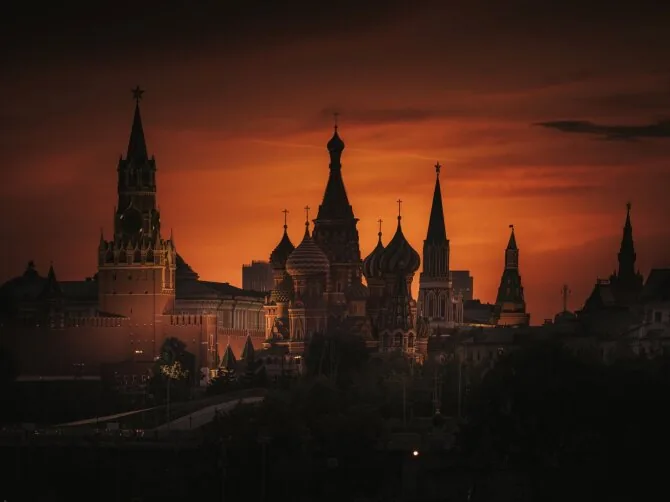
More than 150 Russian diplomats and their family members must leave German territory, the Russian embassy in Germany announced Thursday.
This is a consequence of the German authorities’ decision to close the Russian general consulate in Bonn and the “Russian Houses” in Berlin. Germany took these steps after officially attributing responsibility to Moscow for the drone incident at Leipzig airport.
“Is the discovery of a broken drone, whose origin is unclear and which caused no damage, a ‘justified’ reason to deprive hundreds of thousands of German citizens and Russians living in Germany of consular services, to urgently expel more than 150 Russian diplomatic staff and their families, and to destroy the last islands of bilateral cultural cooperation?” the Russian diplomats complained, quoted by the news portal “The Moscow Times.”
Germany’s actions at the Russian embassy were called “unprecedented, unfounded steps aimed at destroying Russian-German relations.”
“No evidence, no arguments, just the usual ‘highly likely’ style reasoning and an unprecedented reaction due to inadequacy, to which, having received a signal from Berlin, the European Union countries obediently joined,” the embassy representatives continued to complain.
Read more Cracked windshield? In new cars, replacing it alone may not be enough
At the beginning of August, several drones with explosives were found at Leipzig-Halle airport. One was detected near a Ukrainian military transport plane, another near the airport.
German Interior Minister Alexander Dobrindt soon announced that the “hybrid attack” perpetrators acted on behalf of Russian state structures.
After that, German authorities decided to close the Russian general consulate in Bonn and the “Russian Houses” in Berlin, as well as tighten control over Russians arriving in the country.
In response, the Russian Foreign Ministry announced that the German general consulate in St. Petersburg will be closed no later than September 18. Staff were also instructed to leave Russia by that date.
Additionally, as Russian Foreign Minister Sergey Lavrov indicated, the activities of the German Goethe Institute branches in Russia will be terminated.
At the end of 2023, Germany, responding to deteriorating relations with Russia, closed its consulates in Kaliningrad, Yekaterinburg, and Novosibirsk. Thus, currently, the only operating German diplomatic mission in Russia is the embassy in Moscow.
Audit results revealed gaps: where 1.2 billion for Ukrainian weapons disappeared
08:41

When Russian soldiers began attacking trenches in eastern Ukraine in 2024, Ukrainian soldiers responded with fire. However, shells, instead of exploding near advancing soldiers, fell out of launch tubes or quietly thudded on the ground, raising dust.
It turned out that one Ukrainian weapons factory supplied the army with thousands of defective mortar shells. The influential head of the weapons factory, Leonid Shyman, was eventually arrested and charged in one of the most publicly discussed defense industry fraud cases since the start of the large-scale war.
However, as government audit data obtained by “The New York Times” shows, even when officials noticed that weapons were supplied with defects, Ukraine’s defense procurement agency continued to sign new contracts with Shyman’s factory.
This case illustrates a recurring scenario in Ukraine.
According to government audit documents, court documents, and reports in Ukrainian media obtained by the newspaper, 7 out of 10 of Ukraine’s largest military contractors won new orders despite ongoing investigations into fraud, failure to fulfill previous contract obligations, or arrests of executives for corruption.
Read more HERE.
Kyiv attacked at night: 9-story apartment building caught fire, there are injured
08:20

On the night of September 11, Russian occupiers launched another attack on Kyiv. Due to the strike in the Dnipro district, a fire broke out in a nine-story residential building, the Kyiv city military administration reported.
Initially, it was reported that two people were injured during the shelling.
At the same time, according to officials, by 5:30 a.m. in the Dnipro district, eight injured were already known.
Later, Kyiv police reported that the enemy attacked the city with drones last night. In the Dnipro district, a nine-story residential building was damaged, with a fire from the first to the fifth floor.
“Eight people were injured. A 64-year-old man and a 57-year-old woman suffered burns and were hospitalized. A 23-year-old woman suffered shrapnel injuries. Medical assistance was provided to five more people without hospitalization,” the report added.
According to the Ukrainian Air Force, Russia launched at least 66 drones into Ukraine overnight, including more than 50 “Shahed” type drones. Ukrainian defense forces shot down or suppressed 62 drones, while four struck three locations.
Drones attacked Saratov and Russia’s Belgorod region: fire at oil refinery, casualties reported
07:20

On the night of September 11, drones attacked Saratov in Russia, and a fire broke out at a local oil refinery, Russian Telegram channels report.
At about 2 a.m., Saratov region governor Roman Busargin announced a drone attack threat in the region.
“Information about the threat posed by drones was received from the Ministry of Defense. Local warning systems may be activated in areas where there is a potential threat. All emergency services are fully prepared,” he noted.
According to “Astra,” the Saratov oil refinery has been attacked at least 16 times before.
The Telegram channel “Exilenova+” also reported that a fire broke out at the warehouse of the Russian e-commerce company “Ozon” in Saratov due to the drone attack. The consequences of the attack are currently unknown.
Additionally, explosions were heard in Engels, Saratov region.
Meanwhile, during drone attacks in Russia’s Belgorod border region, people were killed and seven others injured, local authorities reported, according to Reuters.
Specifically, one man died when a drone exploded in an unspecified location east of Belgorod in the city of Novy Oskol. Five more people were injured in different settlements.
“Another man died when a drone struck his car in Shebekino, located very close to the Ukrainian border. A woman driving the car was injured,” the report added.
Earlier, aviation expert Konstantin Kryvolap pointed out a weak spot of the Russians. He stated that Russia’s energy sector would be “completely destroyed” if gas were not supplied to pipelines.
“Why attack the Yamal crossroads? You need to attack the plants that process the gas flowing through this Yamal crossroads. This is the main link. If gas is not supplied to the pipeline, it’s the end for Russia’s energy sector,” K. Kryvolap claimed.
Reuters also reported that Ukrainian drones halted the operation of a Russian oil refinery supplying fuel to Moscow. After the attack, the main CDU-6 unit and the secondary CDU-4 unit of the plant were shut down.
The CDU-6 unit, which caught fire during the strike, has a capacity of 8 million metric tons of oil per year.
Volodymyr Zelensky plans to meet Donald Trump in New York at the end of September
07:01

Ukrainian President Volodymyr Zelensky said Thursday that he plans to meet with US leader Donald Trump in New York at the end of September, as Washington seeks to revive long-stalled negotiations to end the war in Ukraine.
“But at the end of September, we will have the opportunity to meet, I think, with the American team in New York,” Zelensky said at a press conference in Canada. “And I think that (…) after the meeting in New York with President Trump, I will be able to speak more openly.”
With or without Ratcliffe: “Politico” explained why a breakthrough in Ukraine negotiations is still not visible
06:51

The prospect that CIA Director John Ratcliffe might take over the “Ukraine portfolio” has sparked interest in various Washington camps, although the White House has denied such a development, reports “Politico”.
It is said that Ukraine supporters in the United States believe it does not matter much who specifically oversees this issue, as the main events are happening on the battlefield.
“If J. Ratcliffe gets involved, keep in mind that he knows Russian issues very well,” said Matthew Boyce, who served as deputy assistant secretary of state for Eurasian affairs during the first Trump administration.
He warned against expecting a quick and significant victory at the negotiating table.
“V. Putin believes time is on his side, bets on escalation, and shows no interest in retreating from his tough, maximalist positions,” Boyce noted.
Both the White House and the CIA denied reports that Ratcliffe is preparing to take a more active role in Russia-Ukraine negotiations. One Ukrainian official said he had no information that Ratcliffe had been handed oversight of this issue but added:
“We communicate with the United States at all levels, including the CIA.”
He did not confirm information about a possible Ratcliffe visit to Ukraine.
An aide to a Democratic member of the House of Representatives noted that Ratcliffe is a stronger negotiator than White House special envoy Steve Witkoff. However, according to the aide, without a more determined US policy, Russia will continue military strikes aimed at weakening Ukraine and undermining its morale during the winter period.
“Until there is real US pressure—through sanctions, military aid to Ukraine, and a fundamental change in policy—the situation will not change,” the aide emphasized.
It is noted that if Ratcliffe indeed took a more significant role, it could at least help abandon some actions that were considered amateurish.
Support for Ukraine
The day before, President Volodymyr Zelensky met with Canadian Prime Minister Mark Carney, who promised to strengthen support for Ukraine’s aspirations to join NATO and the European Union. Zelensky also welcomed a “very important air defense aid package” and thanked for it.
On Tuesday, Ukraine’s Ministry of Defense announced new partner commitments to Kyiv. Among them are Germany’s promise to supply additional missile defense systems “Patriot” and the United Kingdom’s assurance of increased air defense support.
The European Union also approved approximately $3.7 billion in funding for air defense systems. NATO Secretary General Mark Rutte said Tuesday that the supply of American weapons to Ukraine under the PURL mechanism continues without interruption.
Read more Ukraine struck an oil refinery in the Russian city of Saratov