We have seen this change from the inside – because in Sweden, longer periods had to be spent both in 1991 and 1993, when the country was experiencing an unprecedented economic crisis, and in 2004 and 2008 (and the co-author of the article has been living in Sweden since 2005), when Sweden’s narrative was stability, economic growth, and strong social protection, and the obvious image of the welfare state still did not disappear from the pages of the global press.
Read more Conor McGregor confirmed: «I am facing my fifth surgery»
In foreign policy, one of the important issues for Sweden was supporting developing, Third World countries – by this measure, Sweden was among the world leaders. The immigration issue, of course, also existed, but until 2015, the integration of newcomers, especially political refugees, in Sweden was believed to be without major problems. The impact of waves of immigrants was felt little, and the problems of the first, more numerous Finnish and Yugoslav immigration were controlled. Probably, the cultural commonality or closeness of Europeans helped in these cases.
At that time, the very important but barely tangible Sweden Democrats (Sverigedemokraterna – SD) were being shaken, and other political parties did not want to have any dealings with them. In their early development period, the Sweden Democrats were associated with extremism and neo-Nazism, for which the party later apologized.
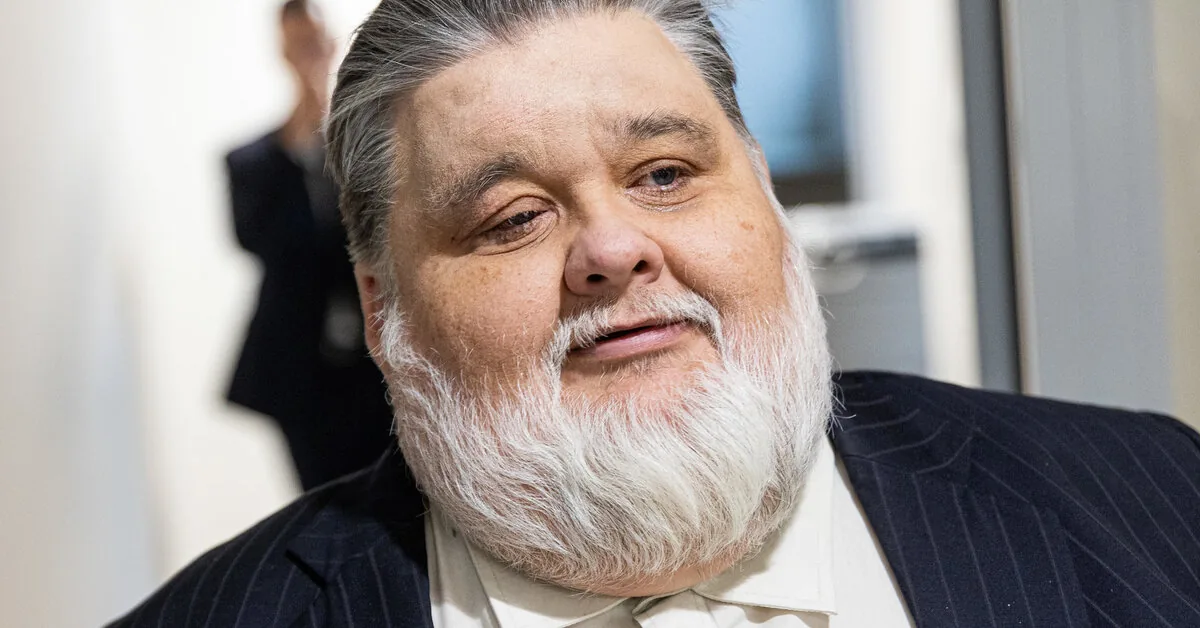
This party represents far-right politics and values – nationalism and anti-immigration policy. The party leader is Jimmie Åkesson, who formulates and implements his policy strictly – he is certainly not like an average, gently apologizing leader who tries not to offend anyone: returning to national identity issues, he wants to implement a true paradigmatic change in Swedish life.
The influence of the other respectable conservative-leaning Moderate Party (Moderaterna – M) in society also remains significant. The unceasing support for Ukraine and joining NATO are also the merits of its leader Ulf Kristersson, who was an influential, popular, and charismatic politician for at least a decade before becoming the leader of the Moderates.
In the case of Swedish elections, the issue of crime, which began to crystallize in the country after 2010, should be especially emphasized. In 2013, in the Husby district, the police killed an elderly man who threatened officers with a machete. The law enforcement was accused of brutality – large riots occurred, cars and garages were set on fire, and police officers and firefighters were pelted with stones. This was a turning point after which locals and authorities understood that things had already changed.
Later, this was reinforced by the refugee wave in 2015, when 163,000 refugees arrived in the country in one year, a large part of whom were newcomers from Syria, Afghanistan, Iraq, Eritrea, and Somalia. Such a mass growth of society affected the country both positively (due to the positive sides of multiculturalism, the need for labor force, the dynamics of city development, as most newcomers settled precisely in the capital, Gothenburg, and Malmö) and negatively – due to only partial or even zero integration of newcomers, housing shortages, school segregation, unemployment, poverty, and a gradually developing parallel society. Although it would be wrong to say that all newcomers are problem-causing criminals, as some immigrants manage to work in highly qualified and economically necessary jobs, local gangs already involved in drug and arms trafficking employ precisely the unintegrated, unadapted person for their dirty work. This means that the more immigrants of this type, the more gang helpers can be hired. This has been the case in recent years, with gangs paying special attention to recruiting new members, many of whom are teenagers and minors.
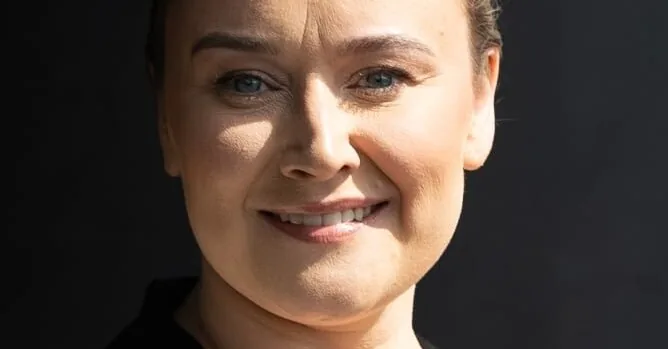
On the other hand, for a newcomer living in the suburbs, the most relevant issues are survival questions: securing work income or social welfare benefits, commuting to work, and other daily matters. Therefore, many immigrants vote for the “sossarna” – the Swedish Social Democratic Party. Its chairwoman Magdalena Andersson, targeting not only them but also a large part of the average Swedish layers, talks about abolishing the “karensdagensavdrag” (when a few days are lost in the bureaucratic system when sick – thus unpaid). M. Andersson also promises, providing concrete proposals, to reduce crime, fix schools, solve the teacher shortage issue, and abolish pensioner taxes. M. Andersson represents simple, uncomplicated Swedish politics and delivers results where needed for the ordinary person. However, it is necessary to understand that cities and the country are experienced differently by different social groups – in their own way. If what M. Andersson promises appeals to a single mother from Eritrea living in the Hjulsta district, who finds it important not only to avoid racism and discrimination so that her son is not hired by a local gang hanging around under the windows but also to prevent food prices from rising, then such issues may not appeal at all to a freelance Swede Tommy, who lives in the prestigious Södermalm district of Stockholm, works daily from expensive cafes, and spends evenings hopping between restaurants.
He is concerned about Sweden’s image abroad, democracy, climate issues, urban culture, healthcare, and housing issues (because he currently rents an apartment from so-called second-hand and pays the equivalent of two thousand euros in kronor per month for his tiny studio). He may vote for the Green Party (Miljöpartiet), which deals with environmental and climate issues and whose followers include all Greta Thunberg followers, or maybe even for the Left Party (Vänsterpartiet), which is characterized by social justice and feminism issues. Or he may also vote for the Social Democrats – Tommy is still undecided.
Foreign policy issues also play a significant role in the Swedish Riksdag elections. Sweden’s accession to NATO, after many years of neutrality, has a huge geopolitical impact. Sweden understands the defense and prosperity issues of its eastern neighbors – the Baltic countries. In the person of Sweden, the Baltic countries now have a guaranteed rear not only on the island of Gotland but also a much simpler military logistics in case of possible Russian military aggression. So how would the Riksdag elections affect the security of NATO countries? – nothing drastic can happen on this issue – all Swedish political parties understand the importance of NATO. No one in the country is thinking of leaving NATO or saving at the expense of NATO matters. Even the Sweden Democrats, who were previously very skeptical about NATO, have changed their position since Russia attacked Ukraine.
Interesting data from the latest representative sociological survey, published on August 2. Support for Swedish political parties is distributed as follows – 32.1% would vote for the Swedish Social Democratic Party, 19.9% for the Sweden Democrats, 17.2% for the Moderates, 8% for the Left Party, 7% for the Green Party, 6.4% for the Centre Party, 4.9% for the Christian Democrats, 2% for the Liberal Party, and 1.5% for others. The threshold for political parties to enter the Riksdag is 4 percent. A ruling coalition of several parties (coalition partners) will be necessary in any case.
2022 Swedish Riksdag Election Results
Party
Political direction
2022 result
Social Democrats (S)
Center-left, social democracy
~30.3%
Sweden Democrats (SD)
National conservatism, anti-immigration policy
~20.5%
Moderate Party (M)
Center-right, liberal conservatism
~19.1%
Left Party (V)
Left-wing, democratic socialism
~6.8%
Centre Party (C)
Liberal center, agrarian roots
~6.7%
Christian Democrats (KD)
Conservative Christian democracy
~5.3%
Green Party (MP)
Green politics, environmental protection
~5.1%
Liberals (L)
Liberalism
~4.6%
2. Expected Trends in the 2026 Swedish Riksdag Elections
Party
Forecasted trend
Social Democrats (S)
Stable result or slight growth
Sweden Democrats (SD)
Stable result or slight decline
Moderate Party (M)
Stable result
Left Party (V)
Expected slight growth
Green Party (MP)
Stable result
Centre Party (C)
Situation uncertain
Christian Democrats (KD)
Possible decrease in voter support
Liberals (L)
Balancing on the threshold of parliamentary entry