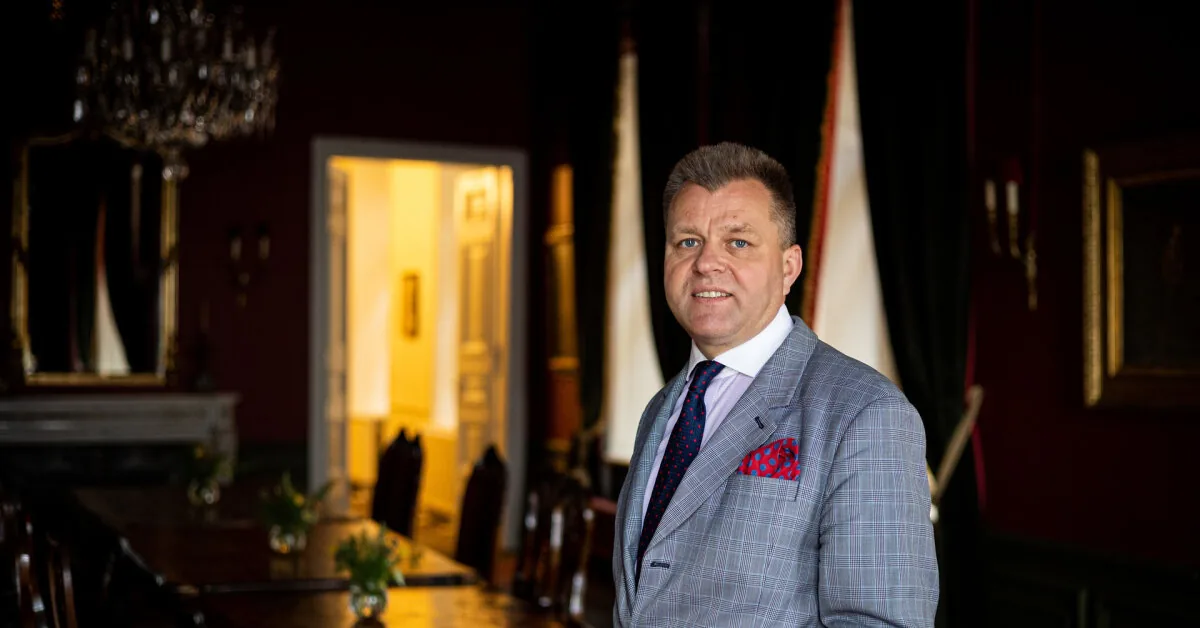
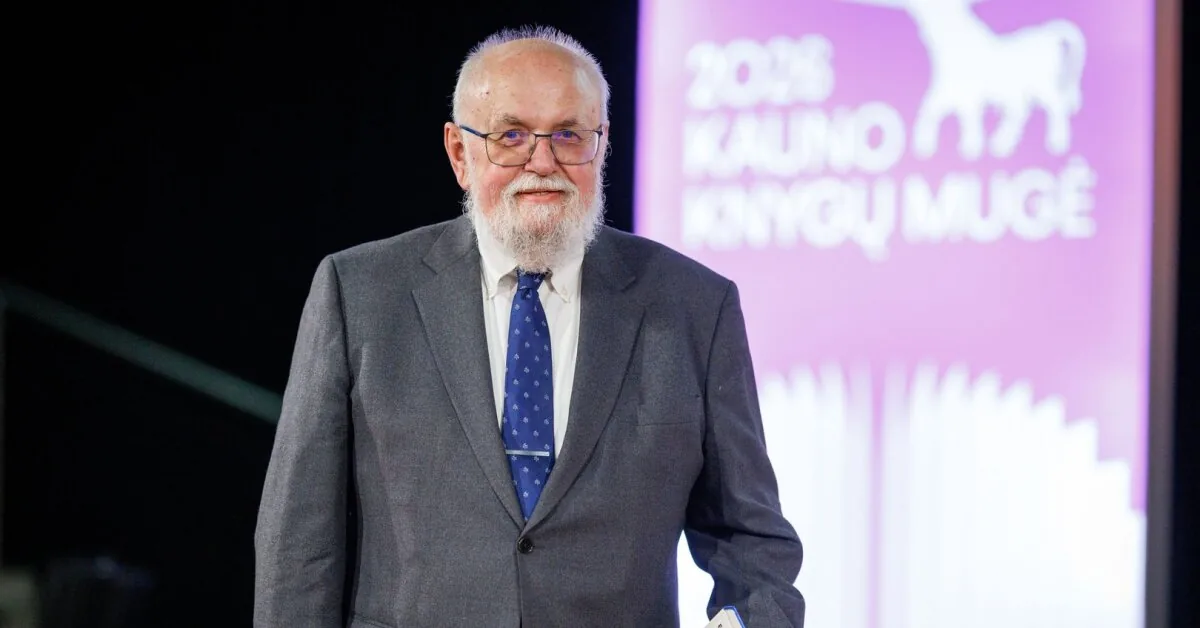
The photo biography “One Hundred Years of President Valdas Adamkus” is a journey through the exceptional life of Valdas Adamkus, marked by dramatic historical events, and simultaneously through the centenary of Lithuania.
Read more Warning to buyers of «Depo»: this product contains a very high concentration of lead
Rare and expressive photographs tell about the President’s childhood in independent Lithuania, the trials of war and emigration, life in the United States of America, where a successful professional career was accompanied by consistent work for Lithuania’s freedom. And, most importantly – about the return to Lithuania and two presidential terms that became a significant part of the history of our restored state.

The book “Life Under the Sign of Love” is dedicated to the country’s first lady Alma Adamkienė. In exclusive conversations with Arnas Ališauskas, the first lady recalls her childhood in Telšiai, the war years, the difficult family escape to Germany, life in the USA, and the homes built there. Her story reveals not only the history of the Nutautai and Adamkai families but also the interwar flourishing yet war-trampled history of Lithuania.
Much attention is given to the fateful decision to return to Lithuania and the decade spent serving as the first lady – not formally, but actively engaging in the life of the restored state. The foundation established by Alma Adamkienė has changed the lives of many rural schools and their students.
We invite you to get acquainted with the books and read some excerpts.
Olympic Games and Meeting with President Kennedy
Excerpt from the book “One Hundred Years of President Valdas Adamkus”
*
Life pushed me into sports, and it pushed me the most when I found myself outside Lithuania’s borders.
The 1948 European Games of the Occupied Nations was not just a Lithuanian idea. We played and talked about sports not only with our fellow fate brothers who had been forced to leave their countries – Ukrainians, Poles, Latvians, Estonians. And the London Olympic Games were approaching. We naively believed that we, as representatives of Lithuania, the last pre-war European basketball championship winning team, definitely had the right to participate in the Olympics.
And it was not just beautiful hopes; we did not sit idly by – the Lithuanian delegation with its proposal reached the International Olympic Committee headquarters in Lausanne. But the answer was that the Olympics represent states, not nations. It did not succeed.
Of course, there was great resentment over the injustice that such a strong team, which likely would have won medals, was left outside the Olympic doors. We were not alone in feeling this, and a European Committee of the Occupied Nations Olympics was formed from representatives of various nations, which organized the games. We received permission to hold the games in Nuremberg, in a huge stadium that could hold about 40,000 spectators.
And in 1948, almost at the same time as the London Olympics, the European Games of the Occupied Nations took place in Nuremberg – with national flags, anthems, maintaining the highest level of opening and closing ceremonies.
I participated in the games not as an organizer but as an athlete. My field was not a team game but athletics. I won two gold and two silver medals for Lithuania.
*
We tried to remind the US authorities of the occupation of Lithuania on various occasions. Especially memorable to me was the reception with President John Kennedy on February 16, 1963,
who was shot six months later. At that time, I was a member of the American Lithuanian Community Council and the Lithuanian Community Center Board, so I was included in the delegation that presented a memorandum to J. Kennedy regarding Lithuania’s situation.
I was the youngest member of the delegation. Older leaders of exile organizations tried very hard to stand as close to the president as possible. I ended up behind everyone. Looking around the office, I saw a rocking chair, which J. Kennedy probably needed because of his back pain.
I settled into it and calmly listened to what was being said while rocking. Suddenly, I heard our delegation leader Leonardas Šimutis say: “Mr. President, we want to introduce you to the youngest member of our delegation, Valdas Adamkus, who will also say a few words on behalf of Lithuanian youth.”
The whole delegation parted, turned to me, and at that moment, as if propelled by a spring, I jumped out of the chair, which was still rocking from inertia. Blushing with embarrassment, I just wanted to sink through the floor, but I saw the president smiling cheerfully. I said a few words, but probably my Lithuanian accent became even stronger from nervousness because when saying goodbye, J. Kennedy said those encouraging words that helped me overcome shyness when speaking English: “Young man, I like your accent.”
Read more Conductor Tomas Ambrozaitis: what awaits on the «Symphonic Adiemus» stage?
The First Meeting of Alma and Valdas Adamkus
Excerpt from the book “Life Under the Sign of Love”
In 1944, as the Soviet army returned for the second time, the Nutautai family tried to escape by boat to Sweden. The lights of Gotland were already visible when the Lithuanians were fired upon by the Germans. The refugees were taken onto a ship and brought to Riga prison, and from there transported to work in Germany.
The men were separated from the women – because of this, the father ended up in Germany separately from his wife and daughters. After the war ended, the Nutautai lived in Mulhouse, later in Rosenheim. Lithuanian high schools began to form in Germany. One of them was established in Eichstätt, where Alma Nutautaitė studied.
– How and where did you learn that you were sacrificed and would not return?
– At the high school. When we found out that a Lithuanian high school was being organized, I remember traveling by train with my father, carrying coal. Between the wagons, there were small platforms connecting the wagons, and we sat there with my father and arrived in Eichstätt.
My father returned back, but I stayed in the new camp – quite a few people had gathered there, and young people started coming. One day, we saw a notice on the bulletin board inviting high school students to gather in a designated hall. We gathered, desks were arranged – it turned out that the premises where we were staying belonged to the local high school. The future high school inspector came and handed out sheets with questions to answer, explained what we had to do, how to fill them out, told us to sign and return them to him. And casually said: there is a question “How did you end up in Germany?”. When answering, do not write that you fled from the communists, write that you were brought here for work. It was a shock to me. The war was over, the Americans were here, we were waiting to return to Lithuania, and we could not tell the truth about why we really fled?
Does that mean we cannot return to Lithuania? I argued, saying I would not write that, I would write the truth that we fled to Sweden… The inspector gave me a new sheet and said: do as I said, trust me, it will be better for all of us. So we all filled out those forms. I did not ask Valdas how he wrote, but I think the same – that we were brought here for work. Back then, the Americans and Russians were such friends… But that friendship ended very quickly. When leaving Germany, we knew they were no longer friends.
– Did the high school change the mood significantly?
– Of course. We all gathered young, the war had just ended, and somehow, everyone immediately found out where everyone was settled, where the Lithuanians were. And along with other news came the news that a high school was being established, and not far from us. As soon as it was announced, I packed some clothes into a woven basket because we had no suitcase and went to the station with my father. No passenger trains were running, only freight trains. We left on one, sitting on the steps. We were happy to be allowed to travel.
In Eichstätt, we found the high school, the dormitory, and there were more arrivals. The next day, Valdas arrived with his friends from Aušra, a large group of them. And so it began… Later, as I mentioned, we were moved to Rebdorf because the high school was needed by the Germans: they had many children who also needed to attend school.
– What was the acquaintance with the new school friend Voldemaras Adamkavičius like?
– Since I knew no one, I was alone. I was housed in a dormitory with bunk beds, on the second floor, and on the first floor lived a family with a girl who was mute. A very sweet girl. And somehow, a connection immediately formed between us: we would go for walks and play together. One time, I was going downstairs to pick up that girl – her parents were about to go somewhere – and I saw Valdas running upstairs. We met, he climbed up, paused, and went on. And I thought: how unsympathetic those Kaunas boys are.
I did not want to talk to them – I came to my own people, all Lithuanians, especially the young ones, seemed like relatives, I wanted to approach and hug everyone, I wanted to socialize, but they… True, there were a couple of girls, including Marija Rimšaitė, Mara, the sister of Jonas Rimša, who later became my good friend. But at first, they were unfriendly. They would go to dance in the hall, the hall windows were visible from the stairs, so I would watch and think: well, dance, Aušra members, I am not interested, I do not want to have anything to do with you…
– When did the relationship warm up?
– Probably when we moved to Rebdorf. Until then, Valdas was very busy, always with his friends and girlfriends. Although when more girls arrived, and I already had a friend who was also alone… One day, we saw a notice on the bulletin board: a nature lovers’ club was being formed. We thought we also loved nature and decided to go.
We went – a meeting was held in a small windowless storage room, only a door and an electric light, little space, everyone somehow squeezed in. And Valdas organized the meeting. He started explaining something, and suddenly – bats… Apparently, they had settled there, and the light and noise scared them. The bats flew out the door, my friend Marija Rimšaitė grabbed her head – and screaming also ran out the door. Then we all went out the door, and that was the end of the club: the bats scared away the nature lovers.
At first, we had neither books nor notebooks, nothing. Later, the Americans delivered notebooks and pencils. The food was terrible. I really disliked onions. When we lived in Lithuania, if there were onions somewhere in the food or sauce, I would pick them out and line them up on the edge of the plate, which my mother did not like, and she would chase me away from the table. I ate very slowly, did not eat everything, in short, my mother had trouble with me over food.
In Rebdorf, the food was very bad, the bread half green… When the girls went for a walk in the woods, they took Italian chocolate received from UNRRA [United Nations Relief and Rehabilitation Administration – ed.] or a cocoa packet and exchanged it with local farmers for onions. Then they would chop them… There was no kitchen, but in the middle of the room was a stove that heated the room, big, fueled by wood or coal… The girls lit it, somehow got a frying pan, and fried those onions.
When we were given dinner, they saved the margarine and fried the onions in it… The whole room smelled, they ate onions and offered me some, but I did not even try. But once I thought: if it smells so good, maybe it could really be tasty. I tried it, and to this day I like onions, especially fried ones.
Read more Married singer Rūta Loop and producer Edgaras Žaltauskas: a crowd of famous friends at the wedding