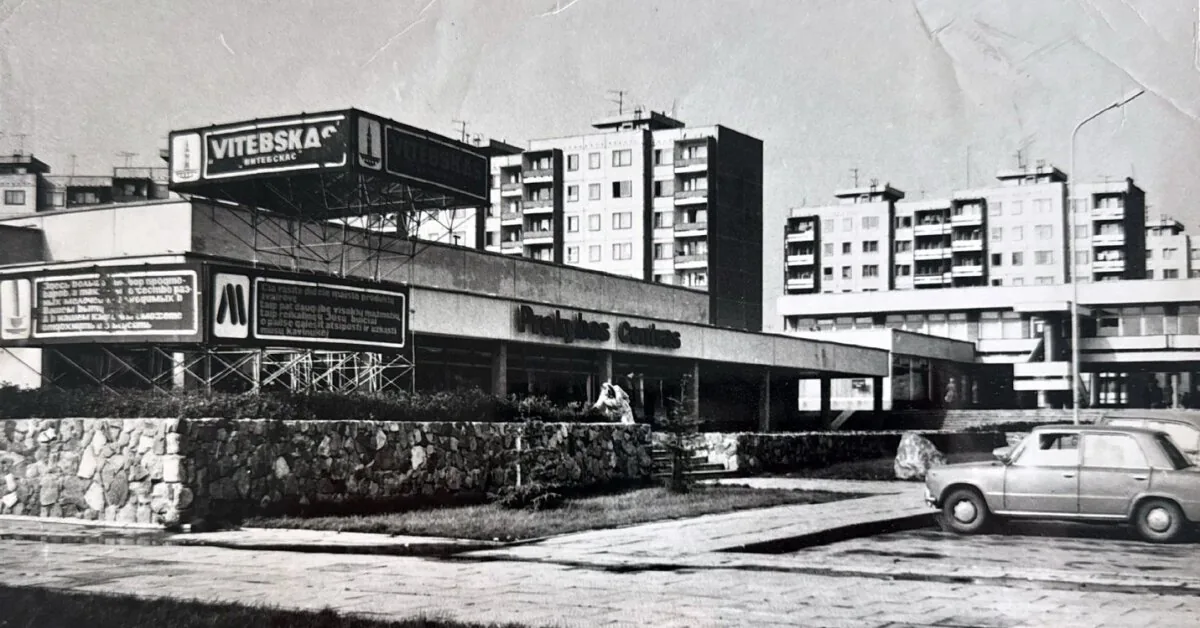
The history of „IKI – Kalniečiai“ reflects not only the pace and development of the retail network but also the life of the city itself. When the then-modern shopping center „Vitebskas“ opened its doors here in 1978, Kalniečiai was one of the fastest-growing microdistricts in Kaunas. As the city changed, so did this place – in 1996, the first „Iki” store in Kaunas was established here, expanding retail spaces, assortment, and services,” says Nijolė Kvietkauskaitė, General Director of „IKI Lietuva“.
Read more In the Champions League – Dambrauskas’ frustration and a great opportunity for Lithuanian «Celje»
When prices were written by hand
The pages of the chronicle and employees’ memories highlight a period when trade looked completely different from today. “Now everything happens automatically, but back then we used to write promotional posters by hand. Whoever wrote the most beautifully got the job,” recalls long-time employee Loreta Ščepanauskienė, who has been working in the retail network since 1998.
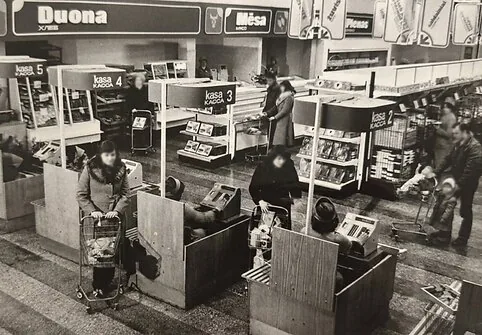


She recalls times when there were neither electronic price tags nor modern inventory systems. Prices had to be rewritten by hand, data recorded on paper, and inventory required a lot of calculations and manual work. Today, many of these processes are handled by digital solutions, making the work much faster, more accurate, and more convenient.
Similar changes are remembered by Viktorija Sargautienė, who has worked at „IKI – Kalniečiai“ for more than two decades. According to her, employees used to place orders themselves, based on their experience and by observing the actual movement of goods on the shelves.
“I remember when I used to collect information by hand about how many items were left, their expiration dates, and arrange orders. Now it’s much more convenient – prices no longer need to be changed by hand, they are digital. Modern systems also help manage other processes,” she says.
Oysters and fish that amazed customers
Long-time employees of the retail network also emphasize that over three decades, not only trade processes but also customers’ tastes have changed. Today, it is common to find ingredients from various world cuisines, freshly baked goods, or exotic products on store shelves. However, back then many of these were still new to Lithuanians.
Read more The nightclub traded sex with Italian footballers: «Do you want a blonde or a brunette?»

One of the most vivid employee memories is related to the times when unusual imported products appeared in stores. Among them were fresh imported fish, seafood, or oysters, which seemed like true exotica to many.
“At that time, it was a real miracle. People would stop to look, show interest, and ask questions. We tried very hard to beautifully prepare the displays to showcase these novelties. Every morning on my way to work, I thought about how to arrange them more interestingly. I remember walking down the street, seeing a branch of ripe rowan berries – I would definitely pick it and decorate the display that day,” recalls Loreta Ščepanauskienė.
A time capsule reminding how much has changed
The old pages of the chronicle capture a shopping center that we would no longer see today. Over the decades, this place has been reconstructed, expanded, and renovated multiple times, changing its appearance, retail spaces, and the shopping experience. That is why archival photos are especially valuable, allowing us to return to the beginning of the building’s history and see how everything looked back then.
Over the decades, technologies have changed, the assortment has expanded, the store has modernized, and the surrounding district has grown. But the unexpectedly found chronicle reminded a simple truth: the most important history of a place is created not by buildings or equipment, but by the people who work there, shop there, and build the community.
Read more Hammer in Sweden, bullets in Vienna, and murder in Poland: who is hunting Kadyrov’s critics?