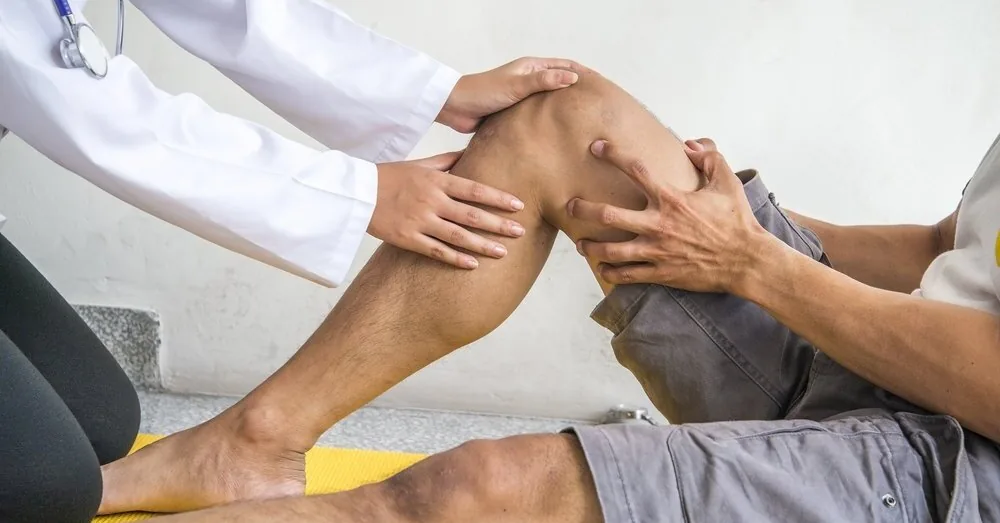
The pharmacist Lina Stočkutė-Plytnikė from “Gintarinė vaistinė” says in a press release that knee pain is one of the reasons why people often first stop by the pharmacy.
Read more Unexpected find in Kaunas opened a time capsule: what trade looked like 30 years ago
“Patients usually ask for ‘something to apply for the pain.’ Sometimes they want to consult about what might have caused the pain, although the pharmacist cannot make a diagnosis. However, we can assess the situation based on the person’s complaints and advise on over-the-counter remedies,” says L. Stočkutė-Plytnikė.
She adds that recurring knee pain should not be relieved solely by self-treatment. If the pain is severe, does not go away, appeared after an injury, or is accompanied by other worrying symptoms, one should see a doctor.
Why might the knee hurt?
There can be many causes of knee pain – from minor overstrain to more serious joint damage. It is often caused by injuries sustained during sports, falling, sudden twisting, or improper foot placement.
“It could be a joint sprain, ligament injury, or meniscus tear. The meniscus is a part of the cartilage in the knee joint, so damage to it can cause pain, swelling, and limited movement. After a more severe injury, bone fractures are also possible,” explains L. Stočkutė-Plytnikė.
Another common cause is degenerative joint diseases. In older age, knee pain is often caused by osteoarthritis, also known as arthrosis. In such cases, the joint cartilage wears down, causing the bones to rub more against each other, resulting in aching, stiffness, and difficulty moving.
Knee pain can also be caused by inflammatory diseases, such as rheumatoid arthritis or bursitis. Pain is also influenced by excessive physical load, repetitive movements, heavy physical work, excessive body weight, or genetic factors.
When is it enough to just monitor how you feel?
If the pain is mild or moderate, does not interfere with daily activities, appeared after greater physical exertion, and decreases after rest, it can be monitored for a while. This often happens after sports without proper warm-up, after working longer in the garden or yard, or after walking more.
“Self-treatment to relieve pain is possible when there is no swelling, deformation, the knee joint looks normal, and the person can at least partially bend and straighten the leg. It is also important that the pain appeared gradually, without a clear injury, and decreases at least somewhat after rest,” says L. Stočkutė-Plytnikė.
Read more In the Champions League – Dambrauskas’ frustration and a great opportunity for Lithuanian «Celje»
In such cases, it is most important to avoid activities that increase the pain, not overload the joint, and observe whether the condition improves. If the pain does not go away, recurs, or worsens, rest and home remedies may no longer be sufficient.
When is it no longer possible to delay?
A doctor’s examination should not be postponed if the pain is so severe that the person cannot support the leg or move normally. It is especially important to seek help after an injury – a fall, blow, or sports injury.
“Significant knee swelling, redness, and warmth at the injury site should cause concern. Such symptoms may indicate severe inflammation or infection. If the knee area is noticeably warmer than the surrounding skin, do not delay,” warns the pharmacist from “Gintarinė vaistinė.”
Another important sign is the inability to fully bend or straighten the leg. People sometimes describe this as the joint “locking.” This may indicate a meniscus injury or another problem preventing the joint from moving normally.
“A doctor’s consultation is also needed when the knee looks unnatural in shape, is deformed, when the pain does not go away for several days or a week, and self-help is ineffective. If other joints also hurt, it may not be just a local knee problem but a sign of a more general disease,” says L. Stočkutė-Plytnikė.
The situation should be taken especially seriously when knee pain or swelling is accompanied by fever, chills, or general malaise. In such cases, an infectious process may be suspected, requiring urgent treatment.
“The most important thing is not to follow the principle that everything will pass on its own. If a person is in doubt, it is always better to consult a pharmacist – they can help understand whether the situation can still be managed independently or if it is time for a doctor’s examination,” summarizes the pharmacist.
Read more The nightclub traded sex with Italian footballers: «Do you want a blonde or a brunette?»