“Ceuta can no longer bear it,” the team from the newspaper “El Faro de Ceuta” added in the comments under the videos.
Read more Ukraine showed a crashed MiG-29 fighter jet: found the black box
However, on the other side of the border, this clip caused a completely different reaction. After being trimmed and republished in Arabic, it looked like an invitation. Women were smiling, showing peace signs and giving thumbs up, and most importantly – walking unhindered by anyone.
The video acted like confirmation of rumors circulating on social networks for weeks, according to which a recent decision by the Spanish Supreme Court means that migrants arriving illegally by sea can stay in the country. As one user mistakenly stated on the social network “Facebook”: “Ceuta has opened its gates.” But in reality, migrants still faced deportation after judicial review.
This and similar reactions to posts with two swimmers were an important part of a wave of disinformation that experts described as one of the clearest examples of social networks directly contributing to a real-world tragedy.
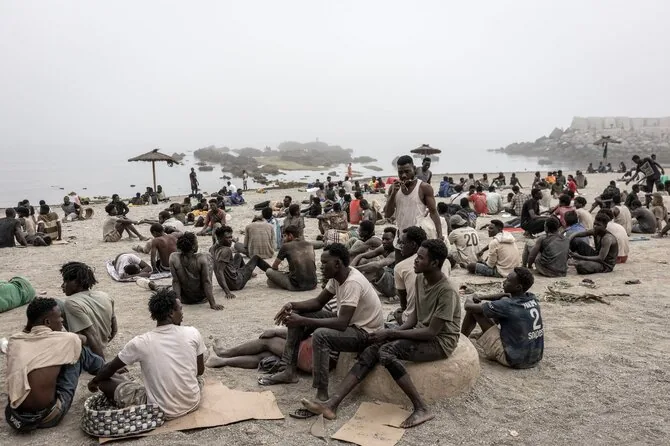
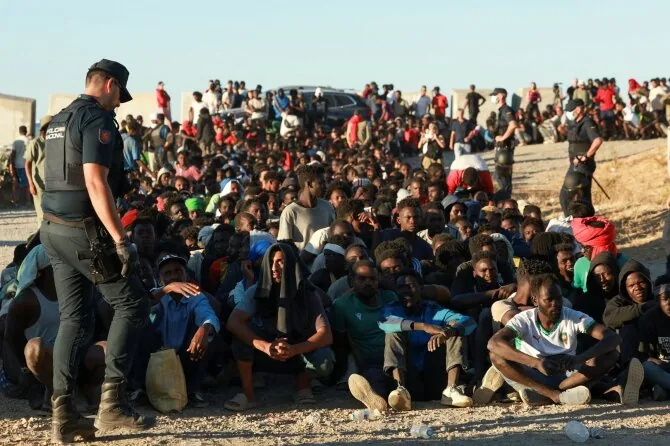
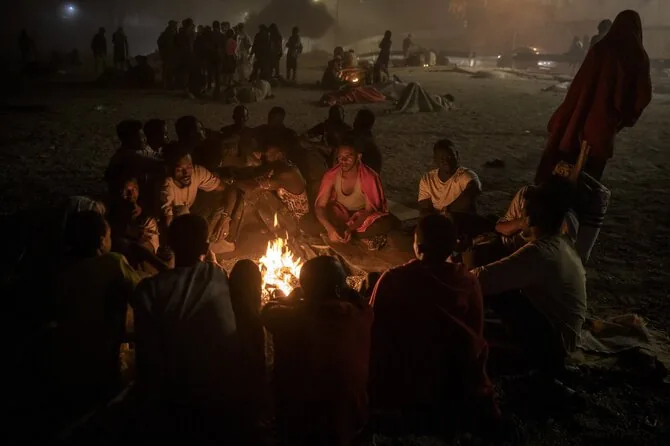
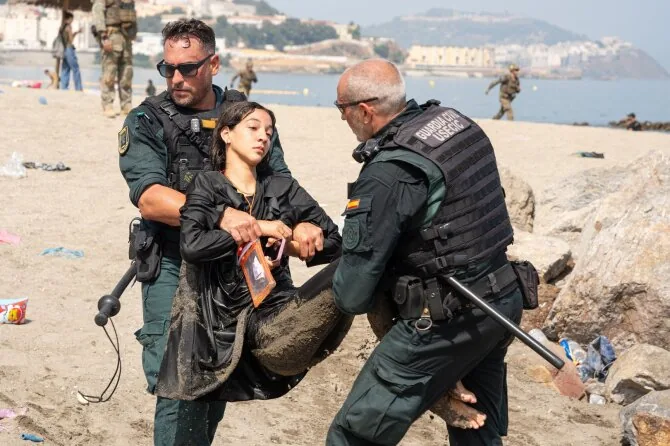
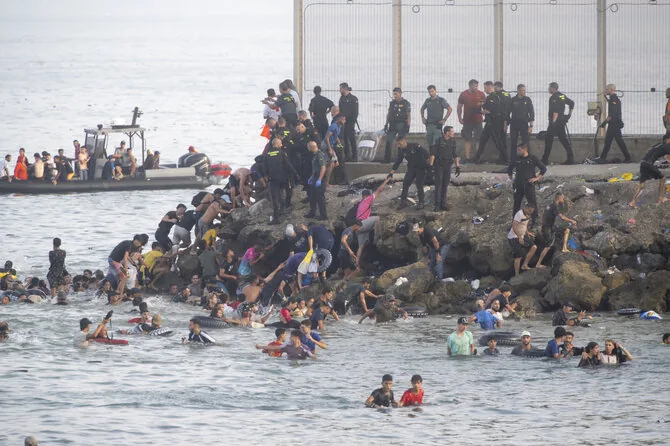
On July 30, thousands upon thousands of people, most of whom unjustifiably trusted rumors popularized on social networks, began flooding into Ceuta, creating a living wave of people that overwhelmed authorities on both sides of the border.
About 90 people died, many of them drowned. The resulting chaos only further heated already fierce debates in Europe and beyond about illegal migration and the economic and social factors driving it.
“It all started with noise,” recalled Moustafa Ayadas, an analyst at the international organization “Strategic Dialogue Institute,” which monitors online threats, referring to the heated discussions, “And then it all turned into a real avalanche.”
For almost three weeks, millions of posts on “Facebook,” “Instagram,” “WhatsApp,” “TikTok,” and “Telegram” platforms buzzed with speculation about how the Spanish court decision increased the chances of reaching the country’s territory, noted M. Ayadas and other researchers who analyzed what provoked the events of that day.
It seems that this type of content spread almost on its own, mixing with the simmering despair of the majority of residents of Morocco and other parts of Africa, pushing them to seek economic opportunities in Europe. This despair was later exploited by online groups involved in human smuggling, offering help on social networks “Facebook” and “WhatsApp” to those considering their chances of crossing the border.
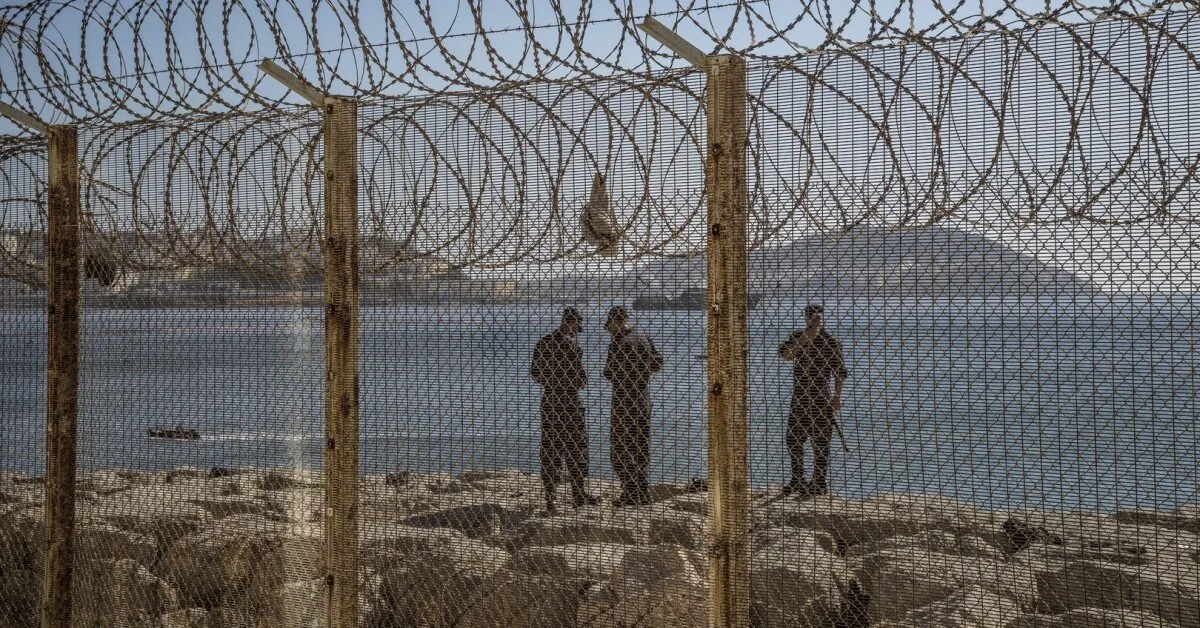
At the end of July, the number of posts increased significantly. More and more, although still relatively small numbers of people tried to bypass the physical barriers that stretch into the sea along the southern edge of Ceuta. Photos of those who succeeded only sparked more passions and inspired others to try.
It is unclear whether the Spanish and Moroccan authorities and the platforms themselves were aware of the massive online movement or expressed any concern about it before the afternoon of July 30, when endless groups of migrants tried to cross the border separating the two countries.
The Spanish fact-checking platform “Maldita.es” assessed that on that day at least 215 “Facebook” accounts posted completely identical messages about the Supreme Court decision, falsely claiming that no person who swam to Ceuta or to the other Spanish enclave on the Moroccan coast – Melilla – would be sent back.
Such repetition of information suggested that these were coordinated efforts to spread information that later, apparently unsuspecting users shared further.
As highlighted by the Spanish fact-checking platform, one of the most well-known accounts sharing this message belonged to Youssef Belhaissi, a press representative of the Moroccan interministerial human rights delegation based in the country’s capital Rabat. Y. Belhaissi himself, who has 1.3 million followers on the social network “Facebook,” did not respond to a request for comment.
Rumors have long influenced the choice of migrant routes to foreign countries, accompanied by unpredictable risks. Social networks only accelerated this process, said Jorgen Carling, a migration expert at the Oslo Peace Research Institute.
“Even if the Supreme Court decision did not have a significant impact,” he noted, “it gave the rumors that grain of truth that made them much more credible.”
Some shadowy “Facebook” and “WhatsApp” groups, previously offering help in smuggling people illegally into Europe, had more than 100,000 followers. Several of them used variations of the Arabic word “harraga” (lit. burners, relating to burning documents or metaphorically burning bridges by crossing another country’s border) – a jargon term used to describe people crossing the border illegally.
One group on the social network “Facebook” was linked to another group on the platform “WhatsApp” called “The Road to Ceuta” and used a swimmer emoji.
Read more Panevėžys residents expressed different moods after the finish
According to researchers, these groups shared advice, provided maps, equipment, and even ride services to cities closer to the border.
The Spanish Ministry of the Interior emphasized in its statement that human trafficking networks “took advantage of the court decision to encourage an influx of illegal migrants, mostly young people.”
It was found that some of these groups were administered by individuals using Algerian phone numbers, but no evidence was found that any other state was involved in this process.
“These calls to action could be observed – moreover, they addressed logistical issues, – and the activity itself was more focused on profiting from the situation than on organized government or foreign forces’ actions,” assessed Marcelino Madrigal, a Spanish disinformation expert. “The groups operating there were meant for coordination, as if they wanted to organize a march.”
The company “Meta,” which owns “Facebook,” “WhatsApp,” and “Instagram,” stated that it assembled a team monitoring the crisis in Ceuta and allegedly removed “content violating our rules, including content offering, facilitating, or seeking illegal migrant transport services.”
Some of these accounts remain active and after the tragedy have become discussion forums for those desperately trying to find out the fate of their relatives who did not return after the migrant surge in Ceuta.
“This is my father, he has been missing since Thursday and there is no news,” reads one post, attached with a photo and a phone number in Morocco in case anyone has any information about the missing person.
From the beginning, the crisis was rooted in distorted information about the Supreme Court decision made in the case of a migrant who arrived in Ceuta. According to Spanish law, authorities can immediately deport anyone trying to overcome physical barriers to enter the country, but the court decided that those who did not overcome the barrier – for example, by swimming across open sea – should be subject to judicial review.
This decision was made at the end of June and published on July 8. In discussions flaring up on social networks in Morocco, these nuances simply disappeared. Over time, as if playing “broken telephone,” the decision was presented as a significant shift in Spanish immigration policy, although in reality anyone entering the country would still be deported if they could not justify their request for refugee status.
According to Marouane Lamharzi Alaoui, founder of the visual content analysis company “Firassa AI,” posts with two young swimmers were viewed more than 32 million times.
Meanwhile, as he noted, a post in French published on the “TikTok” platform, which aimed to correct the falsely reported information about the alleged border opening, was viewed less than 2,000 times.
“On Instagram, I saw videos claiming: ‘They will help you, they won’t send you back,’” one of the people who crossed the border told “The New York Times” in a phone interview. He agreed to speak on the condition that only his first and last name – Achraf Ben Ahmed – be mentioned.
As the man said, he came from central Morocco by train on July 29. Then he bought a wetsuit, fins, and swam 12 kilometers to Ceuta.
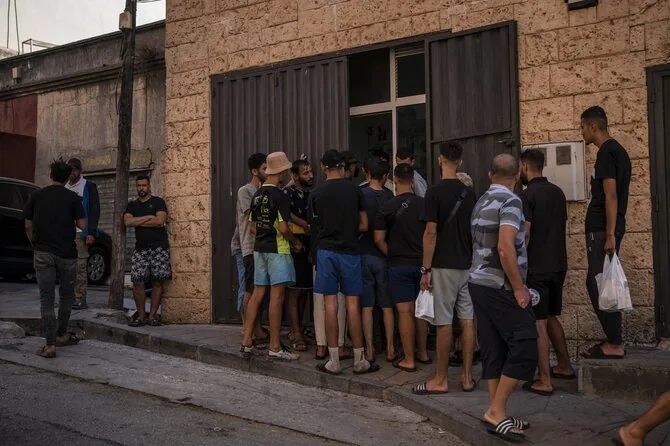
Just a few days after the mass influx of migrants, most of the people who reached Ceuta returned to Morocco. Some of those who remained, including Achraf, admitted that they hide in the forested part of Ceuta and only go into the city to buy food. He still has hope of reaching Europe, although his previous three attempts were unsuccessful.
“I hope God will help us,” he hoped.
After the crisis subsided, questions arose as to whether this online upheaval should have been a warning signal. M. Madrigal blamed “government irresponsibility” and “platform impudence” because they fail to control the content they distribute.
“No one takes responsibility here,” he continued, referring to “Meta” CEO Mark Zuckerberg.
“Mr. Zuckerberg? The Moroccan government? The Spanish authorities?,” the expert asked. “If we don’t identify it, it could happen again.”
Read more Accident in Kaunas: after a collision of two cars, a «Lexus» parked in the lot was also hit
This article was published in The New York Times.
© 2026 The New York Times Company