„In fact, the museum refuses to accept the sculptures because it faced several issues: one, there is no place to store them, and another, there are no funds for their restoration. The sculptures remain under the municipality’s care for now (…) we will try to find a place where we can put them next,“ said Kamilė Gogelienė, Chairwoman of the Historical Memory Commission of the Vilnius City Municipality Council, to BNS.
Read more Want to avoid wrinkles? Effective ways – from dietary changes to sleep habits
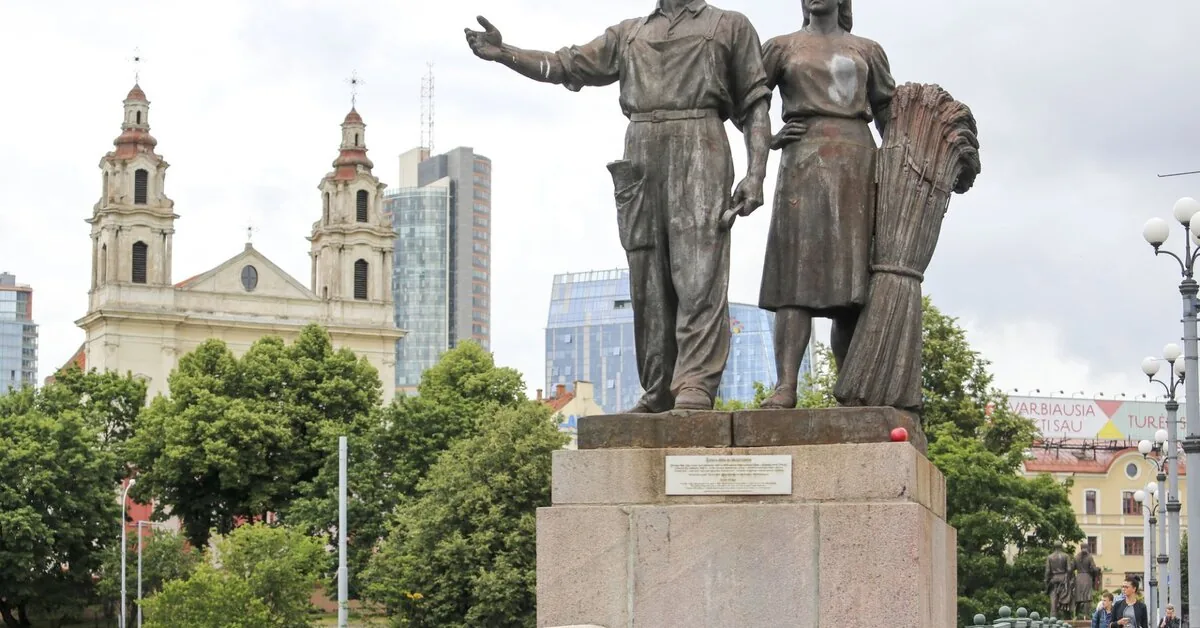
Four groups of socialist realism sculptures depicting soldiers, workers, peasants, and students were removed from the Green Bridge in Vilnius in 2015.
In June 2021, the capital’s municipality announced it would transfer these works to the Lithuanian National Museum. The museum intended to exhibit the sculptures in its recently opened branch – the former detention center.
This week, Giedrė Milerytė-Japertienė, Deputy Director General for Science and Dissemination at the Lithuanian National Museum, confirmed to BNS that the museum ultimately decided not to take over the Green Bridge sculptures from the municipality.
„The museum consistently sought opportunities to take them over, but without resolving the ownership transfer issue and lacking the necessary funding for restoration and further maintenance, the museum had no real possibility to assume such a long-term commitment, so we decided to abandon plans to take over these sculptures,“ said G. Milerytė-Japertienė.
According to her, problems arose due to the legal status of these sculptures. Since they are long-term municipal property, a corresponding government resolution is required for the museum to take ownership. Such a resolution was not adopted.
„Later, the municipality offered the museum to take the sculptures on a 20-year loan basis, with the possibility to extend this period. However, in that case, the museum would have to bear significant costs for their storage, restoration, and exhibition,“ stated G. Milerytė-Japertienė.
„After assessing the condition of the sculptures and preparing a restoration plan, it turned out that at least 500 thousand euros would be needed. The museum does not have such funds, and additional financing was not allocated for this purpose, although we had submitted a project to the Ministry of Culture,“ the deputy director told BNS.
Therefore, plans to take over the Green Bridge sculptures were ultimately abandoned.
According to K. Gogelienė, the Vilnius City Municipality administration proposes transferring the sculptures to Grūtas Park located in the Druskininkai municipality, where other removed Soviet-era sculptures of figures are exhibited. However, the Historical Memory Commission decided to look for other options.
„I think the question is primarily what we expect from these sculptures, whether we will just keep them locked up, or perhaps consider short-term exhibitions, occasional displays, or something else. Everything (the decision – BNS) depends on that,“ said K. Gogelienė.
Read more A Lithuanian who was wanted across Europe for three years finally got into trouble in Alicante
According to her, one possible option is to transfer the Green Bridge sculptures to a museum belonging to some municipality, for example, the Vilnius Museum.
The sculptures were removed from the Green Bridge both because of their ideological nature and because they needed restoration.
The head of the Historical Memory Commission doubted whether the municipality would invest in their major restoration as the National Museum planned.
„I wonder if it is worth doing. Maybe it is better to repair only what is really necessary. I cannot imagine a full restoration; it would require a lot of funds,“ said K. Gogelienė.
According to her, the fate of the Green Bridge sculptures should be clarified this autumn.
The Historical Memory Commission will submit its proposals to the Vilnius City Municipality Council, which will make the final decision.
The Green Bridge in the center of Vilnius was built in 1952. Its project was prepared by the then Leningrad Design Institute “Projektstalkonstrukcija,” and the bridge was built by a Russian army engineering unit.
The bridge was decorated with four sculptures corresponding to the ideas of socialist realism depicting a soldier, workers, peasants, and students, named “On Guard for Peace,” “Industry and Construction,” “Agriculture,” and “Youth of Science.”
After Lithuania regained independence and began removing Soviet symbols, there was a public debate about these sculptures. Their critics argued that the sculptures were part of Soviet propaganda and offended people who fought for Lithuania’s liberation from Soviet occupation. Opponents of removing the sculptures said they were an integral part of the bridge and accused the authorities of politicizing and settling historical scores.
Eventually, the sculptures were removed citing their poor condition and threat to public safety.
Read more „Hezbollah“: Israel attacks will be responded to accordingly
The removed sculptures are still stored at the premises of the municipal company “Grinda.”