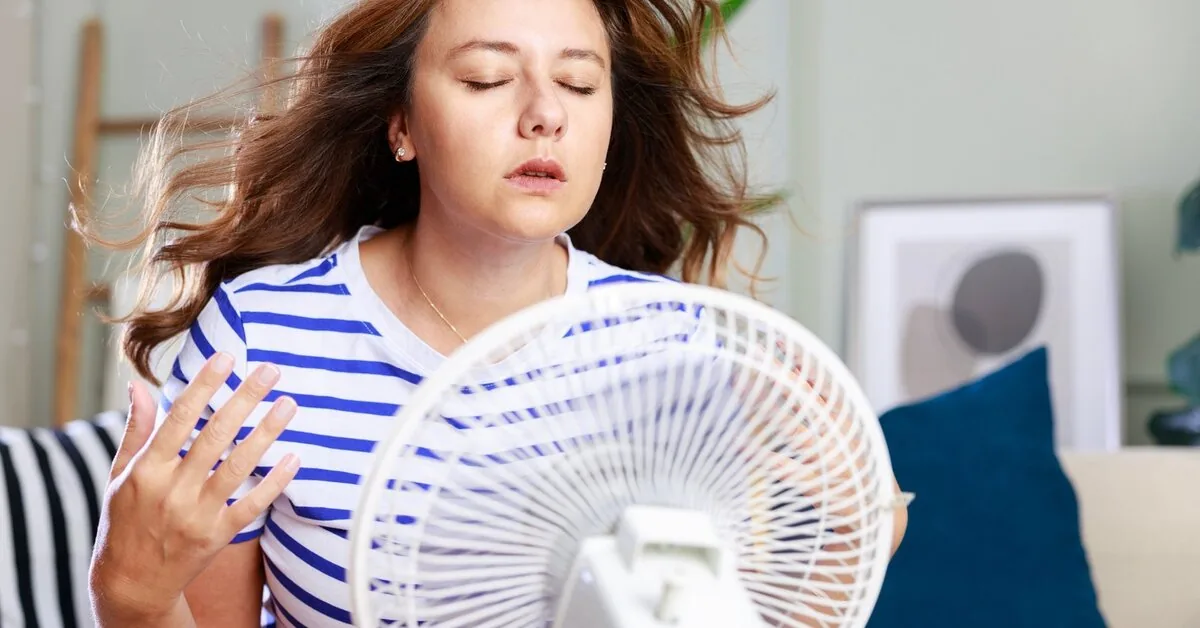
In some parts of the United Kingdom, the fourth heatwave of this year is already being recorded, so the UK Health Security Agency (UKHSA) has issued health warnings for most of England due to the effects of heat. The warnings were issued after an exceptionally hot summer – Western Europe experienced the hottest June on record, writes The Guardian.
Nicola Pegues, director of the non-profit organization Community Sauna Baths, said that initially, as the temperature rose, reservations decreased.
“But now we see that people have started registering again,” she said.
All the organization’s saunas are located outdoors, and there are cold water pools nearby, so visitors can alternate between heating up and bathing in cold water.
“It really provides great relief,” said N. Pegues.
Professor Jari Laukkanen, a cardiologist at the University of Eastern Finland who has studied the health benefits of saunas, says that repeated heat exposure can gradually train the body to cope better with it.
“This is well known in sports physiology – athletes deliberately train regularly in the heat to improve their resistance before competitions in hot climates,” he said.
“Very similar physiological changes can occur due to passive heat exposure, such as visiting a sauna or bathing in a hot tub.”
According to J. Laukkanen, as the body adapts to heat, a person begins to sweat earlier and more efficiently, skin blood flow improves, blood plasma volume increases, and during later heat exposure, the cardiovascular system’s load decreases.
“In other words, regular heat exposure can help the body regulate its temperature more effectively,” he said.
Dr. Jessica Mee, a scientist at the University of Worcester, is currently recruiting participants for a study that will assess whether regular bathing in hot water can improve the body’s response to heat.
According to her, frequent heat exposure changes not only physiological responses but also how a person feels heat and behaves in it.
“People accustomed to heat distribute their energy better, drink fluids more consistently, and recognize their body’s warning signals earlier,” she said.
However, heat adaptation may not be equally beneficial for everyone.
“These bodily changes depend greatly on the ability to sweat more intensely and increase blood flow to the skin,” explained Dr. Heather Massey, an expert in extreme environmental conditions and physiology at the University of Portsmouth.
Moreover, saunas and hot baths can pose risks for some people. J. Laukkanen emphasized that they should be avoided by people with acute illness or fever, unstable angina, recent heart attack, or uncontrolled low blood pressure. In such cases, medical advice and health assessment should be sought first.
Experts say that to train the body to adapt to heat, it usually takes spending about 40–60 minutes in the heat daily for at least four to six consecutive days. The effect of such adaptation lasts about a week, but a longer training period can result in longer-lasting effects.
Read more «Meat attacks» lack 400 thousand: how men are now caught on the streets of Russia
Although some saunas are already advertising themselves as an unexpected way to prepare for heatwaves, whether it is worth visiting them during the heatwave itself depends on many circumstances – a person’s physical condition, health, and whether their condition is monitored.
J. Laukkanen emphasizes that heat adaptation is not the same as protection from heat.
“Currently, we have little evidence that visiting a sauna during the heatwave itself protects people from heat-related illnesses or other health disorders,” he said.
“It is likely that the benefits are more related to long-term body adaptation due to regular heat exposure, rather than using the sauna as an emergency measure in extremely hot weather.”
J. Mee added: “Heat adaptation is a preparation strategy that should be applied in milder months, not a way to save oneself on the hottest day of the year.”
According to her, one of the main problems on a hot day is that after a sauna or hot bath, the body does not have the opportunity to truly cool down and recover.
“You add one heat challenge on top of another, although the body is likely already affected by several consecutive poorly slept nights, a certain level of dehydration, and accumulating cardiovascular load,” she said.
“It is under such circumstances that heat-related health disorders develop.”
Another problem is that most studies are conducted in supervised laboratories or other controlled conditions. There, temperature is monitored, the duration of heat exposure is precisely controlled, and participants are supervised by specialists at all times.
“So far, we do not know how safe and effective it is to apply these findings to people who bathe in hot tubs at home on their own,” said J. Mee.
According to her, one of the direct risks is fainting.
J. Laukkanen urges that during heatwaves, the first priority should be following public health specialists’ recommendations.
“Regular heat exposure does not replace the need to drink enough fluids, avoid intense physical activity during the hottest part of the day, and take care of vulnerable people,” he said.
Read more Before US representatives’ visits to Kyiv and Moscow, Russia rejects freezing the war in Ukraine
“These remain the most important protective measures.”