Relevant calculations are presented in the study by scientists Jacob Haqq-Misra and Eric Wolf, which was published in the authoritative scientific journal “JGR Atmospheres”.
Read more 5 reasons why cucumbers do not bear fruit and how to solve each problem
To model how our planet will change over the next two billion years, the researchers used a three-dimensional climate model.
They paid special attention to two factors: the gradual increase in solar energy activity and the gradual decrease in carbon dioxide (CO₂) concentration in the atmosphere.
The results showed that vegetation on Earth can survive much longer than previous studies indicated. According to the most optimistic scenario, plants will be able to survive for about another 1.87 billion years.
“We tried to prove that life on Earth, especially complex vegetation, can survive longer in the future than previous scientific works suggested,” explained one of the study’s co-authors, J. Haqq-Misra.
The Sun will become brighter and hotter
According to scientists, the Sun will not always remain the same as it is now. As our star ages, it will emit more energy, and the Earth will receive more heat.
In about 1.87 billion years, the amount of solar energy reaching our planet will be almost 20% greater than today.
As the researchers note, this moment will almost coincide with another grand change – the beginning of Earth’s ocean evaporation.
The authors of the study believe that vegetation can survive almost until the moment when Earth begins to lose its oceans into outer space.
This process will gradually heat the planet’s surface, but it will not be a sudden catastrophe, rather a very slow transformation lasting an enormous amount of time.
Eventually, unbearable heat will make photosynthesis simply impossible. With the extinction of vegetation, all food chains dependent on it will collapse.
The Earth will become too hot for plants
In one of the scenarios examined by the researchers, the carbon dioxide level in the atmosphere remains relatively stable, but the temperature relentlessly rises due to increasing solar brightness.
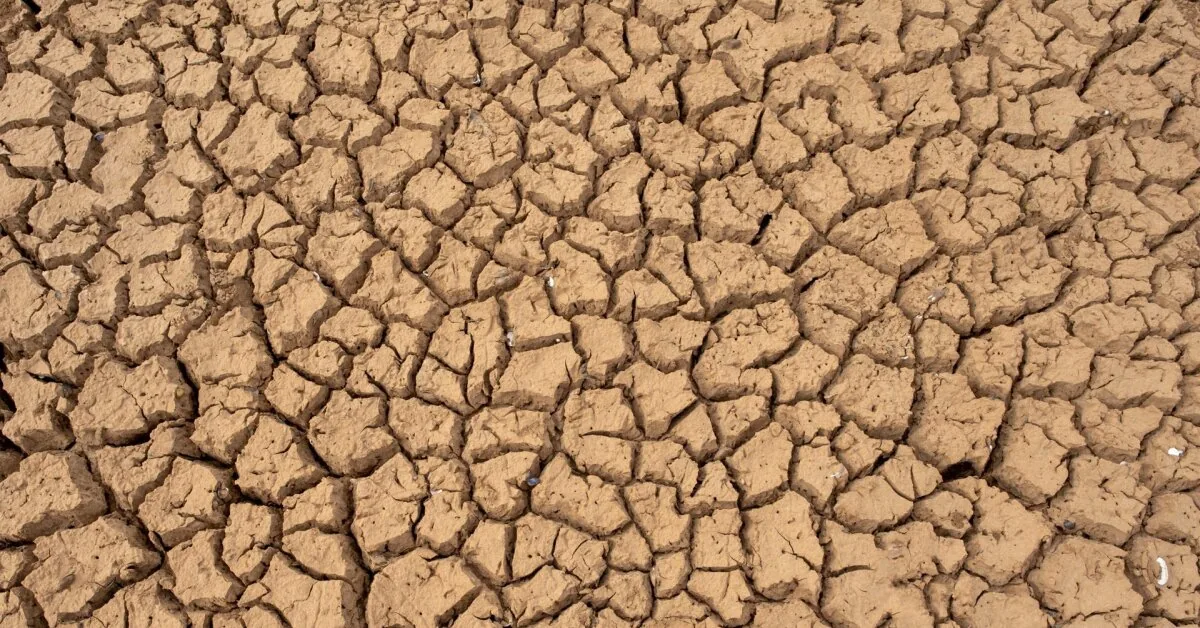
In about 1.68 billion years, the average global temperature may exceed 50 °C. At this point, the Earth will become too hot for most terrestrial plants.
And after 1.87 billion years, the planet’s average temperature will surpass the 65 °C threshold.

According to the researchers, this temperature is the critical limit beyond which even the hardiest terrestrial plants known today will have no chance of survival.
Scientists emphasize that this refers to the average temperature of the entire planet, not specific regions or individual days.
Plants may run out of carbon dioxide
The second scenario examined by the scientists shows that plants may also go extinct for another reason.
There is a natural mechanism on Earth that gradually removes carbon dioxide from the atmosphere and locks it in rocks. This process helps the planet avoid overheating too quickly, but over time it may result in plants simply not having enough CO₂ for photosynthesis to occur.
Read more Who got the most tired until the semifinals and how does Messi dominate by walking?
In this scenario, the temperature remains relatively stable, but the carbon dioxide concentration steadily decreases.
Plants using C4 photosynthesis will face serious difficulties when CO₂ concentration drops to about 10 parts per million (ppm). According to scientists’ calculations, this could happen in about 1.35 billion years.
However, the authors note that some very resilient species may survive even at lower concentrations. Succulents and other plants using CAM photosynthesis require much less carbon dioxide.
“Some aquatic plants can also use bicarbonates dissolved in water. If photosynthesis remains possible even at just 1 ppm CO₂ concentration, the plant biosphere could survive for about 1.84 billion years,” the study explains.
The beginning of ocean evaporation
Scientists believe that the death of the last plants will almost coincide with the moment when Earth approaches the so-called moist or runaway greenhouse effect threshold. Due to continuously rising temperatures, huge amounts of water will begin to evaporate from the oceans.
Water vapor will rise to the upper layers of the atmosphere, where molecules will be broken down by solar radiation. The released hydrogen will gradually leave the atmosphere and disperse into outer space until Earth completely loses its oceans.
The maximum survival limit for plants almost perfectly coincides with this event, which is expected to occur in about two billion years.
The authors emphasize that this work is not a climate change forecast for the coming decades or centuries. It describes the natural evolution of the Sun and Earth over an enormous time span.
Plants may adapt
The researchers acknowledge that even the most advanced models cannot fully accurately predict how life will evolve over such a long period. In their opinion, future plants may learn to withstand even greater heat or manage with even less CO₂.
Life may also move to cooler regions, highlands, or water bodies.
“The limits set today by thermal stress or resource scarcity may only reflect the current state of the biosphere, not its real evolutionary potential,” the authors say.
J. Haqq-Misra believes the study results are optimistic: “The Earth system is extraordinarily resilient, and we are part of something that may have a very, very long future.”
An advanced civilization could save the planet
The study also mentions solutions that today resemble science fiction more.
Scientists hypothesized that a future advanced civilization could try to reduce the amount of solar energy reaching Earth by using gigantic shields in space or special particles that reflect light.
Another theoretically possible idea is the gradual alteration of Earth’s orbit to slowly move the planet away from the brightening Sun.
Although it is difficult to say today whether such technologies will ever be developed, technological intervention combined with natural evolution could further extend our planet’s green period.
Read more In Šventoji – locked public toilets: explained what happened
Source: Libertatea