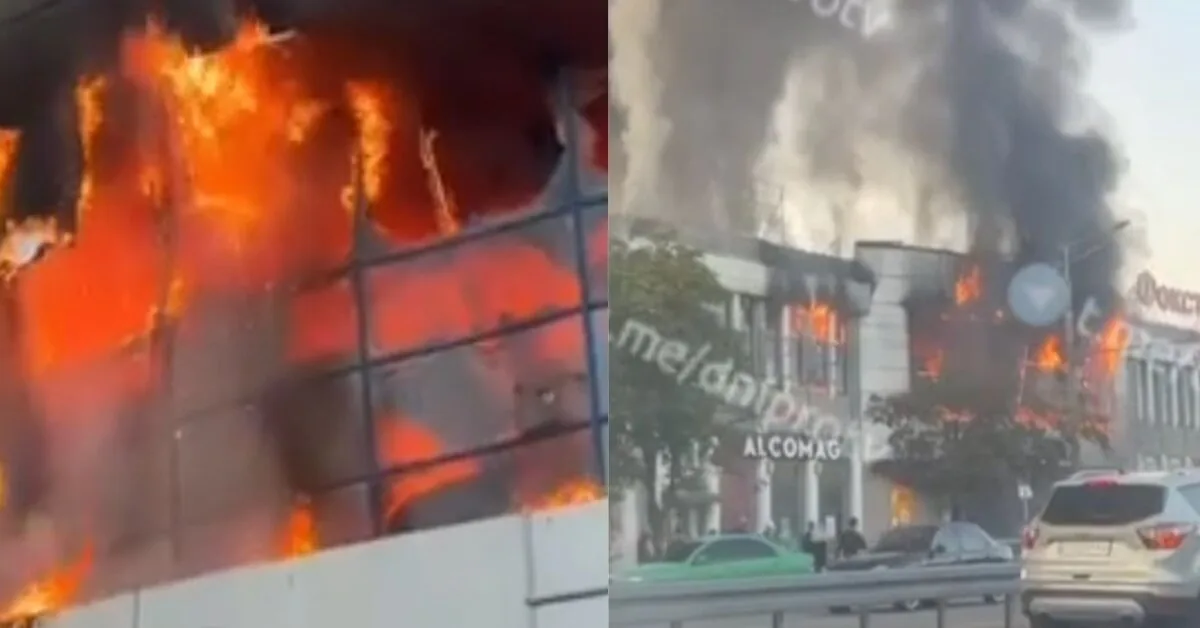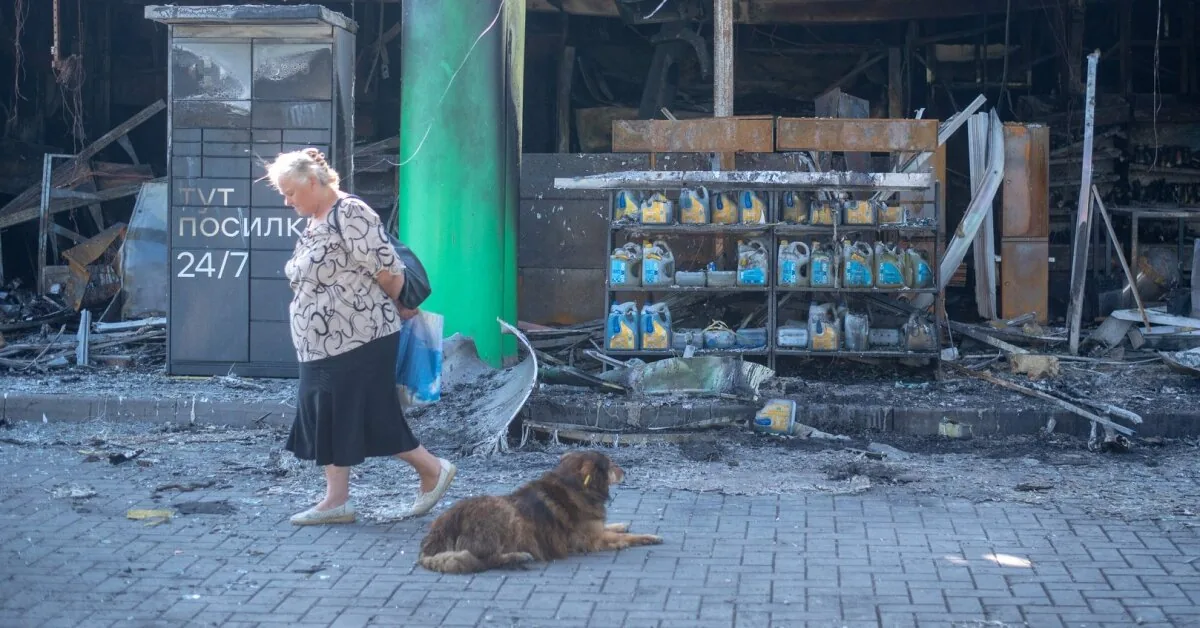
In recent months, Russian forces have attacked nearly 250 gas stations across Ukraine. This, officials, analysts, and gas station operators say, is a systematic and deadly response to Ukraine’s campaign of strikes on oil refineries.
Read more Bertašius, who broke half a century of silence – 17 in Europe
Gas stations, once a beloved and quirky part of Ukrainian life, have become a source of anxiety and fear.
Ukraine claims that its long-range strikes on Russian oil refineries aim to cut off the revenue stream fueling Russia’s war machine and to pressure the Kremlin to end the war.
Meanwhile, Russian state media reports that its strikes on gas stations in Ukraine aim to disrupt the transport logistics of Kyiv’s armed forces.
However, as Ukrainians point out, unlike attacks on Russian oil refining infrastructure, gas stations targeted by Russian drones are visited daily by many civilians.
The oil refineries targeted by Ukraine are state-owned or belong to large companies. Meanwhile, the vast majority of gas stations in Ukraine remain in the hands of retail businesses.
Yes, sometimes Ukrainian soldiers visit them, but they cannot be considered military facilities. Moreover, strikes on civilian gas stations have no impact on military fuel supply logistics, assessed former Ukrainian defense minister advisor Serhiy Beskrestnov.
“The sole purpose of these attacks is terror against civilians,” he emphasized.
The Russian Defense Ministry has already included statistics on attacks against gas stations in Ukraine in its daily reports. The Russian side also publishes videos showing drone strikes on gas stations allegedly “actively used” by the Ukrainian army.
The so-called Russian military blogger “Rybar” previously noted on his Telegram channel that this Russian forces campaign “is gaining momentum.”
Ukraine’s strikes on oil refineries have caused fuel shortages in Russia, but Russian attacks on gas stations have so far shaken the Ukrainian psyche more than the fuel supply chains.
For Ukrainians, gas stations mean much more than just fuel. For people, they are social centers famous for hot dogs and impeccably clean restrooms. They are waypoints for civilians traveling across the country, whose airspace has been closed for more than four years.
Gas stations near the front line provide shelter for soldiers just returning from battle: a place where they can chat with comrades, support staff, and civilians while sipping latte coffee.
But now drivers try to stop at gas stations as rarely as possible, avoid restroom breaks, and carry extra fuel in jerry cans.
When they do stop, they often start the fuel pump and quickly leave the station, bypassing the store. Then they wait quietly nearby until the tank is filled. People try not to linger here if they can avoid it. Even some employees smoke away from the gas stations during breaks.

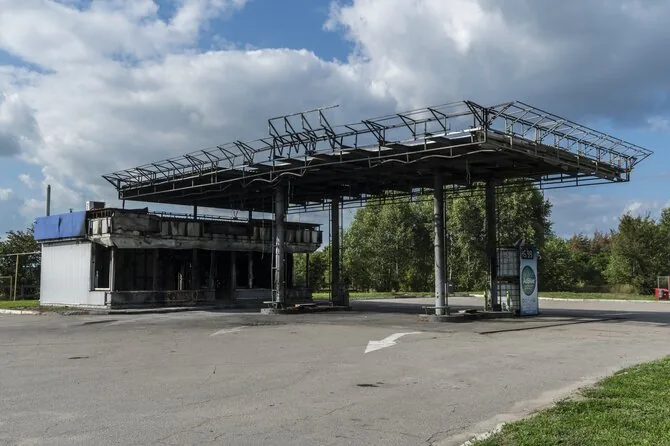
Traces of the new Russian strike campaign are visible throughout Ukraine. Driving between the cities of Dnipro and Zaporizhzhia, nearly every other gas station is burned to the ground. The operating hours of others are completely unclear: one night a gas station may be open, and the next it is closed.
One evening recently, a gas station along this highway was almost empty except for soldiers who stopped to refuel a truck. There were no employees. They had retreated from the gas station closer to the road to observe everything from at least half a kilometer away.
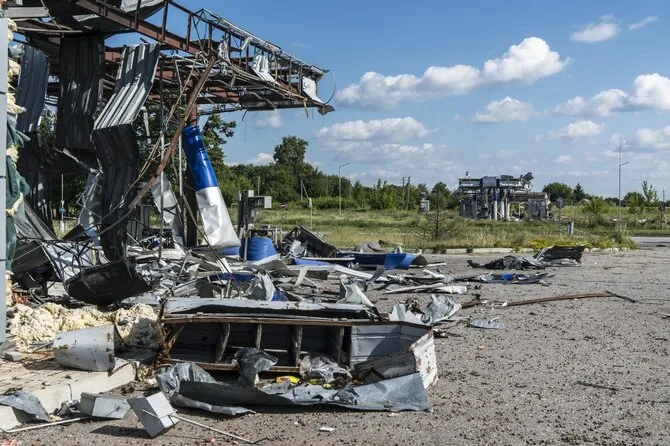
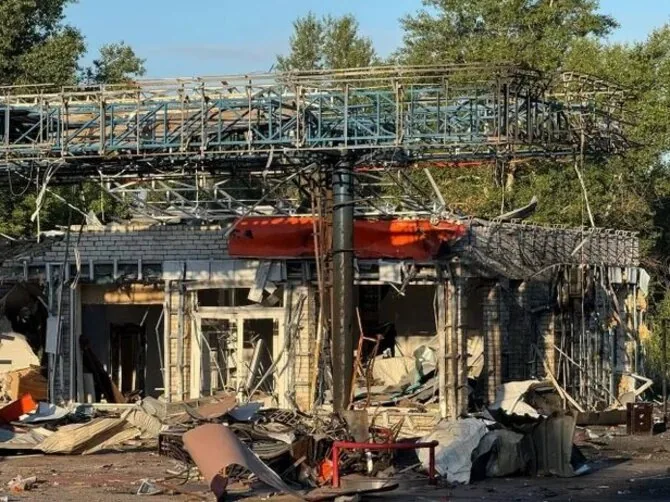
On the road leading from Kharkiv in northeastern Ukraine, two gas stations standing opposite each other were completely destroyed. Around the twin craters left behind, fragments of “Shahed” drones were scattered. Only loudly creaking metal sheets twisted into ribbons remained hanging above the pumps.
Read more Kristina Meseguer introducing a new boyfriend – her ex-husband Enrique broke the silence
Just a 10-minute drive away – another gas station burned to the ground. At another, a blackened, blast-displaced fuel pump stood, and among the rubble of the destroyed gas station were tissue packages and a surprisingly unbroken cup with the English inscription: “Coffee wakes me up. Jesus leads me forward.”
At one of the Kharkiv gas stations marked with strike signs, cylindrical sandbags were piled at the entrance, and nearby hung an intact poster with a warning in Ukrainian: “GAS STATION CLOSED DURING AIR DANGER.” It also stated that “employees must leave the gas station and wait in cover until the air danger ends.”
At another gas station with boarded-up windows, work continued without breaks, even when air raid sirens sounded.
These Moscow strikes have already killed several people, including Maksym Oseredchuk, who before joining the Ukrainian armed forces worked as a driver for The New York Times journalists. The man died in June during an attack on the Kherson railway station.
On July 6, two people died when Russian soldiers attacked a gas station in Zaporizhzhia. A man was killed the day before in an attack in Izyum. On July 1, a strike on a gas station in the Dnipropetrovsk region claimed the life of the gas station operator.
Although Russia has been fiercely shelling Ukraine’s energy infrastructure since the start of the large-scale invasion in 2022, analysts note a clear shift after Ukrainian forces intensified their strikes deep into Russian territory in April. One after another, Ukrainian gas stations have become targets of Russian drones.
In those few months, gas stations in Ukraine were attacked at least 246 times. Of these, 194 strikes occurred from early June to July 27, according to data from the non-profit organization Armed Conflict Location & Event Data (ACLED), which monitors global conflicts.
It seems Russia conducts its attacks in waves. On July 24–25, four gas stations in Poltava were hit. On the night of July 7–8, three gas stations in Odesa were attacked. On July 3, gas stations in Sumy, Chernihiv, Poltava, and Kharkiv were targeted. Two days earlier, five gas stations were shelled in the Dnipropetrovsk region alone.
Most Russian strikes targeted regions closer to the front line, but according to ACLED and the Kyiv-based consulting group A-95, areas farther from the battlefield were not spared. Representatives of the consulting group also noted that drivers of fuel trucks are increasingly refusing to go to danger zones.
While drivers and customers overestimate the risk, Ukrainian authorities and gas station operators are trying to take appropriate measures.
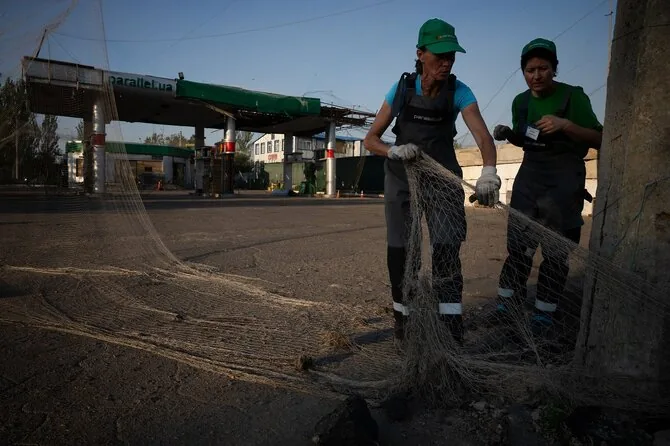
In Trostianets, Sumy region, where all nearby gas stations were destroyed by strikes, authorities set up mobile refueling points. At some gas stations in the Donetsk region, Eastern Ukraine, drone protection nets were installed.
One of the largest gas station networks, WOG, acknowledged that their gas stations “suffered some of the greatest losses among fuel market operators.”
Company representatives recommended that people not leave cars near gas stations. This month, special working hours were also introduced at gas stations closer to the front line. They were instructed to close from 9 p.m. to 7 a.m., turn off outdoor lighting at night, and stop any refueling activities when air raid sirens sound.
The Ukrainian Ministry of Economy did not respond to requests to comment on the financial impact of these Russian attacks on the country. The Ukrainian Oil and Gas Association, calling this campaign an attempt to “apply psychological pressure on society,” emphasized that Ukraine has not faced the price spikes and fuel shortages that Russians have painfully experienced in recent months.
“At first glance, this resembles the situation in Russia, but the outcome is radically different,” commented WOG CEO Andriy Pivovarsky on Facebook.
“In Russia, queues form after strikes on gas stations, severe fuel shortages are felt in some regions, and supply is constantly interrupted,” he said.
Meanwhile, in Ukraine, it is quite the opposite. People stop urgently, quickly refuel at increasingly empty gas stations, and hurry away.
Read more Kyiv warns: Russia is developing its own «Starlink» faster than expected
This article was published in The New York Times.
© 2026 The New York Times Company