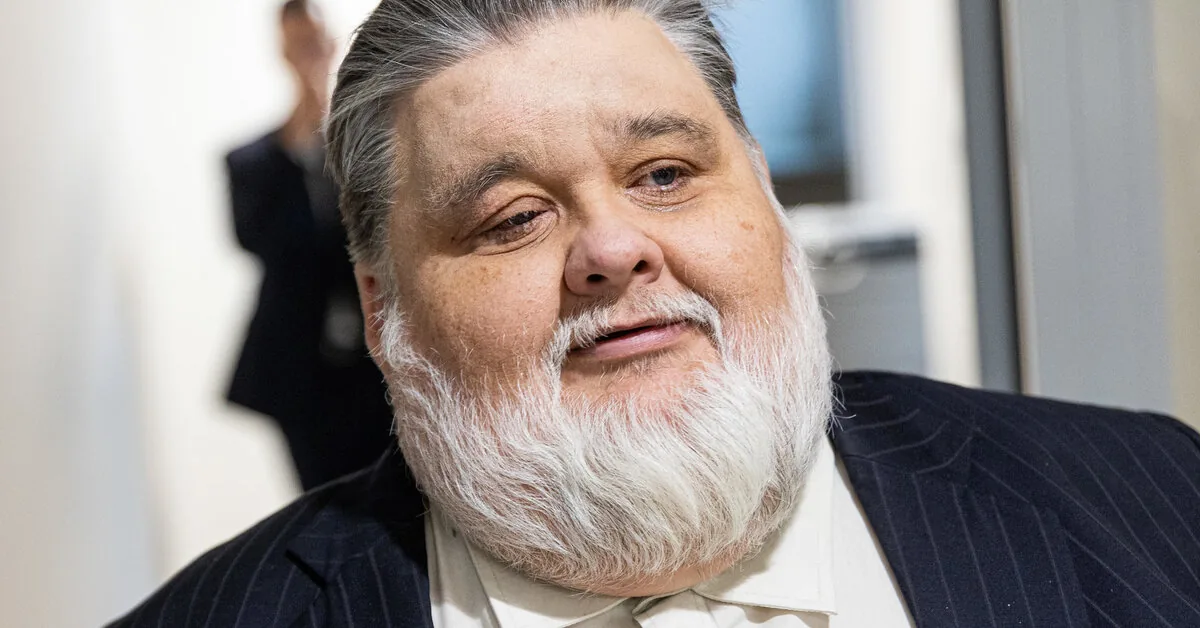
This Sunday, Tillschneider’s AfD in Saxony-Anhalt won the state parliament elections by a landslide – securing 44 percent of the votes and ending decades of Chancellor Friedrich Merz’s Christian Democrats (CDU) dominance in the state politics. The latter received only 18 percent of the votes. AfD fell just a few seats short of an absolute majority, so it is still unclear whether it will actually manage to take power.
Read more Small changes – big effect: how to update your bedroom for less than 30 euros
The election map shows an impressive AfD victory. Out of 218 municipalities in Saxony-Anhalt, AfD leads in 217. In many places, it received more than half of the votes, in some – more than 60 percent. CDU came second almost everywhere. Just five years ago, most of this map was black – the color of the CDU. This party ruled Saxony-Anhalt with a brief interruption for almost three decades. Now almost the entire state is painted in AfD’s blue color.
After such results, pessimistic and moralistic assessments dominate the public space. The elections in this German state are said to be just the first sign of the events that await Europe in the coming years.
Indeed, radical and populist political forces are at record highs today. In the French presidential election polls, candidates from the National Rally lead; in the United Kingdom, Nigel Farage’s “Reform UK” is among the strongest political forces; in Germany, AfD has reached record heights. It seems a political revolution is brewing.
However, every result occurs in a certain context. Only by understanding that specific context can we seek the right recipe to solve the problems that caused it.
The genesis of AfD’s victory: what is Saxony-Anhalt in Germany?
The AfD victory map clearly shows where the party is strongest. In the large cities of Saxony-Anhalt, AfD received about 31 percent of the votes. In medium-sized cities – about 46 percent. In smaller towns and rural municipalities, the result approached or exceeded 50 percent.
Radical and populist political forces are at record highs today.
So the difference is not as simple as “city versus countryside.” It would be more accurate to say: big cities versus almost everything else.
Saxony-Anhalt is one of the least densely populated German states. Only Mecklenburg-Western Pomerania and Brandenburg are less populated. The state has only two larger cities – Magdeburg and Halle. Everything else is mostly smaller towns and rural areas, facing population decline and aging for many years.
This is especially visible in AfD strongholds. In many places where the party received 55 percent or more of the votes, the population has sharply decreased over the past fifteen years due to emigration and low birth rates.
German analysts note that Saxony-Anhalt was one of the most important centers of chemistry and heavy industry in communist East Germany. The industrial triangle of Leuna, Bitterfeld, and Schkopau underwent a huge transformation after German reunification and now continues to face difficulties: high energy prices, weaker demand, and increasing international competition.
In other words, AfD’s best results are exactly where industry is most important to the economy.
In 50 municipalities where the share of people working in industry is highest, AfD received about 48 percent of the votes. In those 50 municipalities where industrial workers are fewest, about 39 percent.
A similar dependence is seen when looking at wages. In wealthier municipalities, AfD results are lower. Where wages are lower, AfD performed better.
Let’s add another long-term process – the departure of young people. The emptying of towns and aging society leads to a reduction in services, school and store closures. But not everyone leaves equally. Especially notable is the migration of young women: they more often finish secondary school, more often choose studies, and move to university cities or Western Germany for them. In some regions of Saxony-Anhalt, among 18–35-year-olds, there are only 75–85 women per 100 men.
And here again we see a connection with AfD results. In small municipalities where the surplus of young men is especially large, AfD’s result is about 50 percent. Meanwhile, in 50 municipalities where the share of men is lowest, AfD receives about 42 percent. The progressive Green party performs much better there.
Of course, this does not mean that the ratio of men to women alone determines voting for AfD. Rather, it is another sign of the same structural process. Younger and more educated people, especially women, leave shrinking towns first, and the remaining population becomes older and more male. At the same time, economic opportunities, social ties, and optimism about the region’s future decrease. It is in such an environment that the anti-system AfD policy finds especially fertile ground.
Economic and demographic reasons are joined by simpler things – political fatigue and a desire for novelty.
CDU ruled Saxony-Anhalt for almost three decades. Social Democrats, Greens, and Liberals were also perceived as part of the system in one way or another. Therefore, for many voters, the novelty factor was important – with Chancellor F. Merz losing popularity, CDU did not seem like the party capable of successfully solving entrenched problems.
Moreover, AfD very successfully exploited the long-standing sanitary cordon built against it. It politically divided the system into two parts: on one side – us, on the other – everyone else. Traditional parties, media, Brussels – all of this became part of one system in AfD’s narrative, which is fought in parts. It seems that a significant part of voters believed this too – according to polls, the hostility of traditional forces towards AfD was also one of the most motivating factors to choose this political force.
Of course, AfD was also helped by another East German peculiarity – weaker historical voter attachment to traditional parties. In West Germany, Christian Democrats, Social Democrats, or Liberals were rooted for decades in specific social groups, professional organizations, and communities. In the East, which only took the democratic path after 1989, such ties were never so strong. Therefore, it is easier for an East German voter to switch from CDU or the left to AfD.
The migration paradox
In both Lithuanian and global media, AfD’s success is often explained by a stricter stance on migration.
The longer a populist party can exist in eternal opposition, the easier it is for it to promise a revolution that will never need to be implemented.
Read more „OP Corporate Bank“ improves Lithuania’s GDP growth forecast to 3.2 percent.
However, the situation here is quite paradoxical. At the end of 2025, about 192 thousand people with foreign citizenship lived in Saxony-Anhalt – less than 8 percent of the total population. This is one of the German states with the fewest foreigners. AfD performed especially well in areas where the share of migrants is low.
On the other hand, migration and internal security were among the most important issues influencing AfD voters’ choice, according to polls.
Research shows that populist attitudes are often driven not by the concentration of migrants in the place of residence, but by the perceived threat posed by migration. Thus, stories from television, social networks, and acquaintances are no less important than direct experience.
Saxony-Anhalt is an almost ideal environment for AfD. It concentrates almost all the problems on which the party has based its political growth for many years: population decline, aging society, departing youth, lower wages, anxiety about the future of industry, disappearing services in regions, and great dissatisfaction with migration policy. And when there are relatively few migrants themselves, it is even easier to paint the political picture of migration in exaggerated colors.
The Russian elephant in the room
The longer a populist party can exist in eternal opposition, the easier it is for it to promise a revolution that will never need to be implemented. If AfD gains real power, sooner or later it will become clear that building and creating is harder than criticizing.
In Lithuania, we have our own examples of such political experiments, albeit on a completely different scale. The participation of “Nemuno aušra” in power also very quickly allowed voters to see the difference between protest and accusation politics and the real responsibility for specific decisions – when competent people must be offered to government positions, compromises sought, and real practical political changes achieved.
But there is one problem: the price of some populist experiments can be too high.
In the 2025 AfD Bundestag election program, Russia is called a “reliable” energy supplier to Germany for many decades. AfD demands the lifting of economic sanctions on Russia, the repair and restart of the Nord Stream gas pipelines, and the expansion of economic relations with Moscow.
The party sees Ukraine’s future as a “neutral state outside NATO and the EU.” Even in the economic part of the program, one of the recipes to restore Germany’s competitiveness is the revival of Nord Stream.
The Saxony-Anhalt AfD itself will not be able to change Germany’s foreign policy. The next Bundestag elections, if there are no early ones, will be held in 2029. If the current trend continues, the question of whether AfD can become the largest political force in Germany nationally is no longer fantastic, but it should be kept in mind that its results will be much more modest than in Saxony-Anhalt, where conditions for AfD’s landslide victory have formed.
Processes are already underway in Europe that even a hypothetically very strengthened pro-Russian AfD-dominated German government could not simply reverse with the press of a button.
The European Union has already adopted a legal decision to gradually phase out Russian natural gas. This is especially important for Germany. Its previous energy and industrial model largely relied on abundant and relatively cheap Russian gas.
After 2022, this model finally collapsed, and every year it is increasingly undermined not only politically but also structurally. Already in 2025, more than half – almost 56 percent – of Germany’s electricity consumption was covered by renewable energy sources.
European green policy will undoubtedly be adjusted in the coming years. Industrial competitiveness already forces Brussels to reduce some regulatory burdens and more realistically assess some previous decisions, but this will not mean a return to the 2000s. The energy system is moving in a direction where Russian fossil fuels become less and less necessary for Europe.
Therefore, time in this case works in our favor. If Russia no longer has energy leverage, it will become increasingly difficult for politicians of all parties in Germany to romanticize “special German-Russian relations.”
The migration card can also be taken away from populists
And Europe is already changing in the field of migration. The new EU Migration and Asylum Pact, which started to be applied in June this year, provides for mandatory registration of people illegally crossing the EU’s external border and identity, security, and health checks. People from countries whose citizens are very rarely granted asylum in the EU (e.g., Morocco), as well as those who mislead institutions or pose a security threat, are subject to an accelerated border procedure. While their application is being examined, they usually remain in the border zone, and if the application is rejected, the return procedure begins immediately.
At the same time, this year the European Parliament and the EU Council agreed on even stricter common return rules for migrants who do not have the right to stay in the European Union. Clear obligations to cooperate with institutions, more effective cooperation between states, and the possibility to establish return centers in third countries with which appropriate agreements are concluded are planned.
The sooner the new system starts to deliver tangible results – faster procedures, better external border control, and the real return of people without the right to stay – the fewer cards populists will have to explain that the “elite” deliberately does not control migration.
The best vaccine is a functioning state
The most important lesson of Saxony-Anhalt for centrist parties is to stop expecting the wave of radicals to somehow pass on its own. We will not re-educate AfD voters, but at least some of them can be won back. This will require showing that the democratic state can act effectively: control its borders, ensure security, create conditions for job creation, provide normal public services not only in big cities, and listen to people in the regions.
At the same time, a very clear boundary must remain: responding to the problems that grow AfD does not mean adopting its views on human rights or Russia. The best vaccine against populism is ultimately a better functioning state.