









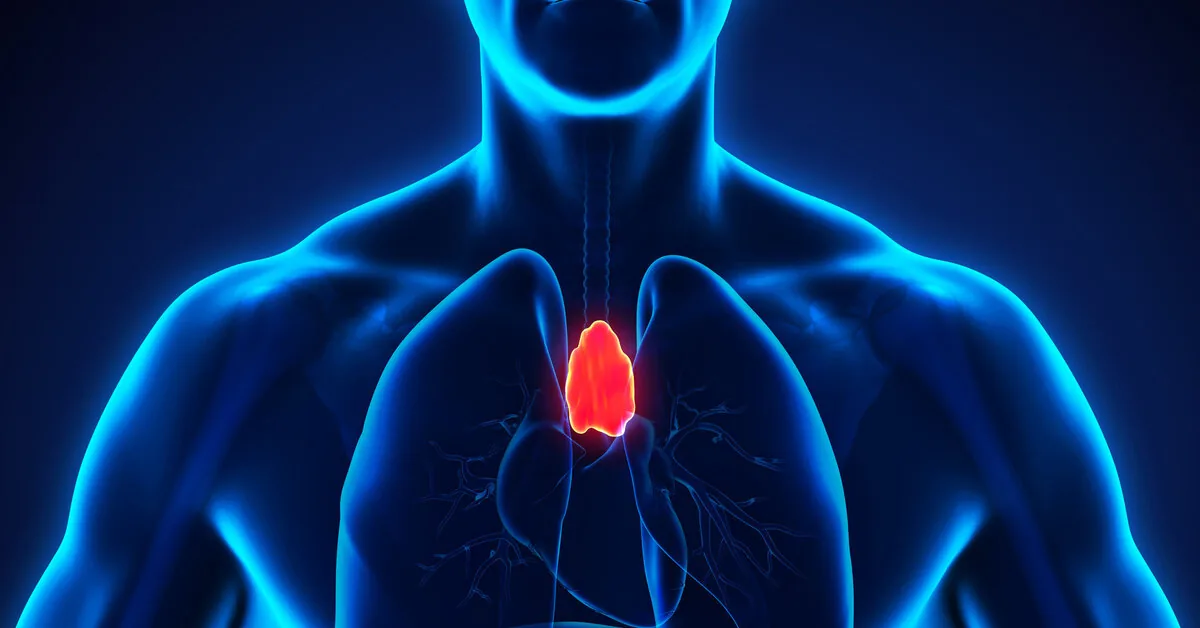
Recent studies published in the journal “Nature” show that the thymus gland can have a long-lasting and significant impact on health and longevity throughout a person’s life, helping the body fight the risk of various diseases, including cancer.
Read more Autumn blow to aphids: how to protect the garden from pests and diseases with one spray
“We suspected that the adult thymus gland could still be important, but we were surprised by the results we obtained. We did not expect these differences to be so strongly and consistently associated with longevity, cancer incidence, cardiovascular diseases, and response to cancer treatment in several large, independent cohorts. This suggests that the adult thymus gland is much more important than previously thought,” said Harvard University oncologist Hugo Aerts to “ScienceAlert.”
In their study, H. Aerts and his team analyzed health data from more than 27,000 people collected in two separate cohorts – the Framingham Heart Study (FHS) and the National Lung Screening Trial (NLST).
In both studies, participants underwent computed tomography (CT) scans to assess the size, shape, and composition of their thymus gland.
This data was fed into an artificial intelligence system that, based on these different features, could evaluate the condition of the thymus gland.
The artificial intelligence then calculated a thymus health score – a certain indicator that allowed an approximate assessment of how functional the gland was in adults. Based on this, each person was assigned to one of three groups: low, medium, or high thymus health.
Further follow-up data from each cohort showed that thymus gland condition was associated with significantly different health outcomes several years after the CT scans were performed.
After adjusting for age, sex, smoking, and comorbidities, researchers found that NLST participants with good thymus gland condition had about a 50% lower relative risk of death after 12 years compared to participants with poorer thymus gland condition.
Also, people with good thymus gland condition had about a 36% lower chance of developing lung cancer and about a 50% lower risk of death from lung cancer than those with poorer thymus gland condition.
In the case of cardiovascular diseases, a significant reduction in relative risk was also found: high thymus gland condition was associated with a 63% lower risk of death from cardiovascular diseases in the NLST study, and up to a 92% lower risk in the FHS study, compared to people with poorer thymus gland condition.
These results should be confirmed in future additional studies. Moreover, the study only showed data associations, so it cannot be confidently stated that a healthier thymus gland causes these better health outcomes.
However, these results still suggest that we need to reassess our understanding of how the thymus gland may contribute to adult health and longevity.
“These findings change our approach to the immune system in medicine. Our study shows that thymus gland condition is an essential part of immune system capacity and that it can now be assessed using routine medical imaging. This opens the possibility to identify patients who may benefit most from certain treatments, tailor treatments to preserve immune system condition, and develop new strategies to maintain immune system function with aging,” H. Aerts told “ScienceAlert.”
Read more Landsbergis named what could become the strongest guarantee of Ukraine’s security