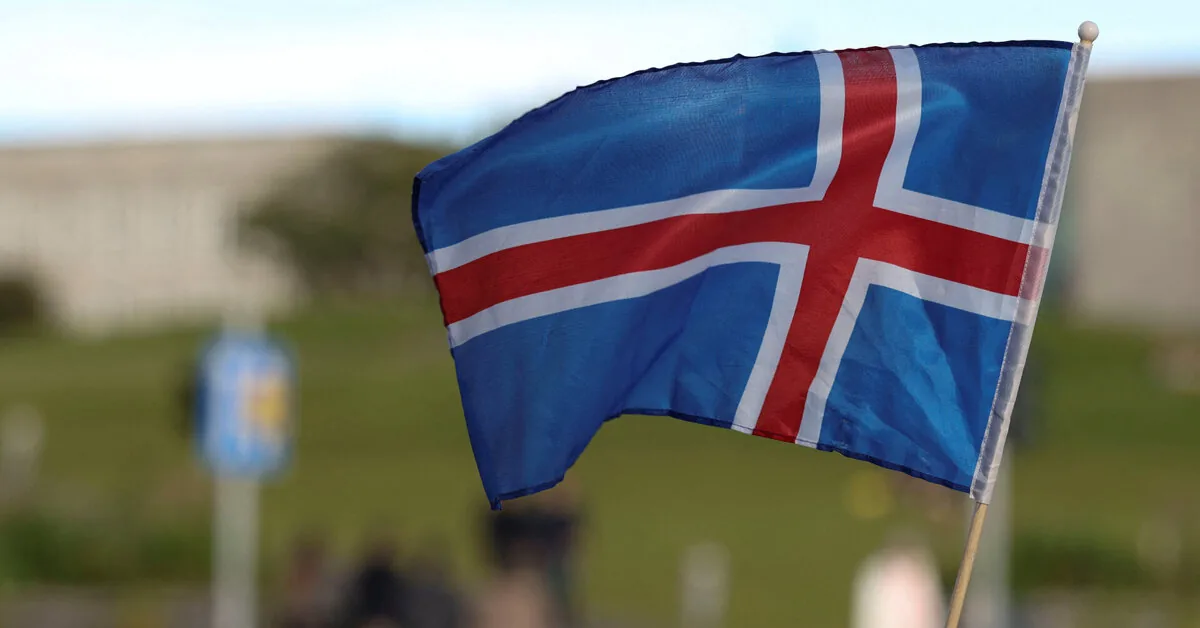
After counting the votes, it turned out that 52.5% supported the “no” camp, while 47.5% supported the “yes” camp. With only a small portion of votes left to be counted in one of the six constituencies of the country, where euroskeptic sentiments also prevailed, the public broadcaster RUV announced the victory of the “no” camp.
Read more Nut – tough: Statistics and history of the Lithuanian national team’s encounters with the Bosnians
“The nation rejects accession negotiations with the EU,” RUV stated.
This result is a painful blow to Brussels, which sought to admit an economically strong country into its ranks and was prepared to compromise on difficult accession conditions. It is likely that the issue of Iceland’s EU membership will be postponed at least until 2028.
Iceland, with less than 400,000 inhabitants, applied for EU membership in 2009, after the country was devastated by the financial crisis. Negotiations were halted in 2013 when a euroskeptic government came to power.
Considering the growing international tension, the current Social Democratic Prime Minister’s government sought to clarify the Icelanders’ opinion on closer ties with the Community.
Read more On Science and Knowledge Day, you will need to look for umbrellas and raincoats
This North Atlantic country is already closely connected to the EU through the European Economic Area and the Schengen zone – these ties will remain unchanged regardless of the referendum results.
Although technically the referendum results are not binding, the government has committed to respecting them. On Sunday at 1 p.m. local time (3 p.m. Lithuanian time), the government will hold a press conference to present further actions.