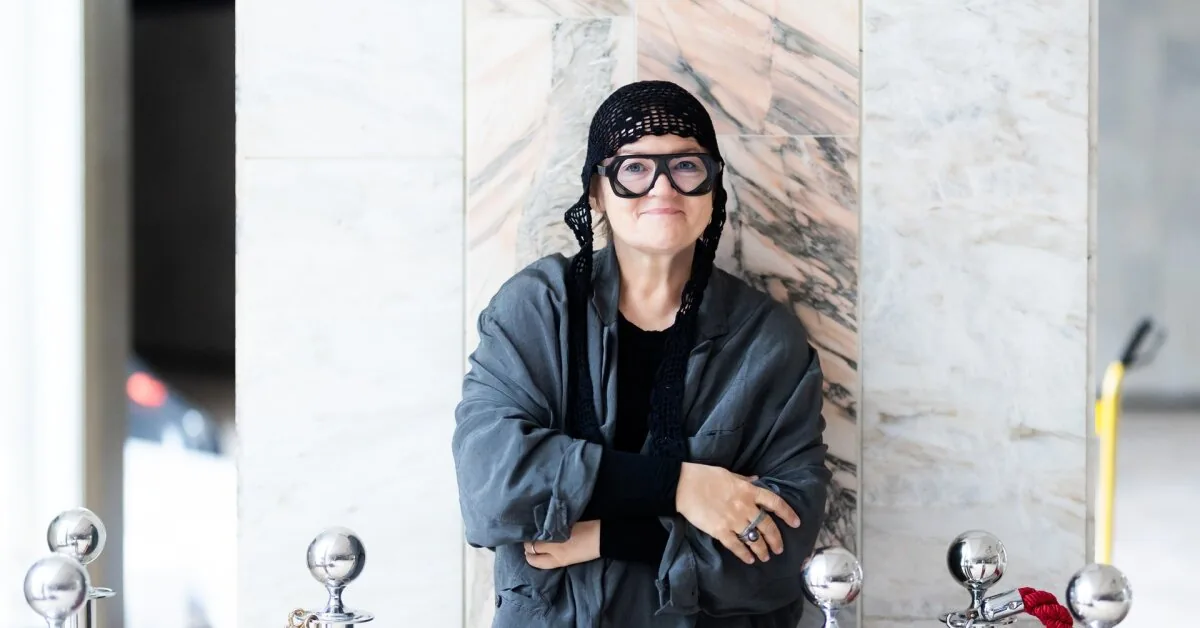
In the interview “Conducting as Creating Community,” journalist Karolis Vyšniauskas spoke with the world-renowned conductor about the concert dedicated to her father’s memory, her relationship with the orchestra, the stressful nature of her work, inner experiences, and Vladimir Putin.
Read more The international ice skating favorite of Vladimir Putin – a nail
An Emotional Return to Lithuania
This meeting with the world-famous conductor took place after the Saturday concert at the Lithuanian National Philharmonic, where M. Gražinytė-Tyla, together with the Lithuanian National Symphony Orchestra, opened the 5th International Joseph Achron Music Festival.
During this concert, the premiere of composer Žibuoklė Martinaitytė’s piece “Light Needle” was performed, and the entire event was dedicated to the memory of M. Gražinytė-Tyla’s father, conductor and pedagogue Romualdas Gražinis, who passed away this spring.
When asked about the feelings and moods accompanying her after the concert, which had been prepared for an entire week, M. Gražinytė-Tyla said that initially there is a huge surge of energy, adrenaline rises, and on the second day – a leveling dip.
“Work in Lithuania cannot be compared to anything else because there are many acquaintances and family here, so everything is very emotional. It is nice to work with the Lithuanian National Orchestra because, compared to the standards of England, America, or France, rehearsals in Lithuania are quite long – usually five days of rehearsals, and on the sixth day – the concert. This concert was special also because we decided in the spring to dedicate it to our father’s memory, so we included several choirs and did various experiments. All this only increased the emotionality, and because of that, it’s hard to sleep at night,” said the well-known Lithuanian conductor.
When journalist K. Vyšniauskas asked what thoughts the piece “Light Needle” by New York-based composer Ž. Martinaitytė, written based on a poem by Vilnius Jewish poet Abraham Sutzkever, evoked in her, M. Gražinytė-Tyla said it is a piece about light, telling a story through the Jewish tragedy.

“It is simply a trembling text, like Abraham’s own story. The poet tells how he himself, hiding in a ruined chimney in the Vilnius ghetto, saw the sunlight every day through a tiny hole, like a needle. I am glad that for the first time through this piece I could touch Ž. Martinaitytė’s work from the inside. She is a composer of incredible sensitivity and subtlety,” said M. Gražinytė-Tyla.
Conducting – Like a Peasant’s Work
Speaking about her daily work with musicians from various orchestras, the conductor emphasized that it is necessary to maintain a balance between discipline and freedom in this work.
“In professional orchestras worldwide, musicians are quite young, although they have been working with their instruments since childhood, for many years; there are also people who have played for forty or more years and have vast experience and imagination. So the more of that individual imagination you can weave into the overall creative flow, the more happiness it will bring to each participant and to everyone together,” she said.
When asked how she sees her role as a conductor within the musicians’ collective, M. Gražinytė-Tyla first highlighted the necessity to know and understand well the piece being worked on.

“The better you know the piece, understand every part, the better you can imagine each line and its role in the whole work. The conductor must prepare everything so that at the right moment, the piece sounds. Besides musical knowledge, historical context is also important, so there is no end to knowledge – the more knowledge, the easier it is at that moment with those specific people to find the keys that can provide the greatest inspiration,” said M. Gražinytė-Tyla.
Recalling a story about a detailed health check-up she underwent a year and a half ago, she compared conducting to hard peasant work that requires a lot of physical strength. “After assessing my condition, the doctor asked if I do professional sports because he noticed that my heart beats too slowly at rest. When I mentioned this to my father later, he said it was the same for him – and that it’s from conducting,” the conductor said laughing.
She also noted that she keeps discovering various “recipes” that help maintain good physical shape. “Magnesium, vitamin C, electrolytes, breathing exercises – these help me a lot,” said M. Gražinytė-Tyla.
Read more Will you answer 10 general knowledge questions about cars?
The conductor emphasized that this work involves a lot of stress because you always have to communicate with many people, constantly travel, and prepare new programs. After the birth of her youngest child, who is now four years old, M. Gražinytė-Tyla said she had often considered ending her conducting career.
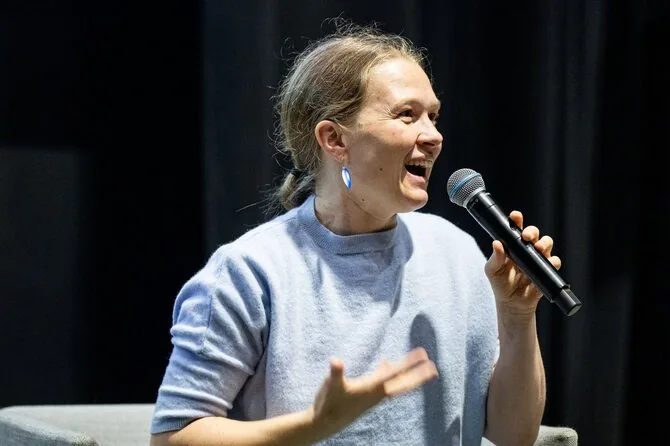
“However, over the past year, I have calmed down, realizing that I simply could not live without at least some conducting in my life. Even in those stressful situations, the friendship formed with the orchestra musicians creates a special miracle. I am incredibly pleased that human beings can not only initiate wars and kill 80,000 Jews in the Vilnius ghetto but also create something that gives much inspiration to life,” said the conductor.
About Competition and Sharp Edges
Asked to comment on the different approach to relationships with the orchestra, M. Gražinytė-Tyla recalled conductor Jonas Aleksa, whom she described as one of the greatest personalities, who held the view that a conductor cannot be friends with the orchestra. She called this attitude “the spirit of a certain era.”
“Of course, being friends with the orchestra can be more difficult because it requires even more resources for human connection. But if it succeeds, if it is possible, it gives more inspiration to the conductor, the orchestra members, and the audience,” shared M. Gražinytė-Tyla.
She emphasized her belief that the impact of artistic expression can be achieved not separately from human connection.
Although, according to the conductor, there is a lot of competition among musicians, which causes much tension, as well as personalities with their unique characters, all this should not overshadow the most important things.
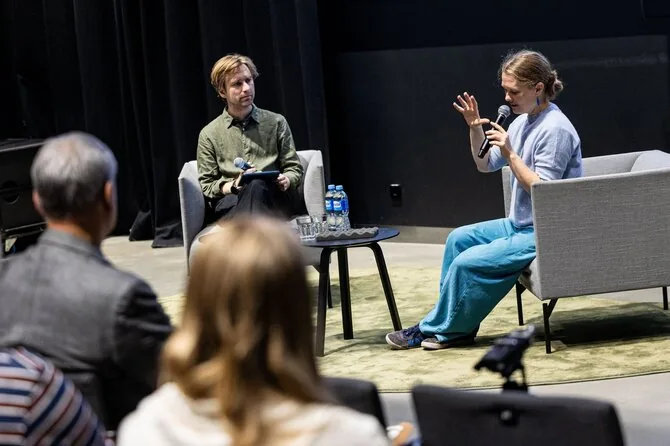
“My six-year-old Jokūbas has told me many times – Mom, you need to learn not to shout. Each of us has our sharp edges, and that is normal. Maybe one of the possible answers to what we do on this earth is the effort to recognize and accept those edges within ourselves. And learn to live with them. Of course, we won’t be able to eliminate all edges, but we can focus on other things,” said M. Gražinytė-Tyla.
When asked which values give her the most strength, she said that caring for her three children is what not only provides balance in life and shapes her personality but also greatly contributes to her conducting.
“The balance between family and creative work is important not only for our young family but was also important in my parents’ lives. The answer here is not always simple and easy,” emphasized the conductor.
In response to whether she is optimistic at this time, when the destructive person gradually prevails over the creative person, M. Gražinytė-Tyla spoke about Vladimir Putin.
“I have often thought that if Putin’s path had turned out differently, he could have been a great artist. After all, what he does is also creation, but on an incomprehensible scale of destruction and annihilation. It is hard even to comprehend. So I have no answer to the question of the present. We can only live here and now and try to do the best we can – individually or united together,” said the conductor.
Read more Pregnancy calendar: a comprehensive guide to fetal development and changes each trimester