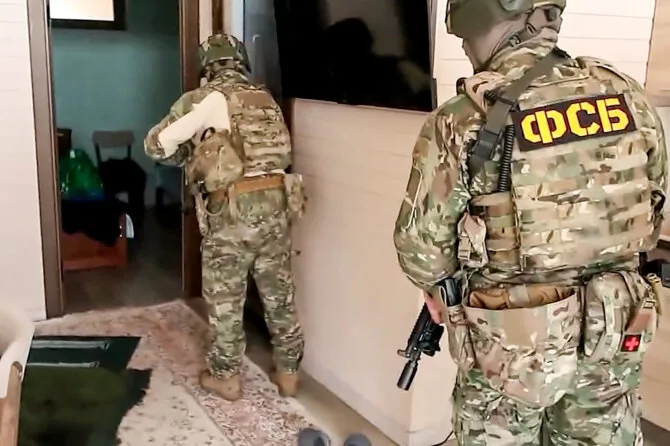
It seems that officials in V. Putin’s administration are losing their influence, as the Russian president, who has always tried to maintain a balance between various influential groups, increasingly relies on the special service close to him – the FSB – amid the worsening military and economic situation in the country.
Read more Source: Volkswagen plans to fundamentally change its strategy in the US, will release a new pickup
It was given complete freedom to conduct investigations on any person with almost no accountability, and it is this service that is trying to accuse Pavel Durov of terrorism, thus fighting the messaging platform Telegram, Kremlin-linked sources told agency journalists.
“The terrorism charges against billionaire Telegram founder Pavel Durov are the latest evidence that the wave of FSB repression is intensifying,” commented interlocutors who asked not to be named when discussing sensitive issues.
However, repression threatens not only the billionaire.
According to the article, the atmosphere of fear has intensified both among the elite, who observe how the system fails to cope with accumulating problems caused by the war in Ukraine, and among the middle class.
The Russian security service is expanding its sphere of influence, and especially broad powers have been granted to the Second Service, responsible for protecting the constitutional order and combating terrorism.
It is behind attempts to poison opposition politicians Alexei Navalny and Vladimir Kara-Murza, noted Bloomberg. Currently, the service is compiling unofficial “blacklists,” including actors, musicians, and directors it considers unpatriotic. Among other things, the FSB fights even the slightest signs of disloyalty to V. Putin’s regime, using laws against “extremism” and the “discrediting” of the armed forces.
What Sergei Kiriyenko is accused of
As explained by persons close to the Kremlin and government, for these reasons tension is growing within the power circles, as the strengthening of the FSB automatically reduces the influence of civilian officials.
Among them is Sergei Kiriyenko, deputy head of the presidential administration responsible for domestic policy, who is now held accountable for failures in political operations in Moldova, Hungary, and Armenia.
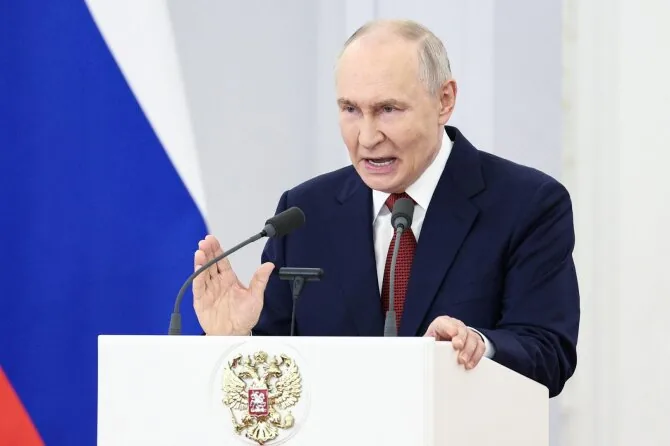
V. Putin, who does not want to make any compromises regarding the war against Ukraine, increasingly supports those advocating for stricter control over business and society, Bloomberg sources indicated.
“The main problem is the feeling that the Russian leadership has lost touch with reality. Putin’s stubbornness in conquering Ukraine has greatly complicated effective governance,” commented Tatiana Stanovaya, senior fellow at the Carnegie Moscow Center for Russia and Eurasia.
Currently, the FSB is strengthening not only its ideological but also economic struggle – the list of selected property objects and detained businessmen is growing longer.
Political scientist Andrei Kolesnikov assessed that the Russian Federal Security Service has become “the leading institution in the country.”
Read more In Kaunas Freedom Avenue, a thief struggled with a security guard but still escaped
“The presidential administration, the Ministry of Foreign Affairs, and the finance and economic bloc have become no more than technical staff implementing decisions made with regard to the interests of the special services,” he stated bluntly.
As Ukrainian strikes on Russian territory intensify, and the number of sabotage acts, such as the explosion in a Moscow restaurant celebrating the 55th birthday of Air and Space Forces commander Alexander Chaika, increases, officials find it increasingly difficult to resist the FSB’s demand to “tighten control.”
In the summer of 2025, V. Putin transferred internet control to the Second Service, which is trying to “cleanse” it of “hostile communication means.”
“A service with little technical knowledge initially demanded operators restrict calls on WhatsApp and Telegram, later to block the messaging apps themselves and fight VPNs. Many internet shutdowns ‘for security reasons’ are linked to its actions,” the news portal The Bell wrote earlier.
According to the article, the head of the Second Service, Alexei Sedov, allegedly promised V. Putin to bring order to the internet – and received complete freedom.”
Now the same service has decided to charge P. Durov with terrorism to restrict Telegram’s activities, despite high-ranking Kremlin officials responsible for the September State Duma elections expressing their objections.
As Bloomberg notes, these officials believe that stricter measures against the popular messaging app could provoke a negative voter reaction.
It is clear that pressure and repression are only increasing, and society is gripped by fear, noted sociologist Ella Panejah, a researcher at the New Eurasian Strategies Center: “Everyone is scared because no one knows who they will come for next.”
V. Putin himself, a former KGB agent and FSB head, hopes that his security service will help maintain power as the war increasingly hurts ordinary Russians.
“Ukrainian strikes on oil refineries, defense enterprises, and logistics warehouses penetrate deeper into the country, disproving Kremlin claims that it still controls the situation in the fifth year of the conflict, which shows no signs of ending,” Bloomberg summarized.
Read more Protest lodged against Russia over Lithuanian capital company affected by attacks in Kyiv