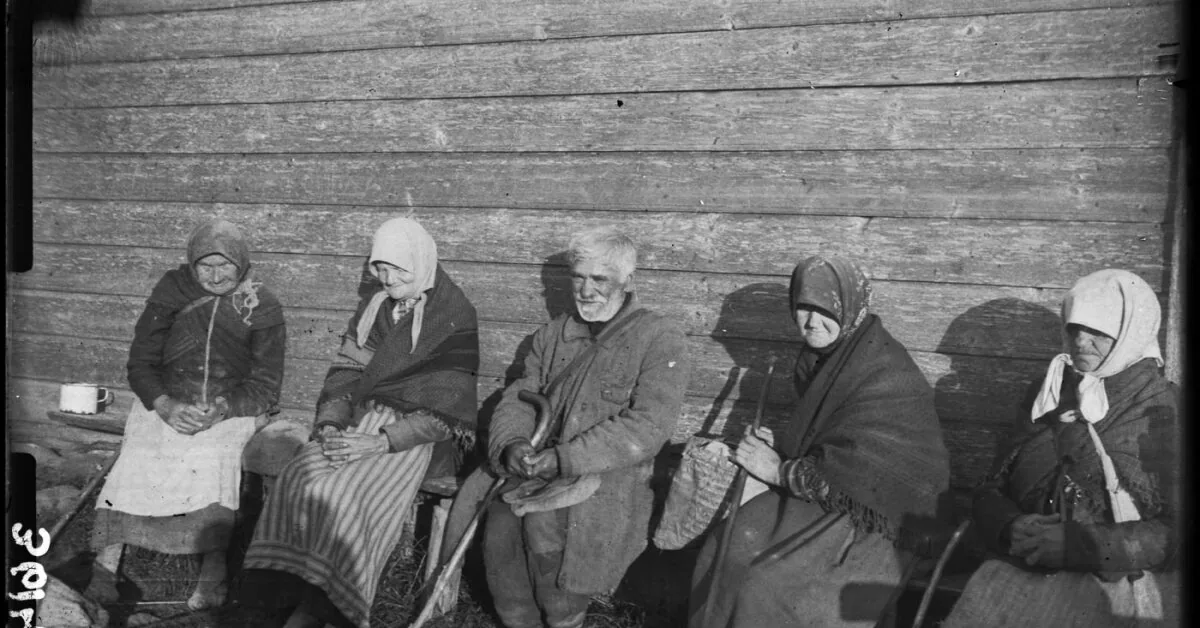
A historical study revealed a dual image of the poor in Vilnius at that time.

On the one hand, these were people living in very difficult conditions, often with various disabilities, completely dependent on the help of the Church and benefactors.
Read more In Paris – Meilutytė’s incredible triumph at the European Championship
On the other hand, the beggars of Vilnius had an official, quite successfully operating organization, took care of their own welfare, and even became godparents or witnesses to marriages of other city residents’ children.
Moreover, beggars were simply needed in Christian 18th-century Vilnius. There were kind of exchanges between beggars and other townspeople – the townspeople helped the poor, and they prayed for them, thus easing the latter’s afterlife.
This 15min interview with Dr. Rūta Miškinytė is precisely about the poor of historical Vilnius and society’s attitude towards them. About the “worthy” and “unworthy” beggars, about the beggars’ fight for themselves, about the reasons that pushed people into begging.
– I have heard that the beggars of Vilnius had their own organization, a kind of beggars’ brotherhood. How did it come about, what did it do, where did it get its funds?
– In 1636, the Vilnius magistrate drafted, and Vladislaus Vasa (then ruler of the Polish-Lithuanian Commonwealth, – ed. note) confirmed a privilege for the beggars of Vilnius.
It was intended to control the flow of beggars into the city and establish certain rules for begging in the city.
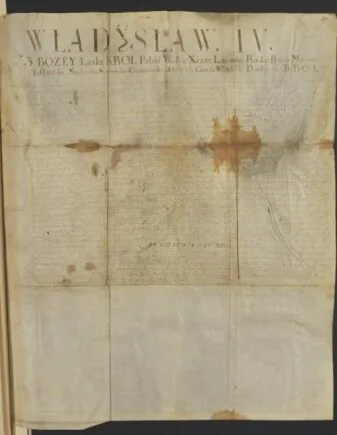
Beggaring itself was not prohibited, but an attempt was made to create a mechanism by which “false” beggars had to be removed from Vilnius.
This was to be the beggars’ organization established by the same privilege. Today it is called both a brotherhood and a guild, although it was not a guild in the true sense of the word.
The organization was to include all persons who begged in Vilnius and were considered “worthy” of help by contemporaries. The organization was to ensure that only such beggars begged in Vilnius and to supervise that no others were in the city.
The magistrate entrusted the administration of the organization to the beggars themselves: they had to elect elders from among themselves, hold meetings, and accumulate a treasury. They were also legally obliged to pray for their benefactors. In addition, they had to have a clerk who knew Polish and Latin.
Each member of the organization had to periodically pay a small amount into the treasury.
From it, common expenses were covered: care for sick members, funerals, masses, everyday things such as candles used during meetings.
In the sources, I found cases where the beggars’ organization lent money from its treasury, but the debtors were reluctant to repay it. I want to emphasize that it was not the beggars who failed to repay the money – the money was not repaid to the beggars.
The parish priest of St. John’s Church, having the ability to manage the organization’s property, sometimes lent its funds at interest. Here is one such debtor who died, and the debt passed to his widow. She moved to live in Grodno and did not want to repay the money. An official lawsuit began.
Interestingly, the beggars themselves went to Grodno to sue. The beggars traveling from Vilnius to Grodno even received a written confirmation from the priest that they were not suffering from contagious diseases or plague and that they had the right to collect alms while traveling.
Unfortunately, the trip was unsuccessful – when they arrived in Grodno, they simply could not find the widow. Eventually, it seems the money was recovered, but it was not easy to do so.
– This organization was formal. Were there informal, underground beggars’ organizations with their own rules, often depicted in books, movies, or games?
Read more Two people died and hundreds were evacuated due to fires on an island near Athens, Greece
– Apparently not. During the Romantic era, a myth about secret, underground organizations to which the poor belonged, about their “leaders” who supposedly had great power and maybe even lived quite well, about their freedom from a lifestyle conforming to societal standards, appeared and was gradually developed, but I have no reason to believe that this was really the case, at least in the case of Vilnius.
Beggars simply lived in poverty. They were not the lucky ones, but those who were unlucky.
– How did you define a beggar in your work? Is it any person asking for alms, or were there other criteria?
– In the broadest sense, I considered beggars to be persons whose main source of livelihood was alms collected personally and for whom collecting alms was the main, not additional, activity.
In contemporary Vilnius, alms were collected not only by beggars – monks, wards of hospitals (Hospital – an institution of shelter, a predecessor of a hospital, – ed. note), and students also collected alms.
However, for example, monks did not collect alms personally for themselves but for the monastery. And the alms collected by a hospital ward went to the hospital. Meanwhile, beggars collected donations for themselves and probably had no other sources of income.
This is the main criterion defining a beggar. I understand that it is complicated – you cannot always be sure whether a person really met it. But you rely on sources because you can no longer ask those people.
For example, in monastery expense registers, alms were recorded by indicating the person to whom it was allocated: “poor nobleman,” “convert” (Convert – a person who changed one faith to another, usually converted to Catholicism, – ed. note), and so on. But many entries simply state “poor man” or “poor woman.”
They are usually not named as beggars, but since there is no clarification, it can be assumed that this is a person collecting alms personally for themselves.
– How did society view beggars? From your dissertation, I understood that there was an attitude that beggars were necessary to society.
– Yes, this is a medieval Christian attitude. In the Middle Ages in Western Europe, the concept of purgatory appeared, which Protestants rejected during the Reformation.
It began to be believed that purgatory exists – an intermediate station between earth and heaven, where souls still have to “cleanse,” and that the time spent in purgatory can be shortened by the prayers of people left on earth.
So people gave alms to the poor, and the poor thanked the benefactors with their prayers after their death. Almsgivers helped those suffering hardship in this world, and the poor helped almsgivers in the next.
Moreover, in Catholicism, good deeds are also one of the factors determining whether you will be saved. So by giving alms, you did a good deed and secured prayers for the salvation of your soul. Two birds with one stone. This understanding lasted a long time and began to change only partly in the early modern period.
– But you also mentioned that “false” beggars had to be removed from the city by the members of the beggars’ brotherhood themselves. Who were these “false” beggars?
– From society’s point of view, the poor could be divided into two categories. One – “true” poor who needed help.