





The Nordic countries iGEM festival “Nordic Jamboree” is a synthetic biology student competition.
Read more Reports of collective redundancies this year – almost twice as many
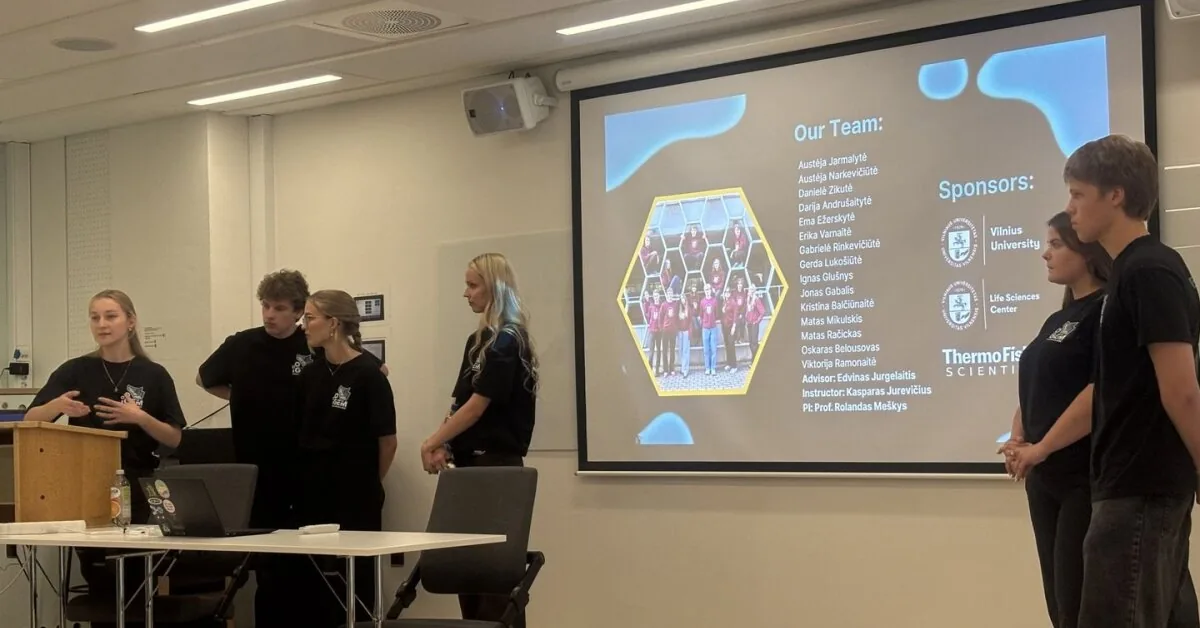
For the VU team participating for the 12th time, it became a valuable opportunity to present the BMClick project and prepare even better for the main iGEM competition, which will take place in Paris this autumn.
“This event was not only a competition but also a space to meet inspiring iGEM teams from other countries, exchange ideas, discuss ongoing projects, and see up close the creativity and ambitions that unite the synthetic biology community,” the team writes on their social media account.
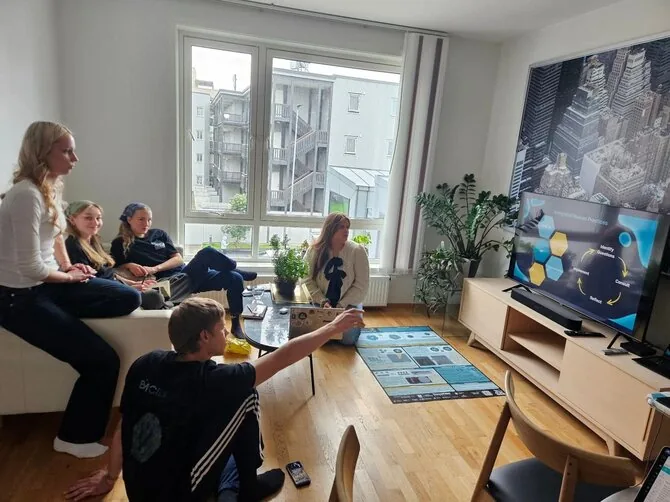
About 440 teams consisting of university students, master’s, or doctoral students participate in the prestigious international synthetic biology competition iGEM 2026, whose final will be held in Paris.
The “Vilnius-Lithuania iGEM” 2026 team:
Austėja Jarmalytė, Austėja Narkevičiūtė, Danielė Zikutė, Darija Andrušaitytė, Ema Ežerskytė, Erika Varnaitė, Gabrielė Rinkevičiūtė, Gerda Lukošiūtė, Ignas Glušnys, Jonas Gabalis, Kristina Balčiūnaitė, Matas Mikulskis, Matas Račickas, Oskaras Belousovas. Electronics instructor – Kasparas Jurevičius. Laboratory consultant – Edvinas Jurgelaitis. Team chief researcher – prof. Rolandas Meškys.
“We sincerely thank everyone who took the time to listen to our presentation and shared their insights, as well as the judges for trusting the potential of our project,” the team members rejoice, also thanking the festival organizers from the University of Oslo.
The goal of the iGEM competition is to promote the advancement of synthetic biology. Interdisciplinary teams from various universities around the world gather to solve real problems and create innovations using knowledge of molecular biology, engineering, and information technology.
Read more The «Radistai» bomb awaited for 10 years: Jovani announced unexpected news
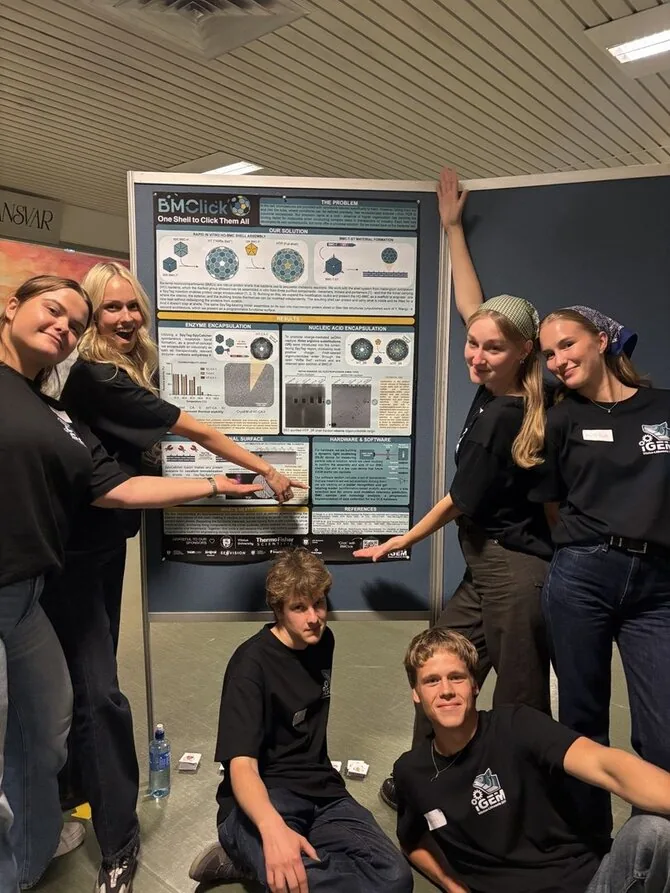
The competition also evaluates human activities. These aim to popularize synthetic biology science, educate the public, and make the scientific world more understandable. Teams also collaborate with companies, scientists, and experts from other fields to gain insights that help them make the right decisions and improve the project.
The project “BMClick” by the VU team representing Lithuania, as stated in its presentation, aims to create a bioengineering platform based on bacterial microcompartments (BMC) – protein “boxes” naturally found in bacteria that exist inside the cell as separate compartments for specific chemical reactions.
As indicated: “By transferring these microscopic particles from bacteria into a test tube and additionally modifying them, wide application possibilities open up. Using bacterial microcompartments, we create science-enriching tools that would allow:
Protecting enzymes – we aim to test whether this protein “box” protects them from high temperature, inappropriate acidity, and other conditions that would normally quickly destroy them.
Delivering therapeutic molecules – we are looking for ways to package short nucleic acids (RNA, DNA) into microcompartments that can turn off or regulate the activity of specific genes.
Creating new functional surfaces – from the same proteins, we form fibers to which various biological components can be attached. In the future, these could become biosensors or antimicrobial films.”
Read more Speaker of the Seimas: the right to express one’s opinion cannot turn into belittling other people