









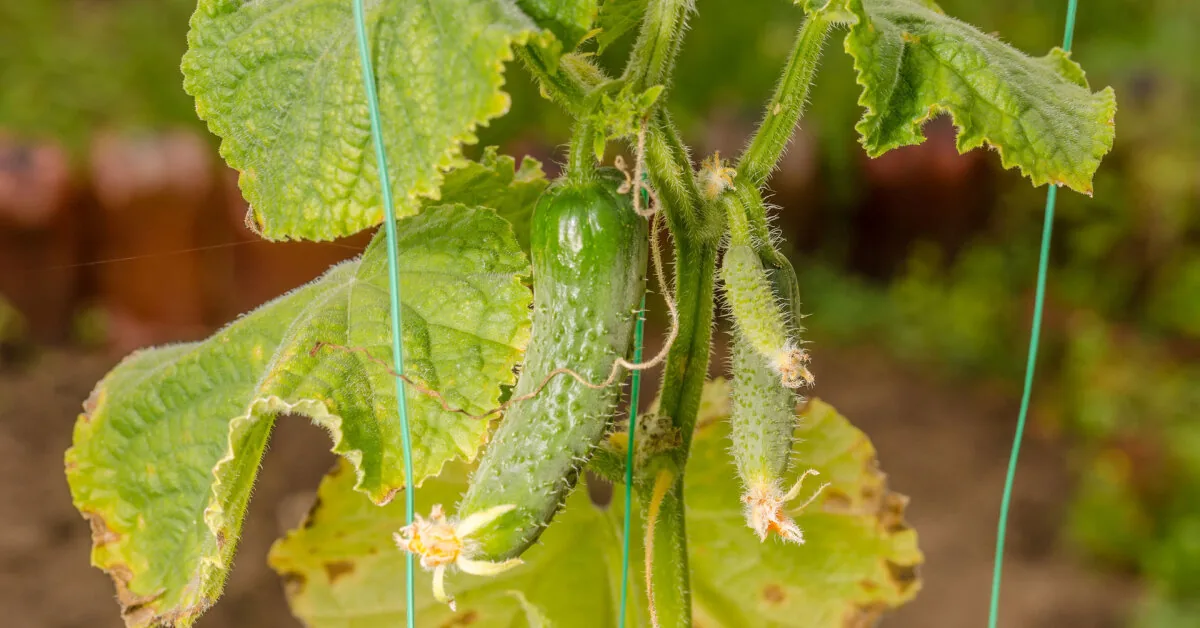
How to recognize cucumber root rot
The first signs of the disease are easy to miss, so gardeners often only realize when it is almost impossible to save the plants.
At first, the firmness of the lower leaves decreases – they droop in the evening or when the soil dries out, but later they straighten again. Soon the leaves start to yellow, their edges dry out, and the plant withers.
As the disease progresses:
- all leaves become wilted;
- flower buds fall off;
- fruits stop growing and begin to yellow.
When digging the soil near the stem base, you can notice that the root collar is brown, cracked, or starting to rot. Sometimes you don’t even need to dig – a dark, watery spot often covered with brownish or mold-like deposits is visible at the stem base. In advanced disease, the stem may even break at this spot.
When the plant is pulled out, it is clearly visible that part or all of the roots are rotten.
Why does root rot occur?
Root rot is usually caused by a combination of several factors:
- soil infected with fungi;
- improper plant care;
- unfavorable weather conditions.
The disease is caused by various pathogenic fungi, less often by bacteria. Fungal spores enter the soil and plants with plant residues, water droplets, dirty tools, or even pests.
Infection penetrates more easily if roots or the stem base are damaged while weeding or loosening the soil.
What promotes disease development?
Favorable conditions for fungi:
- around +15 °C temperature, especially at night;
- constantly wet soil;
- watering with cold water;
- plants planted too densely;
- excessive nitrogen fertilizer;
- alternating soil drying and waterlogging.
There is also a high risk from seedlings planted too deep. Unlike tomatoes, cucumbers do not like the stem base to be buried in soil, so they should not be hilled.
In open ground, root rot often spreads after long rains and cooler weather.
How to protect cucumbers from root rot?
The most effective measure is prevention.
Practice crop rotation
Plant cucumbers in a different place every year. They should not be grown after pumpkins, zucchinis, pattypans, or watermelons.
Best preceding crops:
- onions;
- garlic;
- legumes;
- tomatoes;
- peppers;
- potatoes;
- eggplants.
At the end of the season in the greenhouse, it is necessary to remove all plant residues and disinfect the soil and structures. It is recommended to replace the topsoil layer every few years.
Water properly
Water cucumbers only with warm water. The soil should be moist but not waterlogged.
Read more Earthquake in Japan traps people in shopping mall: fatalities reported
Pour water at the roots, not on the leaves or stem.
Do not overcrowd planting
Plants need good air circulation. During the season, remove excess shoots and lower leaves, which are usually the first to get fungal diseases.

Can root rot be cured?
If the root collar is already damaged and the plant is clearly withering, it is practically impossible to save it.
Such plants are recommended to be:
- pulled out;
- destroyed;
- the growing site disinfected.
The remaining healthy plants should be prophylactically watered with fungicides or biological preparations. Spraying alone is not enough – the preparations must reach the soil near the roots.
If the disease was caused by excessive moisture, watering should be stopped for a while and plant ventilation improved.
Do folk remedies help?
Baking soda or wood ash can slightly slow down disease development only at the very beginning, as they create an alkaline environment unfavorable to fungi. However, they do not cure already damaged plants.
A popular solution is made from 2 tablespoons of baking soda and 3–5 liters of water, adding a little green soap so the solution adheres better to the plants. Wood ash infusion can also be used or sprinkled around cucumbers.
However, specialists emphasize that the best way to protect cucumbers is to prevent the disease from spreading. Proper crop rotation, warm water for watering, moderate moisture, and good plant ventilation are the most reliable protection against root rot.
Read more American «Mach Industries» demonstrated Viper, strengthening allies’ defensive readiness


