However, official investigation data shows a much narrower picture. Law enforcement talks about four employees of the pathology office, tissues taken from deceased civilians, and their transfer for bioimplant production. There is no data indicating trade in internal organs or the use of bodies of deceased soldiers.
Read more The new Mazda CX-6e: a European approach to Kodo design
The post circulating on social networks tells about a possible illegal trade scheme in human anatomical materials being investigated by Ukrainian law enforcement in the Chernivtsi region.
It is claimed that pathology office employees may have illegally taken tissues from the deceased and handed them over to commercial companies for bioimplant production, and in some cases, relatives were allegedly misled about the extent of the tissues taken.

However, these specific possible crimes under investigation by law enforcement are expanded in the post into a much broader narrative about alleged systemic criminality of Ukrainian institutions and Ukrainians themselves, although such general conclusions do not arise from the presented case itself.
Moreover, the wording of the post may give the impression that it is about trade in human organs for transplantation, but this is not accurate.
The information published by law enforcement talks about tissues and anatomical materials taken from the deceased – for example, skin, bones, tendons, or corneas – which could have been used for bioimplant production. This is not the same as trading internal organs intended for transplantation, such as hearts, livers, or kidneys.
What really happened?
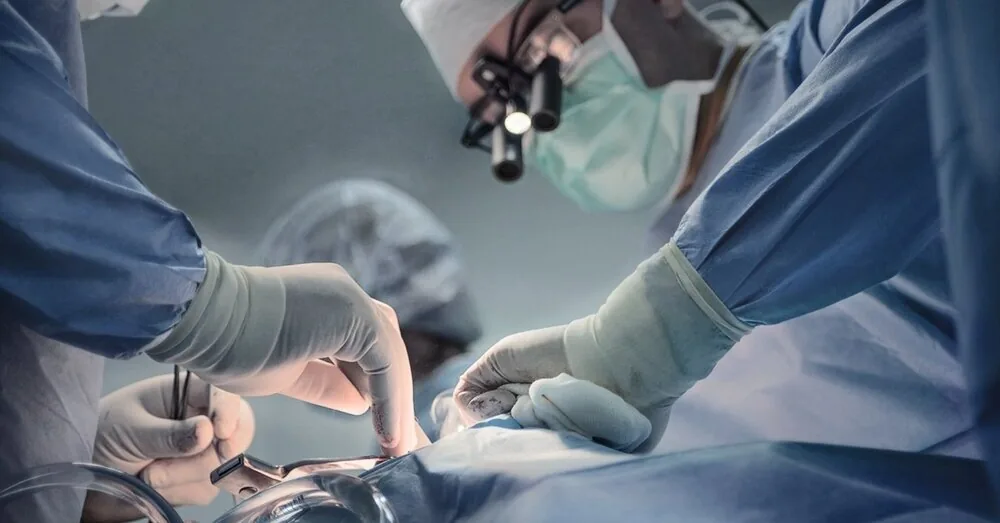
At the end of August 2026, Ukrainian law enforcement reported uncovering a possible illegal scheme of anatomical material collection in the Chernivtsi region. It is suspected that pathology office employees, without the necessary license and violating established procedures, took tissues from deceased bodies, which were later handed over for bioimplant production.
According to law enforcement data, the institution did not have a license to conduct such activities.
Contract annexes specified which anatomical materials could be taken and what service prices applied. The completed work and payments were formalized monthly with acceptance-transfer acts.
However, during the pre-trial investigation, law enforcement found that in at least one contract, the official service price may have been artificially lowered. According to investigators, part of the funds exceeding the contract amount was handed over monthly in cash to pathology office representatives through a currency exchange network.
On August 28, officers simultaneously conducted 18 searches at suspects’ homes, cars, pathology office premises, and cooperating company premises. All four suspects were detained.
It is also important that the law enforcement report does not state that anatomical materials were always taken without the consent of the deceased’s relatives.

On the contrary, investigators claim that consent was sought, but questions arise about the circumstances under which it was obtained – it is suspected that the vulnerability of relatives was exploited and free services were offered, such as body embalming.
Therefore, the claim that tissues were simply secretly cut out without the knowledge of relatives is not supported by officially published information.
What is wrong with the context?
The post manipulates the terms used. Although most of the text talks about tissues and anatomical materials – skin, bones, tendons, and corneas – later the phrase “organs and tissues” appears.
This may give the impression that the case involves the removal or trade of internal organs intended for transplantation.
However, such data is not indicated in the official information published by law enforcement. The investigation concerns anatomical materials transferred for bioimplant production, not a network trading hearts, livers, kidneys, or other internal organs.
Read more “InMedica” requests permission to acquire Navicko clinic
Therefore, the wording of the post dramatizes this story and gives it a broader meaning than is supported by officially published investigation data.
The way the post is presented is also misleading. The possibly criminal activity of four specific pathology office employees is expanded here into generalizations about Ukraine, its society, and “heroes.”
Formulations such as “one’s own kind” or “now even mocking the bodies of the dead” create the impression that it is about a broader phenomenon related to war or soldiers.
However, official law enforcement information does not indicate that tissues of deceased Ukrainian soldiers were taken or that this case is related to the military.
No official source mentions that bodies of deceased soldiers were affected – it concerns deceased civilians in a region where no active hostilities are taking place, and in one episode – a resident of a geriatric nursing home.
Other unrelated accusations are also attached to this story – about alleged child trafficking, theft of donated money or weapons. The post provides no sources linking these claims to the Chernivtsi case, so they act as emotional background rather than facts of this specific investigation.
What are bioimplants and how do they differ from organ transplantation?
Bioimplants are medical products prepared from human or animal tissues, used to restore damaged or lost tissues. They can be made from bone, skin, tendons, fascia, corneas, amniotic membrane, or other tissues.
Such products are used, for example, in orthopedics and spinal surgery, to restore jawbone before dental implantation, ligament reconstruction, burn treatment, or ophthalmological surgeries.
This is not the same as vital organs intended for transplantation – heart, liver, kidneys, or lungs. In organ transplantation, a functioning organ is transplanted to the recipient, requiring preserved blood flow and a very short time from donor death to transplantation.
Tissues must be taken shortly after death under sterile conditions. However, unlike transplanting a heart, liver, or other organs, they do not require maintained blood flow until removal. Therefore, tissue donors can be not only brain-dead donors in hospitals but also other deceased persons if their health history and test results allow donation.
Because of this, such tissues can be taken in morgues or pathology institutions. This also means that clear control is especially important here – who gave consent, which tissues were taken, to whom they were transferred, and whether the entire procedure was carried out legally.
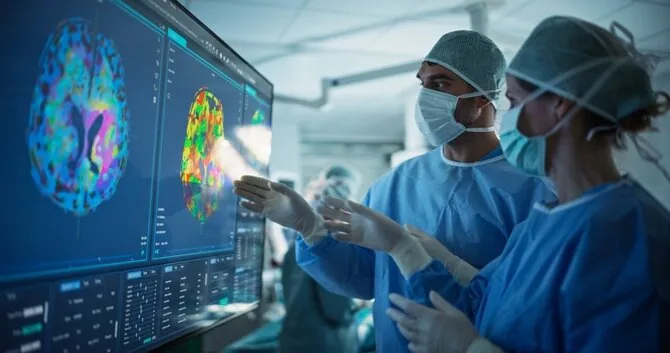
Not all deceased can be tissue donors. People who had certain malignant diseases, systemic infections, some neurological or unknown origin diseases, or cases where it is impossible to reliably determine medical history or cause of death may be considered unsuitable. Specific criteria depend on tissue type and national regulation.
That is why the transfer of skin, bones, tendons, and corneas for bioimplant production mentioned in the Chernivtsi case should not be equated with illegal internal organ transplantation. These are two different medical fields subject to different procedures for collection, processing, storage, and use.
15min verdict: lack of context. The post circulating on social networks is based on a real case investigated in the Chernivtsi region but presents it in a much broader and more dramatic context than official data allows. Law enforcement is indeed investigating possible illegal collection of anatomical materials from the deceased and their transfer for bioimplant production, but it has not announced trade in internal organs for transplantation, use of bodies of deceased soldiers, or that tissues were always taken without relatives’ consent.
There is also no basis to present this case as a widespread or nationwide phenomenon – officially it concerns a specific pathology institution in the Chernivtsi region and four suspects. The post also attaches unrelated and unsubstantiated accusations about alleged child, weapon, or donated funds theft to this real case.
Publication prepared by 15min in cooperation with Meta, aiming to stop the spread of misleading news on social networks. More about the program and its rules – here.
Read more One person killed, two injured in a shooting in the Netherlands