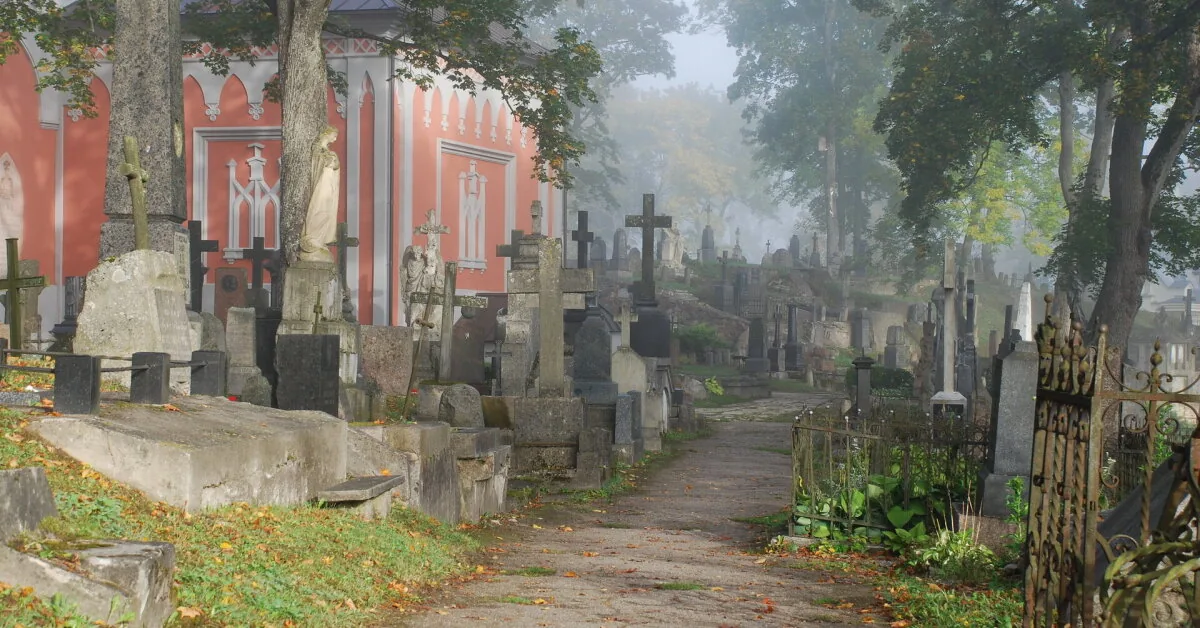
Rasos is the first “modern” cemetery in Vilnius and in Lithuania in general, established by the imperial authorities outside the city limits, away from the parish church, in an empty hilly area. According to one of the exhibition curators, historian Vida Girininkienė, this was a significant step by the authorities that shaped a new approach to visiting graves and cemeteries in general.
Read more BNS Sprint: meeting on the waste crisis, acting mayor of Marijampolė, new UK prime minister
“At the end of the 18th century, due to economic and political circumstances and cities expanding their infrastructure, there was no more space to expand cemeteries near churches. The establishment of cemeteries further from residential areas was also encouraged by medical warnings that such close proximity to graves, especially during outbreaks of plague, cholera, and other epidemics, could be dangerous to health. However, this process was not simple: there was significant dissatisfaction among city residents, so the new cemeteries had to be ‘brought closer’ to urban spaces by imitating parks and city squares.
Documents about the establishment of Rasos Cemetery in 1800–1801 are related to the founding of the new parish – the Church of the Ascension of the Lord (Missionaries) – and its subsequent activities. Cemeteries outside the city formed a cult of honoring the dead, visiting graves became a conscious act, and on All Saints’ Day or All Souls’ Day – a duty and obligation. New trends are reflected not only in official documents but also in epitaphs on tombstones and obituaries, emphasizing the deceased’s presence alongside the living,” says V. Girininkienė.
The exhibition brings together the perspectives of three curators – historian Vida Girininkienė, architect Eglė Bazaraitė, and art historian Rasa Antanavičiūtė. For this reason, visitors to the exhibition will find not only well-known but also less noticeable layers of Rasos Cemetery, says R. Antanavičiūtė, director of the Vilnius City Museum.
“At Rasos, at least four layers of meaning coexist. The traditional narrative is about the people buried there and their activities, their influence on today. Since Rasos was a prestigious cemetery in Vilnius, walking through it allows one to recall the history of Vilnius and Lithuania in the 19th and early 20th centuries. It is a kind of history textbook. Another, no less interesting layer is the artistic form of the cemetery. After all, tombstones were erected following the fashions of the time.
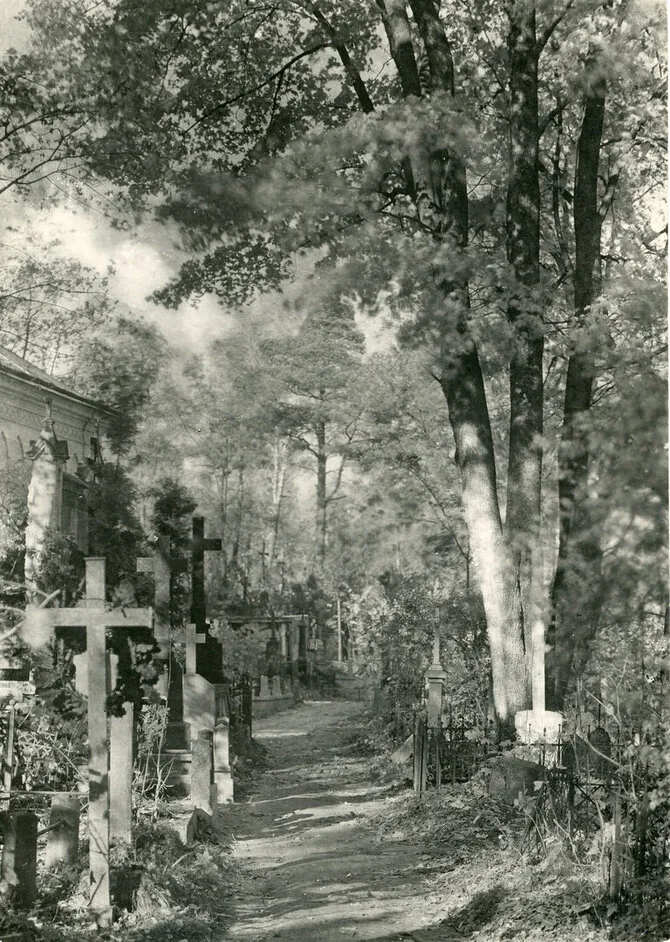
Moreover, they reflect the social and economic status of the deceased’s family. The symbolism of the cemetery is also very interesting – extinguished torches, ivy, broken columns. Learning to read these symbols reveals Rasos in a different way. Finally, the exhibition invites you to look at cemeteries as a green urban biodiversity island,” says Rasa Antanavičiūtė.
The exhibition creators emphasize the importance of paying attention to the less noticed but equally important current inhabitants of Rasos Cemetery. Birds, insects, plants, lichens, fungi, and other microorganisms turn the cemetery into a significant green space. According to Eglė Bazaraitė, it is very important to discuss how and why we care for cemeteries.
“There are more than 8,000 cemeteries in Lithuania, covering an area of 43.5 square kilometers – more than the entire city of Alytus. This is a huge territory. What would it mean to view all these places not only as burial sites but also as green urban or rural spaces? Cemeteries could be visited not only to be with deceased loved ones but also to walk, spend time in the fresh air, surrounded by history and art. There is even a separate term for this interest in cemeteries due to their history, art, and landscape – thanatophilia.
Even rarely visited cemeteries can provide shade, reduce the heat island effect, and create conditions for plants, birds, insects, and other organisms. This is an existing but not always recognized network of green spaces in cities, towns, and villages. Cemeteries have enormous ecological, aesthetic, and recreational potential, which is increasingly limited by intensive maintenance, removal of trees and shrubs, and installation of hard surfaces. Therefore, it is important to ask not only how to preserve cemeteries as places of memory but also how to preserve their vitality and ecological functions,” says E. Bazaraitė.
The exhibition opening is on July 24 at 6 p.m. at the Vilnius City Museum, Vokiečių St. 6.
Read more Fuel crisis in Russia has moved to stores – prices leave Russians speechless
The exhibition will be open to visitors until December 31.