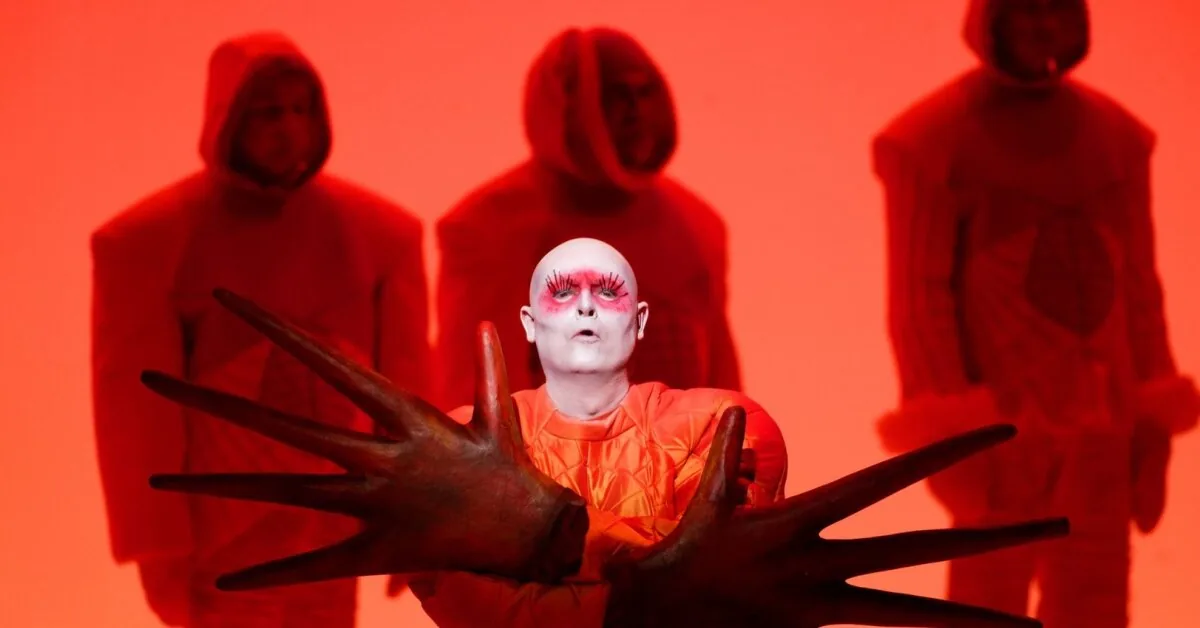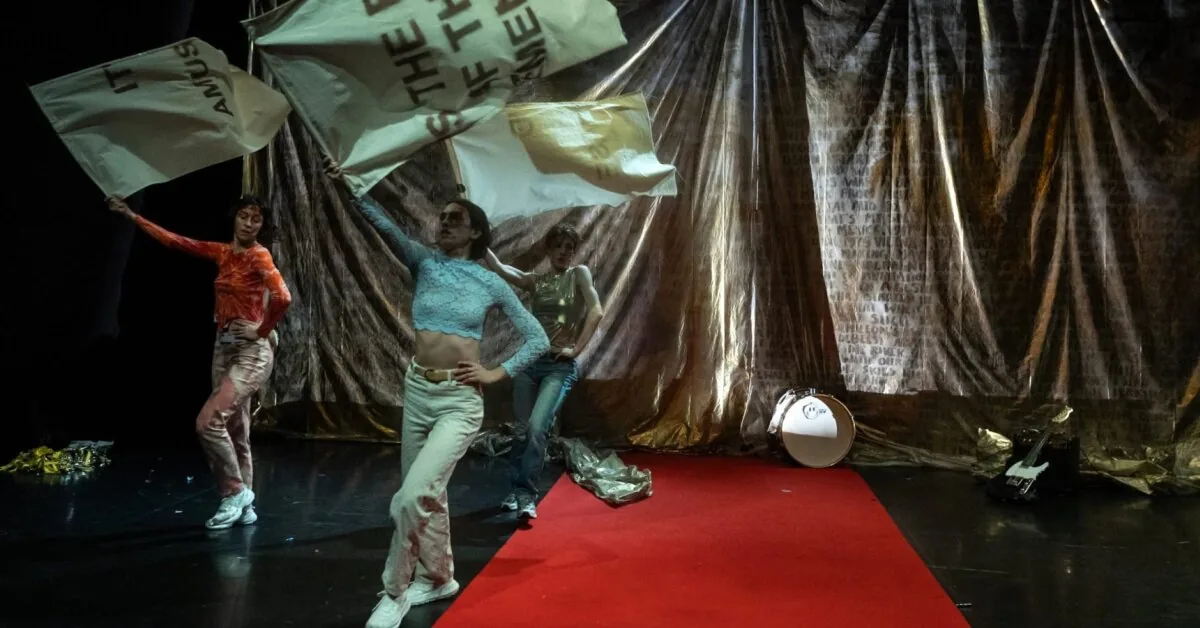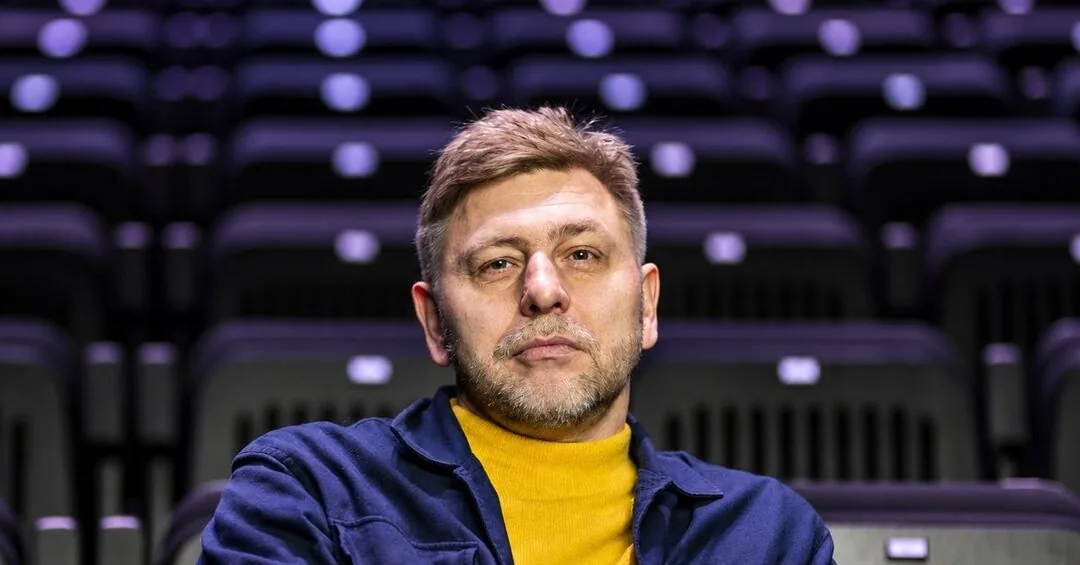
„The Dawn of the Gods“ – a play about the film director Mantas Kvedaravičius who died in Mariupol, the fate of women, and love against the backdrop of the war against Ukraine. A sensitive play that has received the highest praise from critics. According to Marius himself, with Mantas’s death, that war also became ours.
Read more An elderly but still valuable Mitsubishi SUV was stolen in a seaside town
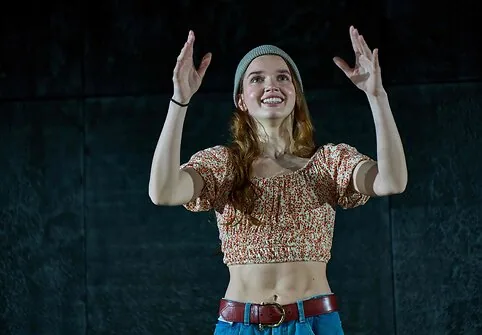
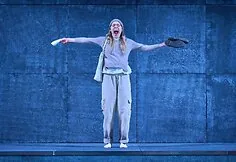
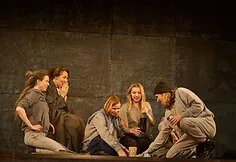
The initial sketch of the play was shown at the Old Theatre of Vilnius and the Avignon Theatre Festival back in July 2022. So the play has come full circle and returned to its starting point. We spoke with Marius about the genesis of the play, Russian drama theatres in the Baltic states, and theatre trends.
Even before the Estonian premiere, which took place on May 30, 2025, the play was recognized as one of the best in Europe at the international competition „EURODRAM“. The play will be performed in two casts – with Estonian (October 8) and Russian (October 9, 10) actors. All performances will have Lithuanian subtitles.
– What is the backstory of „The Dawn of the Gods“? It seems that the initial version of your play „The Dawn of the Gods“, whose sketch was shown at the Old Theatre of Vilnius and the Avignon Theatre Festival in July 2022, practically has nothing to do with this one?
– This play was provoked and dictated by the war. Both its creation and its theme. In February 2022, I had no suspicion that in two months I would be writing something like this. After Russia’s invasion of Ukraine, I felt completely paralyzed. Spiritually and professionally.
It seemed that not only was there no point in creating anything, but everything I had created before no longer made sense. I know that most people felt this way. Then in March, unexpectedly, I received an invitation to write a play about it for the Avignon festival. At first, I accepted it skeptically. I did not feel morally entitled to talk about this war without being in it. Without being Ukrainian. I only agreed when I learned that four female war refugees from Kyiv would participate in the creation of the play and the resulting performance.
It seemed that not only was there no point in creating anything, but everything I had created before no longer made sense.
More precisely, when I met them and saw how important it was for them to talk about what is happening in their homeland. We started meeting at the Old Theatre of Vilnius with them and the local actresses of this theatre. These were called „rehearsals“, but in fact, they were wellness sessions. We all tried to overcome our helplessness in the face of this war and find a way to talk about what has happened and is still happening using theatrical tools. Regarding the play itself, it has hardly changed from the Avignon version, only slightly shortened.
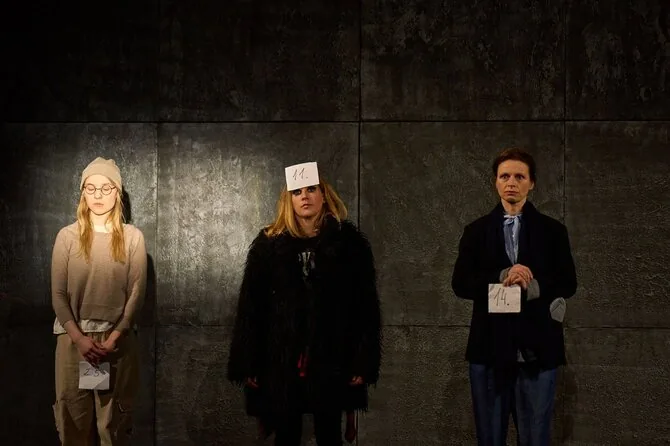
The main difference is its production then and now in Estonia. The first was done very hastily and without talent. After ten performances in Avignon, I told the theatre management that I would not tolerate such work. Either they redo it, or I will not allow it to be shown. The theatre bargained that I would allow two performances in Vilnius and then we would see. After those two performances, everything ended.
– I knew Mantas Kvedaravičius when he was studying archaeology at Vilnius University around 1995–1997, and I was studying history. We called him Mantinis. We communicated sporadically, nothing special. I still remember: standing naked in the surgeon’s office at the Pylimo St. polyclinic in Vilnius – they were checking students’ health… Once we slept with friends on his kitchen floor in Lazdynai, after getting out of the Neris at night – we were kayaking, had nowhere to go, etc.
Then he took different paths: anthropology, cinema, etc. I observed his trajectory as a person and artist from the side. He was interesting, genuine, always naked like in that polyclinic: open to adventures in a good sense, drawn to hot spots, it seemed he was searching for something, maybe even desperately. What is your own relationship with Mantas and how did he „ask“ to be included in the play?
– My acquaintance with the living Mantas was quite superficial. We knew each other, greeted at various premieres, attended a few joint gatherings, but that was all. Yet, when the news of Mantas’s death in Mariupol came, it was a shock. That war, which had already been very close not only geographically but mentally, became even closer. A Lithuanian, an artist, an acquaintance died.
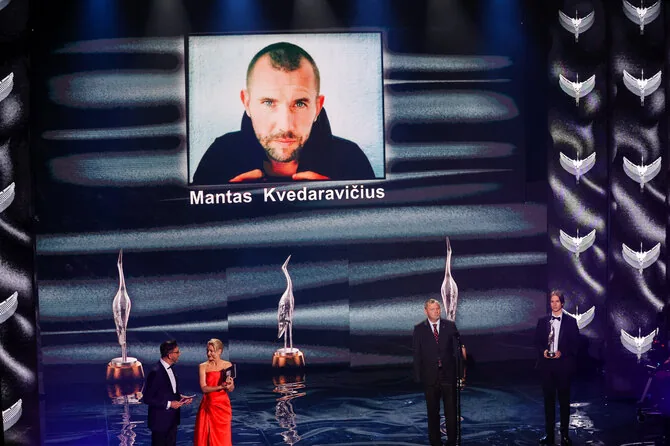
The first information that appeared was exactly that – he died. We did not yet know about his cynical murder. I started to inquire about the circumstances. I met his wife Ana, almost the day after Mantas’s funeral. I quickly realized that this would be the missing piece of my motivation to talk to the French about the war in Ukraine. With Mantas’s death, that war became ours too.
With Mantas’s death, that war became ours too.
– The play has two casts: one Russian-speaking and the other Estonian-speaking. Whose decision was that? How does it look to you from the outside, what does this approach give, what does it take away? It seems there should be two separate plays. Both emotionally and mentally.
– It was the director Elmo Nüganen’s decision. And, as it later turned out, a very wise one not only artistically but also politically. These two plays became a kind of cross-section of Estonian society, where more than thirty percent are Russian-speaking. The Russian-speaking audience in Tallinn was reluctant to attend the Russian „Dawn of the Gods“, even though it was held in their „native“ theatre. Apparently, for many of them, still influenced by Russian propaganda, this play was obviously uncomfortable.
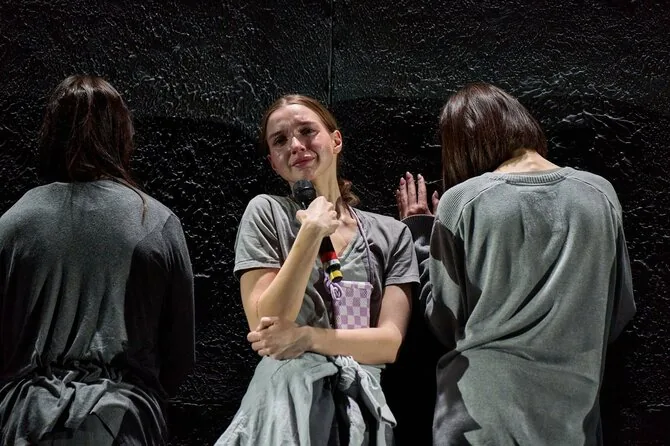
But the Estonian hall was packed. A 650-seat hall. Many Estonians came to this theatre for the first time in their lives because it was the first play in Estonian at this theatre. Such paradoxes occurred during the Tallinn premieres of „The Dawn of the Gods“, provoking public discussions about what the Russian diaspora in Estonia really is.
Read more Trump opened his wallet: gave his favorite employees 45 thousand dollars each
Or at least most of it. I myself was only at the Russian premiere; the Estonian one took place four days later, I couldn’t wait that long. So in Vilnius, I will have the opportunity to see the Estonian version for the first time.
– All events are very close in time, the bodies are still warm… One can sense that such a lack of distance when writing the play must have been a certain obstacle, a challenge… Am I wrong?
– Exactly – at first, I felt like a vulture, interviewing women who had just lost their dearest people. Until I realized that all this was very important to them. Not to vent, but precisely to tell the world. I first felt this from Mantas’s Ana – our recorded interview lasted four hours. Then with Jana, who lost her husband in Mariupol – the interview with her was remote.
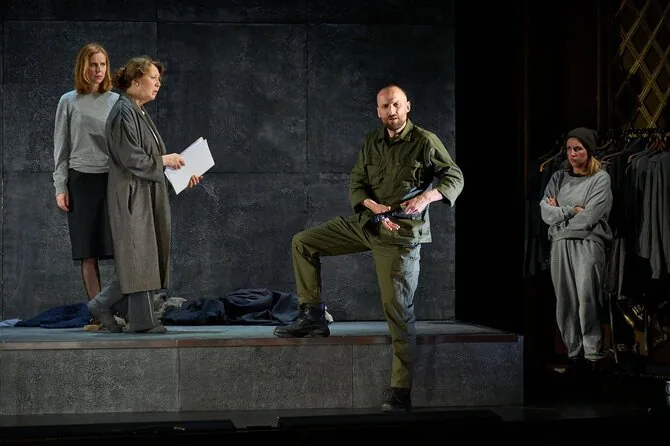
When I asked at the end of the conversation if she wanted to remain anonymous, she replied: „No way. I told all this so that the world would hear about my husband. And know his name and surname. And so that our son, who is now only one year old, would know in the future who killed his father.“
Exactly – at first, I felt like a vulture, interviewing women who had just lost their dearest people.
– As far as I saw, you also participated in rehearsals yourself. What was the process like? How was the text received? Considering the geopolitical situation, Russian speakers in Estonia, was there no rejection reaction? As I understand, your vectors with director Elmo Nüganen coincided very well…
– This was our second joint work with Elmo. Before that, in 2017 at the Tallinn City Theatre („Linnateater“), he staged my play „Kant“. I participated in the rehearsals of „The Dawn of the Gods“ modestly, as much as the author needs. I flew in for the play reading stage, clarified all the nuances with Elmo and the actors.
It was interesting to hear that some invited Russian-speaking actresses refused to act. For others, it was a challenge. One young actress called her Russian-speaking father and told him she would participate in a play that would undoubtedly block her path to Russia even in the future, when the war ends. The father replied: „I am proud of you, daughter.“
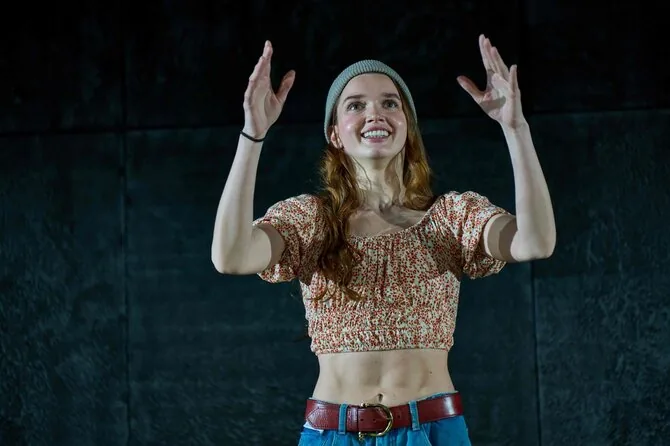
– „The Dawn of the Gods“ closed the second of the three Russian drama theatres in the Baltic states. After the sketch of this play was staged and taken to Avignon, the Lithuanian Russian drama became the Old Theatre of Vilnius. For the Estonian Russian drama, the premiere of „The Dawn of the Gods“ was also the last; from autumn it is called the City Heart/Centre Theatre. Well, without exaggerating, one can say that „The Dawn of the Gods“ is symbolic… What is your own relationship with the existing and former Russian dramas? How would you see them today, in today’s cultural fabric? Are they dying out? Especially since this year marks the 80th anniversary of the Russian drama theatre founded in Lithuania in 1946, and 40 years since it operated in the current Old Theatre of Vilnius building on Basanavičius Street from 1986 to 2022. There is really nothing to celebrate, but the phenomenon needs to be discussed.
– To me, all these Russian drama theatres not only in the Baltic states but also in all other Soviet-occupied countries are precisely signs of occupation. If they had appeared under other circumstances, due to the natural cultural needs of the Russian minority in those countries, one could talk differently. But the Russian minority did not appear here naturally. They came after the occupying Russian army.
If Russia ever becomes a normal, civilized country in the future and there remains a cultural need to have a theatre in Russian, such theatres can be established anew. But this Soviet legacy had to be reformed. Another question is what to do with the remaining professional Russian-speaking acting troupes. I think they have the right to perform in the language they best master. And today, in the former Estonian and Lithuanian Russian drama theatres, they still have such an opportunity.
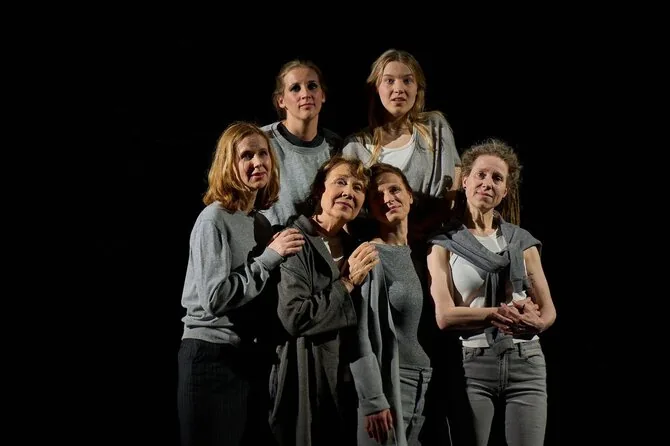
– What about Estonian theatre in general? Does it have its own specificity? Lithuanian theatre, which, in my understanding, is totally stagnating and has plenty of poor, low-level productions, I would say is surpassed (if such a sports term can be used) by both Poles and Latvians… Maybe I’m wrong? How would you see the situation yourself?
– In Estonia, I have long been pleasantly surprised by patronage. Something we completely lack in Lithuania. Estonians have a lot of private theatres that compete with state ones. Even the state theatres – each has its own big patron. I don’t know how they achieved this, but somehow they did. On the other hand, Estonia does not have the kind of audience Lithuania has. An audience that would go to see the same play several, sometimes even dozens of times.
In Lithuania, theatre is a semi-religious sphere, in Estonia – more down-to-earth. The already mentioned large Russian-speaking minority also influences this. They do not attend Estonian-language performances. So, excluding Russian speakers, Tallinn is no longer the third largest city in the Baltics by population, but the fourth, giving third place to Kaunas.
In Lithuania, theatre is a semi-religious sphere, in Estonia – more down-to-earth.
Due to the factors listed, performances in Estonia last much shorter than in Lithuania. Two seasons is already a lot. Three to four – a long-lived performance. Six, as happened with the Estonian version of „The Exile“, is already a record holder. Legendary. Today, there is also a generational change happening in Estonian theatre, but not as wild as in Lithuania. All fit on the main stages – both young and veterans. The quality of performances varies; I have seen both very good and very bad ones. But overall, the theatrical atmosphere is very healthy. It is good to be there and create.