Narva is a special place. In this city of 53,000 inhabitants, the majority of residents speak Russian, and about a third hold Russian, not Estonian, citizenship. Vladimir Putin described Narva as historically Russian land.
Read more Possible killings and cannibalism 7,000 years ago: The caves of Granada revealed chilling secrets
The city even became the subject of a recently published book, “If Russia Wins.” It presents a hypothetical scenario in which Russia, having achieved its goals in Ukraine, allegedly launches a surprise attack on the city, forcing NATO leaders to decide whether it is worth risking war with Russia over this city.
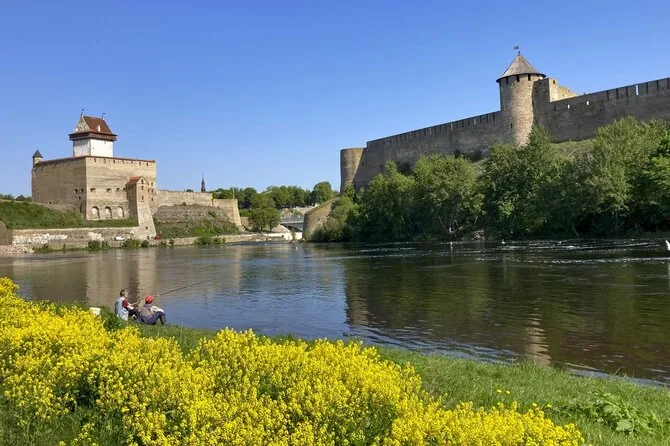
“Many people say: ‘Narva is another’ on Russia’s military target list,” said Katri Raik, former Estonian Minister of the Interior and three-time mayor of Narva. “Here we feel that war is near. But the only thing we can do is to keep living.”
Estonian officials urge calm, although NATO countries are increasingly issuing warnings that Russia may launch an attack against the Alliance.
Last month, Central Intelligence Agency (CIA) Director John Ratcliffe made a surprise visit to Moscow to warn the Kremlin against such a move, notes The Wall Street Journal.
However, Estonian officials say they see no signs that Russia is preparing to send tanks and troops across the border, as its forces are too bogged down in Ukraine to open another front.
“We have to watch carefully, we have to be prepared for any… real provocations,” emphasized Estonian Foreign Minister Margus Tsahkna. “But large-scale military aggression against NATO? The numbers don’t add up.”

In many respects, as Estonian officials note, the fight against the Kremlin has already begun: Russia constantly threatens NATO countries with explosive-laden drones and carries out sabotage. Moreover, a Russian disinformation campaign has long been underway across Europe.
“He plays on our fear, organizes various attacks, sabotage, provocations,” said the head of Estonian diplomacy about Vladimir Putin.
After Germany officially accused Russia of involvement in the drone incident at Leipzig-Halle airport, Moscow strongly denied participating in sabotage against Europe.
Meanwhile, Estonia has its own suspicions. The country’s officials are investigating whether persons linked to Russia stand behind the arson of a local defense industry company last month.
Among other things, Ukrainian drones flying to targets in Russian territory are sometimes diverted off course using jamming transmitters or GPS signal spoofing and end up in Estonia. Earlier this year, one such drone hit a power plant.
Although the drone was Ukrainian, M. Tsahkna emphasized that it was still a consequence of Russia’s invasion of Ukraine and should prompt Europe to double its efforts in providing aid to Kyiv.

“We should respond to every type of attack,” explained the head of the country’s diplomacy in an interview. “Not by going into Russia and blowing something up, but at the level of sanctions.”
“We don’t know if we can rely on NATO”
Elvi Orr, who recently returned to Estonia after spending more than a decade in the United States, said that Estonians have always been aware of the threat from Russia.
“When they see what is happening in Ukraine, memories arise for people,” she said. “We don’t know if we can really rely on NATO.”
Not beneficial for the Baltic countries?
Estonia began preparing for defense against Russia even before the large-scale invasion of Ukraine. Since 2017, land forces from other NATO members, including the United Kingdom, have been deployed in the Baltic countries, and their numbers were increased in 2022. There are now about 1,500 troops.

Estonia’s doctrine now envisions a fierce fight for every centimeter of the country’s territory. Watching the course of the war in Ukraine, officials realized that it is much easier to hold territory than to retake it.
However, Elisabeth Braw, an expert on limited military actions at the Atlantic Council think tank, assesses that Estonia has partly strategically downplayed the risk posed by Russia.
“It is not beneficial for the Baltic economies if they constantly talk about Russian threats,” she pointed out. “They position themselves as countries able to operate normally because that is how investors are attracted and a vibrant economy is created.”
E. Braw noted that Russia has shifted its “gray zone” attacks to countries like Germany and the United Kingdom, which contribute more to Ukraine’s defense.
She also reminded that the Baltic countries have strengthened their defense against certain types of attacks, such as the large 2007 Russian cyberattack against Estonia.
“Since then, nothing similar has happened,” she said, “and not because Russia hasn’t tried.”
“2022 was much scarier”
“The situation is not that critical,” said Artur Sade, who grew up in Eastern Estonia, just across a lake from Russian territory. “There may be some explosions or drone incidents near the border. But I don’t think the situation will worsen significantly.”
However, a significant portion of Narva’s residents, especially older ones, continue to watch Russian television programs and repeat Kremlin propaganda about the war in Ukraine.
55-year-old Russian speaker Liam Fitt, who moved to Narva as a child, blamed the West for what is happening: “They scare people by saying Russia will start a war. That’s nonsense.”
Meanwhile, Kirill Smirnov, an Estonian citizen whose native language is Russian, admitted that 2022 was much scarier for him – it seemed that Russia could take over Ukraine and then Estonia. Now, according to him, it is clear that Russia cannot start another war.
Read more The Yemenis have taken control of a strait vital to global shipping
“I don’t feel any threat from the other side of the river,” he said.