For the exhibition in Vilnius, the Malbork Castle Museum lent its most precious and valuable exhibits so that visitors from Lithuania could learn about the life of the most dangerous medieval enemy – the Teutonic Order knights, their daily life, the fate of Malbork Castle after the fall of the Order, and the museum today. According to Polish museum experts, Malbork Castle is also an important part of the history of the Grand Duchy of Lithuania, which is why weapons, works of art, household and liturgical items – everything used by the Teutonic Order knights in the castle at that time – were brought to the Palace of the Grand Dukes Museum.
Read more North Korea calls the first automobile bridge to Russia a sign of closer ties
The exhibition – not only about the Teutonic battles
The exhibition’s title quotes a line from the poem by Jonas Mačiulis-Maironis. In the phrase “The sound comes from Malbork…”, the Lithuanian national poet used Malbork as a symbol of the threat to Lithuania. The feeling of anxiety that accompanied thoughts about the former capital of the Teutonic Order is juxtaposed in the title with the word “treasures,” which evokes the excitement of discovery and allows a new perspective on this place. Today, the Malbork fortress can be rediscovered by exploring the historical “treasures” accumulated there.

The exhibition’s narrative covers the entire history of the Malbork fortress – from the Teutonic times, the Polish-Lithuanian Commonwealth period, the Prussian era, to the present day, when the site, included in the UNESCO World Heritage list, attracts many visitors with its medieval mysteries. Visitors will see sculptures, paintings, architectural details, weapons, everyday household items, and religious artifacts in the exhibition.
The most valuable exhibit
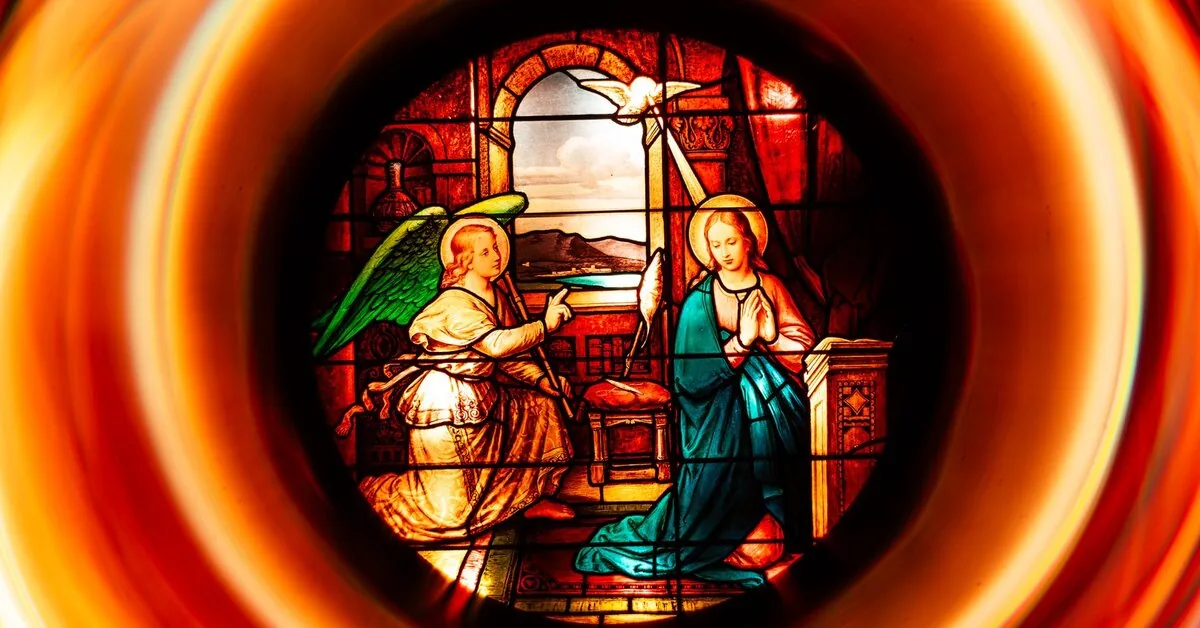
One of the most important “Malbork treasures” is the altarpiece (upper part) from Tenkytai. It was created in 1504 by order of the dignitaries of the Teutonic Order. The central part of this late medieval work depicts a scene of the Blessed Virgin Mary crowned by God the Father and God the Son, while the side wings feature figures of St. Barbara and St. James the Greater.
This cultural heritage object is valuable not only as a work of art – it is also a kind of monument to the persistence and passion of the Malbork Castle museum staff. The cabinet altarpiece was dismantled into parts after World War II and, like many cultural heritage objects, disappeared during the post-war chaos. In the 1970s, traces of one of the altarpiece’s sculptures were found – this marked the beginning of a search for other parts of the altarpiece that required much effort.
Read more Repeated warning to residents: police have not yet found the dangerous patient sought since summer

As some parts were recovered, others almost miraculously appeared. Only in 1997 did the Malbork Castle Museum manage to assemble the entire retable of the Tenkytai altarpiece. Since then, this medieval masterpiece, returned to Malbork, has not been taken outside the castle walls.
Shared history
In the 14th century, Poland and Lithuania were united by a common enemy – the Teutonic Order, whose aggressive territorial “baptism,” in fact conquest policy, was carried out at the expense of neighboring states. At that time, Malbork (German: Marienburg), the capital of the Order, became a symbol of the fight against the Teutonic Knights, and the castle itself – their eternal monument. Today, Malbork is the largest surviving medieval castle in Europe. It consists of a complex system of buildings and multi-tiered defensive fortifications.
This powerful Teutonic Order complex lost its power after the Battle of Grunwald (1410). In the second half of the 15th century, the castle became one of the residences of the rulers of Poland and Lithuania – for more than three centuries, the Jagiellonian, Vasa dynasties, and later rulers or their representatives visited Malbork, as they did Vilnius. Since 1961, a museum has been established in the castle, which today is visited by thousands of people.
The temporary exhibition “The sound comes from Malbork… Malbork treasures” serves as an introduction to what can be experienced when visiting the brick fortress standing by the Nogat River. The Malbork Castle Museum is celebrating its 65th anniversary this year. The international exhibition will be open only until November 22.
Read more Polish meteorologists’ forecasts are gloomy: after the heat wave – frosts