Poland has land borders with seven countries: Germany, Czech Republic, Slovakia, Ukraine, Belarus, Lithuania, and Russia through the Kaliningrad region. Traffic between neighboring countries is intense, with transit through Poland as well as arrivals for specific purposes.
Read more Predicted future scenarios: Finland identified the greatest danger
Some come as tourists, others as workers or to visit relatives, and still others regularly travel to Poland for shopping.
The portal biznesinfo.pl reports that in 2025, Poland’s borders were crossed 291.9 million times, which is 0.9% more than in previous years. In the last quarter of the past year, the Poland-Germany border was crossed the most times, accounting for 49.5% of all crossings.
The number of crossings at the Lithuania-Poland border is the lowest compared to other countries (except Belarus and Russia’s Kaliningrad region) and accounted for 3.8% in 2025.
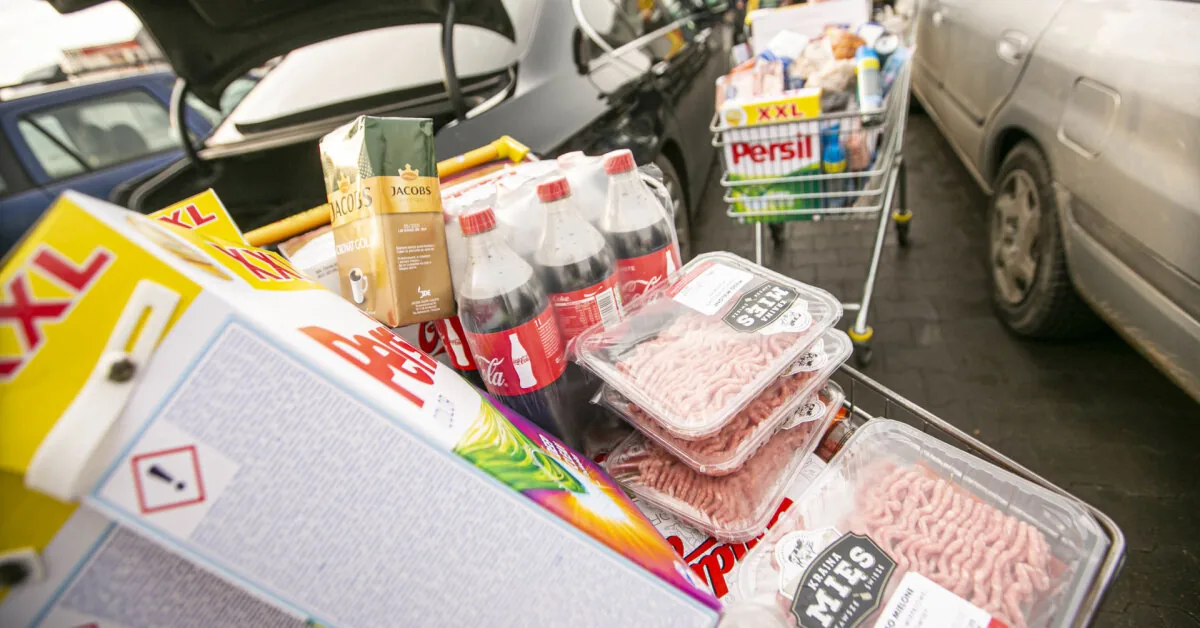
It is estimated that as many as 74.6% of people crossing the borders live about 50 km from the border – on both the Polish and neighboring sides. This allows the conclusion that a significant portion of them come to Poland for shopping.
The amounts they spend are impressive – in 2025, visitors paid about 11.67 billion euros (50.6 billion zlotys) for goods and services in Poland.
The needs of visitors from different neighbors are not the same. For example, Czechs buy dairy products, butter, meat, fruits, vegetables, dry goods, household chemicals, etc. in Poland. Germans flock to border gas stations.

In northern Poland, most buyers visiting stores and other marketplaces come from Lithuania. Sellers in the Podlasie and Suwałki regions say that besides food products, Lithuanians also buy furniture and fuel.
“Such flows are beneficial to local entrepreneurs as they increase turnover and the number of customers. However, there can also be another side: if a large portion of visitors simultaneously start buying a certain type of product, its supply suddenly drops.
Some marketplaces selling heating fuel in northeastern Poland are currently experiencing exactly this phenomenon,” writes biznesinfo.pl.
Read more Before the planned 29 million euro bond issue, VIK maintained an A+ credit rating
However, there can also be another side: if a large portion of visitors simultaneously start buying a certain type of product, its supply suddenly drops.
Customers from Lithuania are especially interested in coal at the moment. One seller from Suwałki told the portal Money.pl that as many as 90% of his customers are Lithuanians. The price of a ton of the coal pellets he sells is 1520 zlotys, but some products have to be waited for several weeks.
According to the seller, buyers are also interested in ecological pellets and peat briquettes.

The reason for coal’s popularity is primarily financial. According to the portal, coal can be purchased in Poland for 262-277 euros (1135-1200 zlotys) per ton, although some of its products cost up to 392 euros (1700 zlotys) per ton. However, in Lithuania, the price of a ton of coal ranges from about 370-500 euros (some products even more), which is at least 1600-2150 zlotys.
“When buying larger quantities, the price difference can compensate for transportation costs, so the conclusion is that shopping in Poland is still worthwhile.
Lithuania does not have its own coal mines and depends on imports. Although this type of fuel accounts for a small share of the entire Lithuanian energy sector, the price remains important for households that still heat with coal,” says biznesinfo.pl.
On the other hand, wood pellet sales look the opposite. As the mentioned portal writes, it is noticeable that the purchasing direction here is reversed – Poles more often go to Lithuania to buy them. The reason is the price: according to the portal’s data, the average price of a ton of wood pellets in Poland is 465 euros (about 2018 zlotys), and certified products cost even more. In Lithuania, this price is about 450 euros (about 1940 zlotys).
“All this creates an unusual situation at the border: Lithuanians buy coal in Poland, and Poles buy wood pellets in Lithuania. For sellers in Suwałki, this means higher sales but also longer delivery times for some products. Increased demand before the heating season can also raise prices and the availability of fuel on both sides of the border,” writes biznesinfo.pl.
Read more Elegant equestrian sports event at Pakruojis Manor: unbelievable, but everyone will be able to start