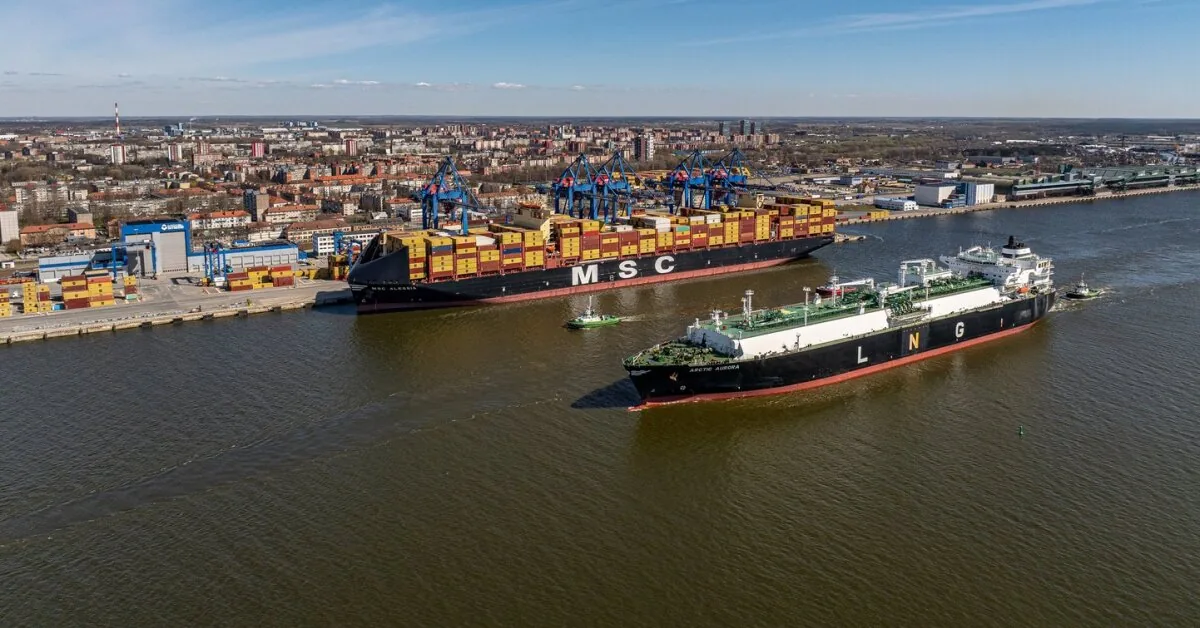
The port authority management emphasizes that this is not a short-term recovery after previous geopolitical shocks – new cargo flows formed in recent years allow us to hope that the growth trend will continue.
Read more «Google» introduced an AI model that almost no one will get: what does this say about the future?
There is optimism
Although international trade continues to be affected by the war in Ukraine, European Union (EU) sanctions against Russia and Belarus, customs policy, and a slowing economy, the Port of Klaipėda has recorded growing cargo handling for the third consecutive year.
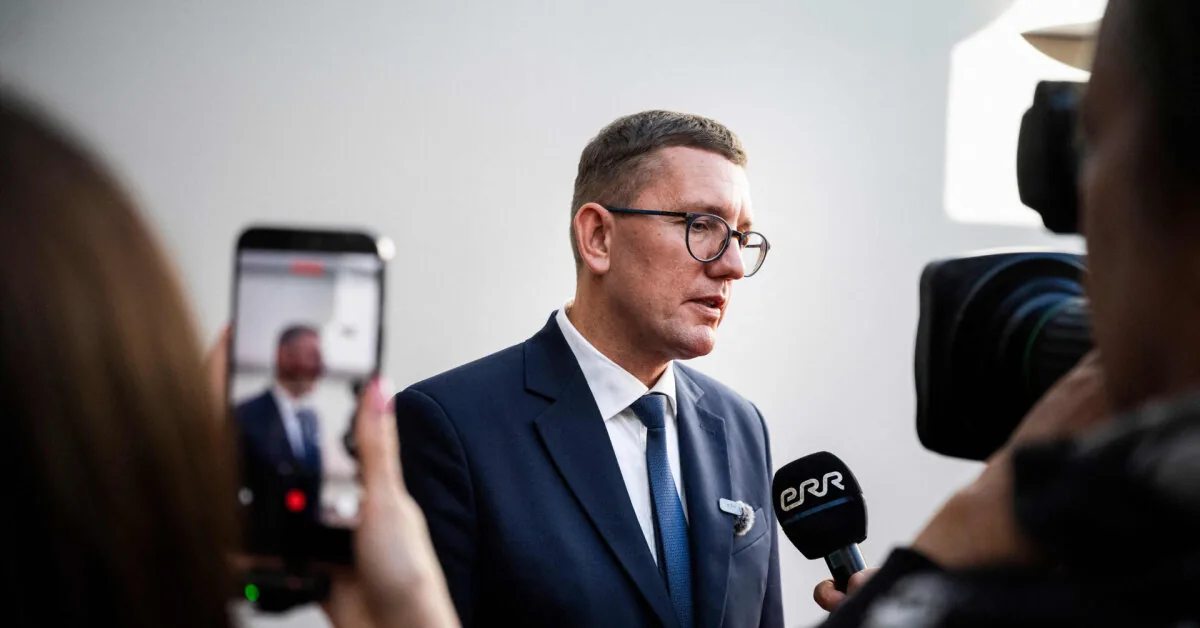
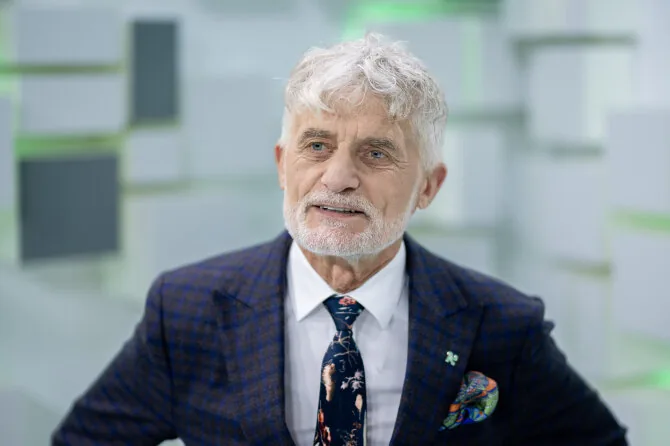
According to Algis Latakas, CEO of the Klaipėda State Seaport Authority, one of the most important factors of resilience is timely diversification.
“The Port of Klaipėda is extremely diversified, and this is one of its success elements. Looking at an uncertain future, not knowing what might happen when, such diversification truly saves the port,” says A. Latakas.
According to him, this year the port continues to adapt to global unrest and changing international trade conditions. Nevertheless, the half-year results allow for an optimistic outlook on the future.
“The first half of this year was really good in terms of cargo handling. 20 million 123 thousand tons of cargo handled in the port – that’s 6 percent more than last year. These figures show that the port has truly recovered. This is not a one-day or one-year phenomenon – new lines have formed, new flows have emerged, which allow the Port of Klaipėda to grow,” emphasizes the CEO.
According to A. Latakas, the cargo structure itself has also changed in recent years. While in 2022, land transit accounted for about 40 percent of all cargo handling, now it only reaches about 3 percent. Meanwhile, sea transit is growing rapidly, already accounting for almost a fifth of all cargo transported through Klaipėda.
“Now, about 19 percent of all cargo handling consists of sea transit, which increased by 134 percent in the first half of this year. This means the growth is enormous,” emphasized the head of the port authority.
Containers provided the biggest boost
According to A. Latakas, the most significant growth this year is recorded in the container segment. In the first half of the year, over 7.2 million tons of cargo were transported by containers – 12 percent more than a year ago. In terms of container volume (TEU), Klaipėda is moving at a similar pace as last year, so there is reason to expect another successful year.
“In the first half of the year, about 700 thousand TEU were handled. This number is very good, as a total of 1.3 million TEU were handled in Klaipėda last year. This means that we are moving in the same direction, and the bar that was set last year will probably be reached and perhaps even exceeded this year,” says the interviewee.
In addition to containers, the volume of cargo transported by ferries also grew. The flow of these cargoes has already reached almost 3.4 million tons. Shipments on routes to Germany increased by about 9 percent, to Sweden by 3.4 percent, although flows to Denmark decreased by approximately 16 percent. According to the head of the port authority, these changes reflect the evolving trade relations between Lithuania and the Scandinavian countries.
Read more Blind tennis? The World Championship in Vilnius will surprise even professionals
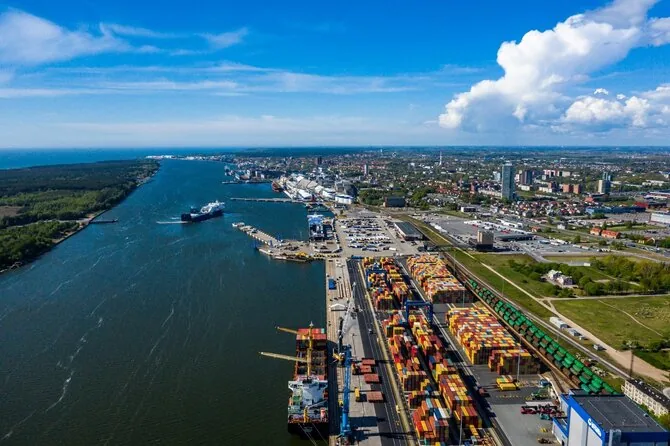
Double-digit growth was also recorded in the oil products segment – their handling increased by about 12 percent to 2.3 million tons. This is associated with larger volumes at the Būtingė terminal and more active work by “Orlen Lietuva”. Meanwhile, liquefied natural gas handling jumped by as much as 37 percent, and fertilizer handling grew by 14 percent.
However, the results were not equally good across all segments. Grain and other agricultural products handled in the first half of the year decreased by about 11 percent compared to a year ago. According to A. Latakas, this situation is characteristic of almost the entire Baltic region and is mainly related to fluctuations in international trade and prices.
“If we were to observe other ports in the region, we would see that it’s practically similar for everyone, except Riga. Less grain, of course, due to trade, prices, and all these factors,” emphasizes the CEO.
Klaipėda occupies almost half of the Baltic market
Although the overall Baltic Sea ports market contracted by about 1 percent in the first half of the year, Klaipėda only strengthened its position. Currently, the port handles 44 percent of all cargo in the Baltic states – a few years ago, this share was about 39 percent.
Compared to competitors, the difference remains significant. In Riga, about 8 million tons of cargo were handled in the first half of the year, in Tallinn – 6.5 million, and in Ventspils – about 3.5 million tons. Nevertheless, A. Latakas is not rushing to celebrate and warns that as cargo handling decreases in neighboring ports, competition will only increase.
“One must understand: the greater the hunger, the more one wants to eat. So, we need to be prepared and not lose the momentum we currently have,” he asserts.
Asked why Klaipėda manages to outperform other significantly larger Baltic Sea ports, A. Latakas emphasizes that the main reason is not at all its geographical location or territorial size.
According to him, since the restoration of independence, there has been consistent investment in port infrastructure, and private cargo handling companies have modernized technologies, equipment, and warehouses. As a result, today almost all types of cargo can be handled in Klaipėda, and the port itself is characterized by an efficient shipping organization system and high service quality.
“Stability and consistency in business are extremely important. Such things are attractive to carriers, shipping lines, and buyers alike. This is how the whole mechanism gets started,” says the CEO.
Read more To live and study in Vilnius – a springboard to Europe