








Since the United States and Israel started a war against Iran at the end of February, plane ticket prices have skyrocketed – doubling on some routes. And the war actions have repeatedly disrupted flights at commercial aviation hubs in Dubai and Doha.
Read more «This will be the beginning of the end»: Bitter words from the Armenian Prime Minister to Putin
Although the tourism sectors in Cambodia, Indonesia, and Thailand have remained largely resilient due to regional travel, some cities and towns dependent on travelers from Europe have been severely affected. Travel sector representatives said that in recent months a large share of European tourists canceled trips to these popular destinations and chose vacations closer to home.

For 30-year-old Khon, this has caused huge financial difficulties. The man said that every time he prepares formula milk for his 7-month-old baby, instead of the recommended 2.5 teaspoons of milk powder, he uses only one so that the can lasts not 10 days but three weeks.
“I am worried that my daughter is not healthy because I cannot give her as much milk as before,” Khon said, looking at the quiet street scene in Siem Reap, one of Cambodia’s main tourism centers.
Travel sector representatives noted that this war is the biggest shock to the Southeast Asian tourism industry since the COVID-19 pandemic.
In the first three months of this year, the number of foreign tourists in Cambodia decreased by 45% compared to the same period last year.
Khon admitted that previously, when driving tourists, he earned an average of about 82,000 Cambodian riels, or 17.5 euros per day. Now he earns less than 4.39 euros per day.
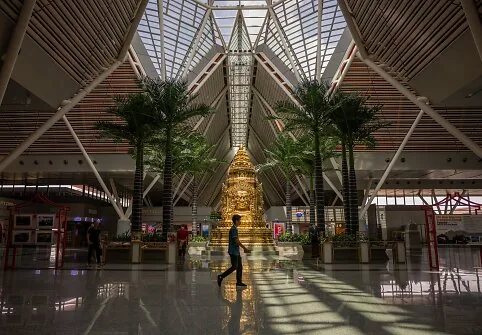
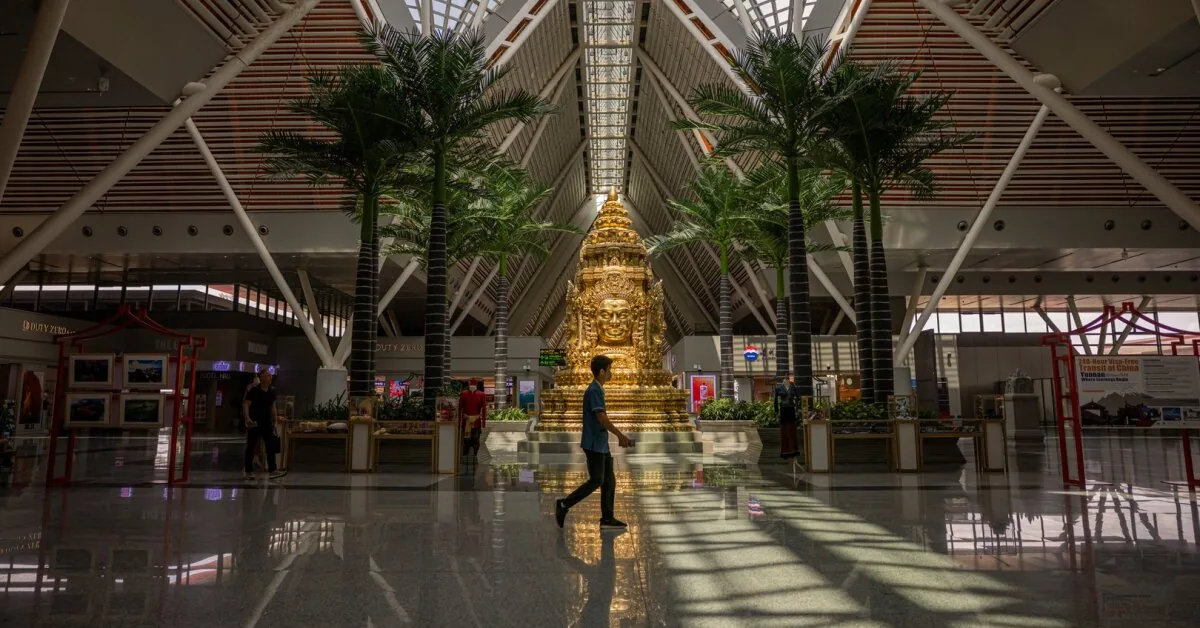
Companies operating at Siem Reap’s Angkor International Airport have also significantly shortened their working hours. Lamas Lan, a 25-year-old cook at the airport restaurant, said that since March his working hours have been reduced from 30 days per month to about 20. His monthly income dropped from 220 euros to less than 130 euros.
After deducting expenses for gasoline and debt payments, Lamas said he barely has enough money to buy soy milk for his one-year-old daughter. Meanwhile, his wife is expecting their second child.

“I don’t know how it will be with the second baby because I have no savings for its birth,” he admitted.
Tour guide Chrun Kimseng, who has been leading Spanish-speaking tourists around the Angkor temple complex for more than 30 years, said he now earns 35% less than before the war.
Trying to compensate for this difference, the man started growing vegetables and chickens, hoping to reduce food expenses.
“My income now is just enough to survive,” Chrun worried.
Neighboring Thailand’s Phang Nga province is facing a similar crisis. According to local officials, hotel bookings have dropped by about half since the war began.
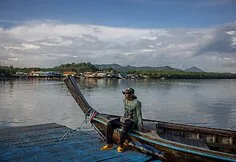
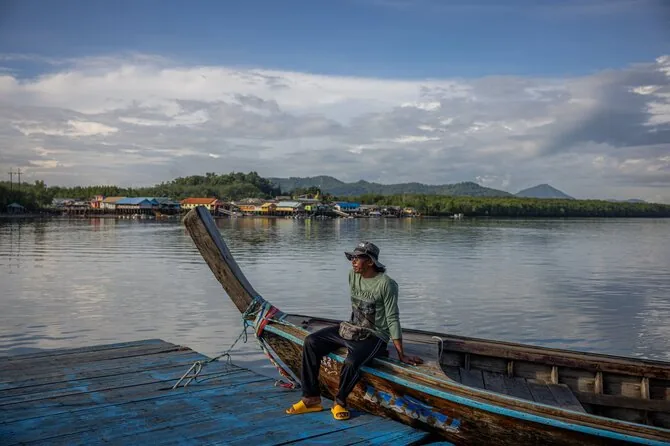
At Surakul Pier – the main departure point for boat tours to Kau Phing Kan island, where scenes from a James Bond film were shot – financial losses are visible to the naked eye.
Where previously a continuous convoy of minibuses transported thousands of tourists daily and boats with long hulls carried them, now dozens stand unused, quietly swaying at the docking spots.

“I don’t know how much longer we can hold on,” said 46-year-old Channipha Laklaem, who collects a 10 baht (0.26 euro) fee from boats at the pier. According to the woman, since the war began, there have been almost no trips, so there is no one to collect fees from.
Her husband, who has been working as a boat captain for 16 years, has had no clients since April. The family now tries to live on Channipha’s monthly salary of 213 euros.
Read more „Kauno Žalgiris“ gold pot – the victory secured an impressive bonus
The woman said that every evening on her way home from work, she would stop by the roadside to pick wild Indian pumpkin leaves and gnetum fruits, from which she cooks a simple soup for her husband and two children.
“We used to go out for fun with the kids on weekends. We ate out,” Channipha said. “Now that’s gone. It’s a luxury we can’t afford.”
Rungratas Huailek, who has been organizing boat tours in Phang Nga province for 30 years, noted that now, with no European tourists, residents are cutting unnecessary expenses.
According to the man, his monthly income has dropped from about 790 euros to about 260 euros. Because of this, he was forced to spend a large part of his savings.
When his teenage daughter recently asked to go on vacation, Rungratas asked her to buy herself a snack at the nearest store. According to him, that was the only break his family can afford.
“Everything looks so bleak now,” he said. “All I can do is pray and be patient.”
Indonesia’s Bali, a global tourist attraction, has proven to be much more resilient. The island’s economy has been protected from the consequences of the Iran war by a steady flow of travelers from Australia and China.
However, local travel operators who worked specifically with European tourists admitted to being worried about work in the coming months.
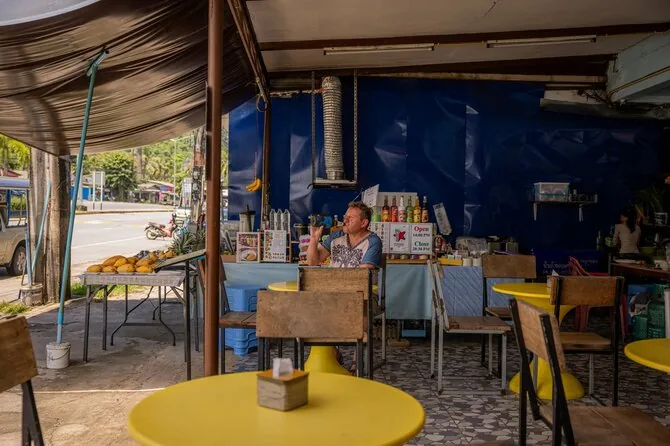
Bali Governor Wayan Koster indicated that the number of European tourists arriving on the island through major transport hubs in the Middle East has decreased precisely because of the war in Iran.
The chairman of the island’s travel agency association, Putu Winastra, said that his company temporarily froze salary payments because they expected the number of orders to drop by about 45% this year.
Bali’s tourism officials immediately began looking for tourists elsewhere and sent their sales delegations to Australia, China, Singapore, and South Korea. Meanwhile, the Indonesian government also canceled taxes on domestic flights to encourage Indonesians to vacation within their country.
So far, there is no end in sight to the war. Tourism sector workers are trying to survive as best they can. Some boat captains in Phang Nga province have returned to fishing or agricultural work.
In the Thai resort town of Kau Lak, 41-year-old manicurist Nantipa Yamsantia said she started learning massage techniques.
Khon from Siem Reap still comes to the taxi stand every morning and waits for passengers, but they appear very rarely. The man, who previously worked as a kitchen assistant, is considering whether it is time to give up his tuk-tuk and look for a job in a restaurant. Although local restaurants are also reducing working hours for their employees.
For now, he has decided to reduce his own food portions so he can give a little more porridge to his daughter.
Read more July 30 Horoscope: fate will settle the score for three signs, and one will get an unexpected chance
“I have no other choice,” Khon shrugged.
This article was published in The New York Times.
© 2026 The New York Times Company