








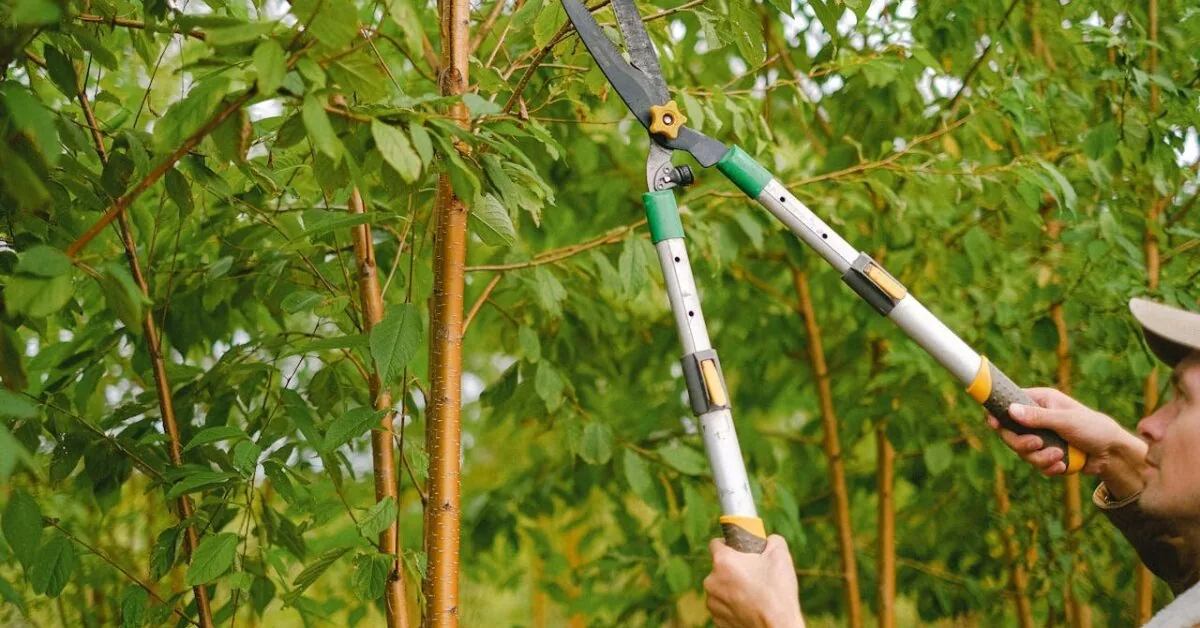
This procedure helps plants to overwinter better, become more resistant to diseases and pests, and also allows for a more abundant harvest the following year.
Read more Berries on pizza? This unexpected combination with goat cheese will become your favorite
We explain when to prune currants, raspberries, and other fruit bushes, and what to do with fruit trees.
Which plants can be pruned in autumn?
At the very beginning of September, pruning should be done only for three plants – grapes, raspberries, and wisteria.
Summer raspberries must be pruned if you have not yet removed old shoots after the berry harvest. All biennial stems that will no longer produce fruit should be cut at ground level, making sure not to leave stumps. At the same time, young green shoots should be preserved – it is on these that berries will grow next season. Thinning the raspberry patch in September improves air circulation, thus reducing the risk of fungal diseases.
Grapes should be freed from weak, unwoody shoots in September, and all unnecessary greenery that does not participate in fruiting should be removed. Autumn pruning helps the plant not to waste energy on “empty” shoots and directs it to the development of clusters.
Moreover, grapes pruned in September withstand frost better. It is important to understand that suckers and thin shoots that overly thicken the bush can also be removed, but the main formative pruning should be done only in November, while now it is best to limit to sanitary pruning.
Wisteria will also “thank you” for pruning with the secateurs and bloom abundantly next season. For this, long shoots need to be shortened to 5–6 buds from the main stem. This trick encourages the plant to form more flower buds, so it can bloom profusely in spring and summer.
Read more One person died after a ferry sank off the coast of Java: more than 100 rescued
Is it possible to prune currants and gooseberries in September?
Many gardeners are used to pruning fruit bushes in autumn. They are partly right, but it is very important to choose the right time. Pruning too early can harm the bushes and even have the opposite effect – part of the harvest may be lost because the plant will withstand winter worse or may be damaged by frost at all.
Therefore, it is important to remember: currants and gooseberries can only be pruned after the leaves have fallen, that is, at the end of September or in October. At that time, old branches over 4–5 years old that have already borne fruit and will no longer give a good harvest should be removed, but young green shoots should be left. It is also important to cut out damaged and diseased branches and those growing very close to the ground.
Which plants are better not to prune in autumn?
Speaking of plants that are better not to prune in autumn, it may be surprising, but first of all, we are talking about fruit trees. Apples, pears, cherries, sour cherries, plums, and apricots are better left alone in autumn, and the main pruning should be done in March–April, before active sap flow begins.
Even if you see that the tree has completely shed its leaves, it does not mean that it must be pruned. Another situation is sanitary pruning when the tree has dry, diseased, or broken branches. These can be removed in September, but larger wounds, especially on mature trees, are preferably treated only in early spring.
Horticulture specialists explain this approach by the tree’s dormancy period, which they enter in autumn. Plants prepare to successfully withstand winter frosts and accumulate materials necessary for overwintering. A large part of these materials enters the plant through the leaves during summer, so pruning too early can deprive it of some important substances.
Moreover, it often happens that after pruning, the tree starts to produce new shoots – in other words, pruning stimulates growth. The coming winter frosts can damage or destroy these new shoots and buds, which becomes a serious blow to the plant’s health.
Read more After «Kaunas Pride» – sharp criticism from Romas Zabarauskas: «I no longer want to be silent»
Source: unian.net