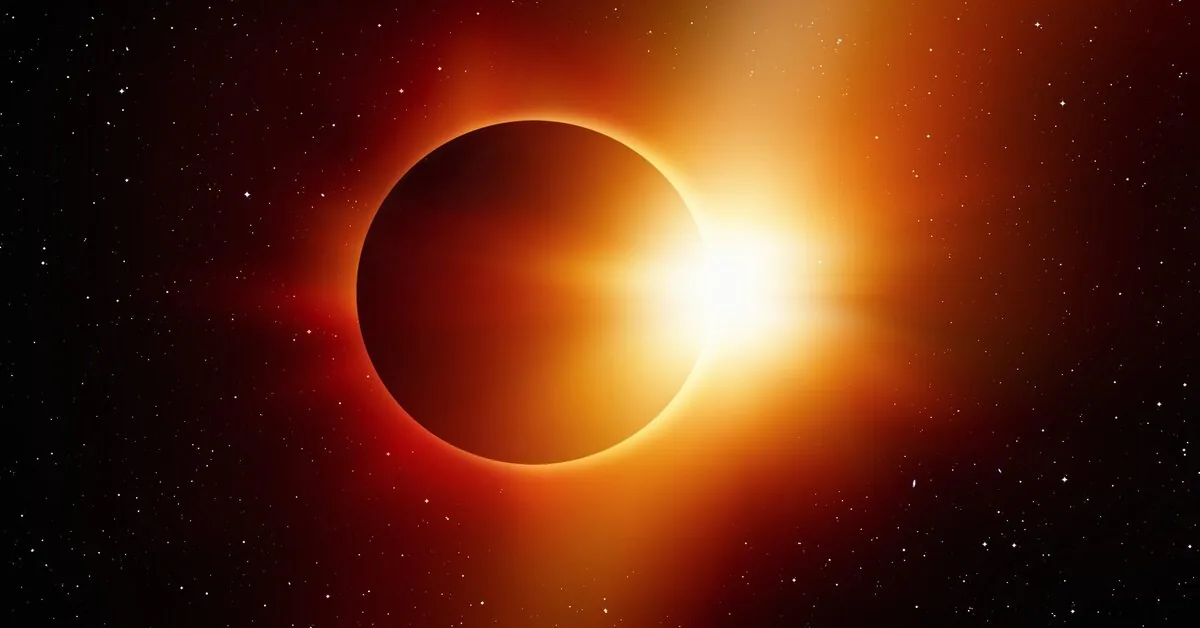
Hotel prices in major European cities have risen sharply as hundreds of thousands of tourists arrive to witness the first total solar eclipse visible from Europe this century.
One of the biggest price jumps was recorded in Reykjavik, the capital of Iceland – one of the few easily accessible places where the total eclipse can be seen on Wednesday evening. According to data from the travel and hospitality sector company “Lighthouse Intelligence,” the average hotel room price for Wednesday is $793 – 98% higher than on the same day last year.
Spain is also preparing for a large influx of tourists – one of the best places in mainland Europe to observe the total solar eclipse. The country’s Ministry of Finance announced on Monday that it expects about 460,000 foreign tourists to arrive specifically for this event.
In the northern Spanish city of A Coruña, hotel room prices have risen 135% compared to last year, averaging $451. In Mallorca, where the eclipse should be visible at sunset on the horizon, prices increased by 24% – to about $448. Hotels in Santiago de Compostela have become 34% more expensive, and in Bilbao – 67%.
Accommodations in smaller towns and villages located within the eclipse path, as well as temporary observation platforms set up by local enthusiasts, were booked months in advance. It is reported that some tourists from the USA are staying by house swapping with Spanish hosts living in the Castile and León region – an area considered one of the best for eclipse viewing.
However, Spanish authorities are concerned about the increased risk of forest fires. Police predict that there will be about 1.5 million more car trips on the roads on Wednesday than usual. Officials warn that due to unusually dry weather, even the smallest spark can cause devastating forest fires, and traffic jams may hinder rescue services from reaching accident sites in rural areas.
To reduce risks, Spanish authorities are organizing a large-scale police operation and public safety campaign – planning to deploy about 35,000 officers. Virginia Barcones, General Secretary of Civil Protection and Emergency Situations at the Ministry of the Interior, said: “This summer in Spain has been extremely challenging – we have had to fight large forest fires again. Therefore, we must limit any activity that could cause a spark.”
The country has banned parking cars on road shoulders or near dry vegetation, as well as prohibiting barbecues and fireworks. The Valencia region has temporarily closed natural parks and banned walking on rural paths. On Monday evening, large forest fires were still burning in the provinces of Huelva, Segovia, and Huesca. According to the Ministry of Environment, fires have already devastated about 200,000 hectares this year – six times more than at the same time in 2025.
For those who cannot travel to eclipse viewing locations, the US space agency NASA has set up four powerful telescopes in the village of Villalibado in northwest Spain. The eclipse will be broadcast live to more than 10 million viewers worldwide.
A partial solar eclipse will also be visible across the United Kingdom on Wednesday.
Read more What happened to those Russian soldiers: sexually exploiting captured Ukrainians