These questions are explored by the project implemented by the Lithuanian Institute of History “Member of the Communist Party in Soviet Lithuania and Latvia. A socio-cultural perspective.” The project is implemented after winning the funding competition for scientific group projects announced by the Lithuanian Research Council.
Read more Terrifying head-on collision between BMW driver and MAN truck – a mystery for investigators
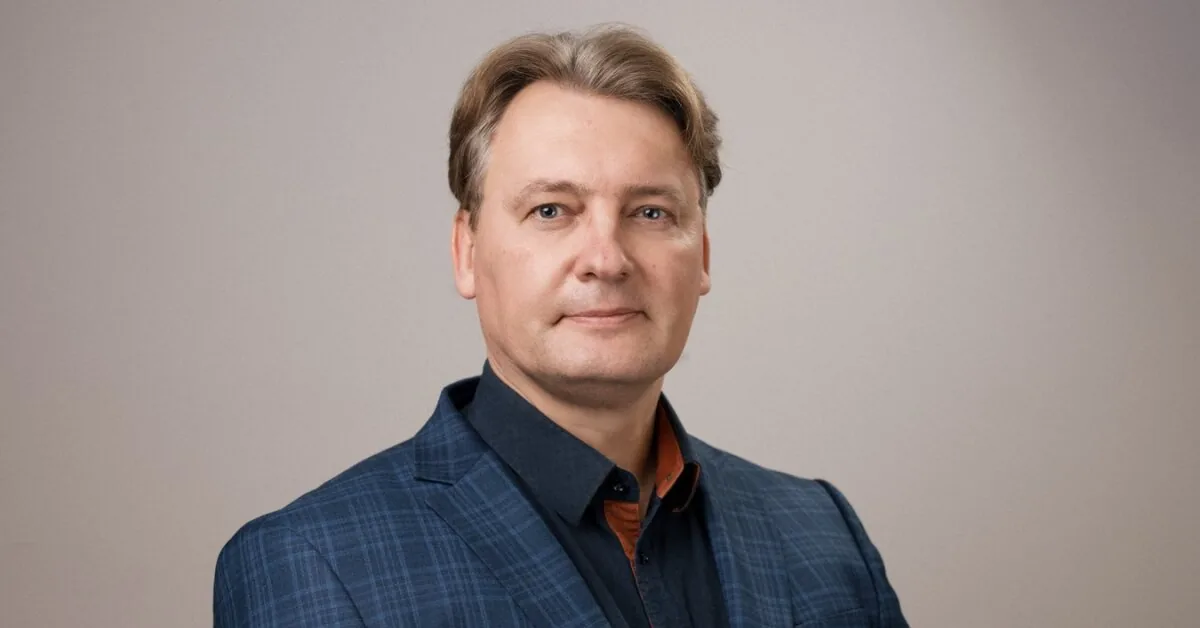
The project leader, senior researcher at the Lithuanian Institute of History Dr. Saulius Grybkauskas, talks in more detail about the research being carried out.
– The former membership of politicians and public figures in the Communist Party is becoming an increasingly relevant topic. Did the informational background influence the planning of this scientific project?
– Definitely yes. I myself was surprised that our society, sometimes even historians, know little about partisanship: what the Communist Party was, how it operated, how one became a party member. When society began to discuss, various discrepancies and inaccuracies appeared. For example, it is not taken into account that a candidate period was necessary to join the party. At least a year before, documents had to be submitted, then one was accepted as a candidate for a kind of probationary period.
– So there was a whole procedure – becoming a member of the Communist Party was neither quick nor easy?
– Yes, the procedure was quite complicated. If you are a candidate and do not sign further to join the party, it is practically almost a wolf ticket – any doors to further career are closed. So the beginning of this project was the desire to look at the procedures of becoming a member of the Communist Party: how we imagine it and how it really was.
Another aspect of the project is much more academic. It is our society of that time: why did it join the party, who joined, what did they do there, how was the very fact of joining evaluated. We imagine that we already know everything about it. But being a communist in Stalin’s times and being a communist in the late Brezhnev period is quite different. It is very interesting to see how primary party organizations worked, which were not only in every factory but also in larger workshops. Many authentic stories and discussions have survived until the beginning of Brezhnev’s rule. In primary party organizations, people at that time even discussed family relationships, many cases of domestic violence, and men behaving badly were educated. Although in the Latvian archival material I found another case: a woman wrote complaints about an abusive husband. It turned out that the husband did not abuse at all: the woman’s goal was to have the husband expelled from the party and to get the apartment after the divorce. Of course, such cases are rare.
In the later Brezhnev years, discussions become formulaic, formal: everyone already learned what to say and what not to say. The documents that have survived until then reveal everyday life, full of various curiosities. For example, even in Khrushchev’s times – not to mention Stalin’s – there were cases when the party secretary himself organized speculation inside the factory, removal of products.
Collecting material on how primary party organizations operated in institutions, in Latvia I selected the Medical University, the VEF radio factory, some collective farms. I do the same in Lithuania: I look at the transcripts of primary party organizations of Vilnius University and also factories. Comparing how these organizations worked in factories and how in higher education institutions, you see the living social life.
– Since you mentioned sources, is it interesting whether you plan to conduct interviews with former Communist Party members?
– The main source is primary party material: organization protocols, transcripts, activity reports. Supplementing the material, I also rely on interviews, but here a problem arises. When talking to a person, you have to present the project for which you are interviewing. It is one thing to talk about some social topic. Another is when you say that you are researching the Communist Party and why the interlocutor became a communist. Then the person begins to think that maybe he does not really want to talk about it.
Partisanship is one of the moments for a person: it is not that he sees himself as a communist and wants to talk about it for two hours. My found solution is access to the Latvian oral history archive and the thousands of interviews stored there. By reviewing them, you can find very interesting things about joining the party. These interviews are from a later period, so they cover what is no longer in the archives; as I mentioned, from the eighth decade the material becomes very formal. Also, it is one thing to immediately ask a person why he joined the party – he may feel like being interrogated. But another thing is if the person himself mentions during the conversation, without being asked, that he was a party member.
– The project description states that although there are many scientific works about communism, there is still little information about the ordinary communist, about the individual’s experience. How is the ordinary communist defined in this project? Was it a fairly homogeneous group, or were there significant differences even among its members?
– The audience was diverse. In general, there were various waves of joining the party. Sometimes a person avoids and does not want to join the party for a long time, and then for some reason, mass membership occurs in the collective.
In this project, I am also interested in the party secretary of the primary party organization: what his relationship with the administration is, how he takes over the instructions from the district authorities, how he retransmits them downwards. It is interesting to observe how an instruction to consider some issue comes from the Central Committee of the Communist Party of Lithuania. But by the time it reaches the primary organization, it has already become quite different. For example, in 1959, there was a purge of Latvian national communists. At primary party meetings, people began to talk about what happened. And when later the Central Committee secretary visits a large factory and starts talking on this topic, people already know more about it than the authorities want them to know. At that time, Latvians completely stopped joining the Communist Party: they saw that it was not really their organization.
By the way, this purge of the Latvian national communist leadership was also discussed at meetings in Lithuania. The party city or republic authorities tried to control so that everything would not grow into a bigger discussion. Here was an interesting aspect: how to give initiative to the party organization but at the same time not let it go too far. At different times, this manifested in different ways. For example, even in Stalin’s times, it was considered that Vilnius University had too few communists. An instructor from the Central Committee told the local organization: you must show initiative, criticize lecturers and professors more strictly. And the local replied: how can we show it if we have not received such an instruction from above? So, on the one hand, primary party organizations had to raise issues, inform the central authorities about concerns. On the other hand, at the same time, initiatives were suppressed.
Read more Moscow court sentenced a Lithuanian citizen for damage to Soviet soldiers’ graves
For example, at the Vilnius plastic products factory, communist activists at one time wanted to take over the factory. During Khrushchev’s rule, the army and KGB contingents were being reduced. Dismissed officers and non-commissioned officers were employed in factories. These military men had already experienced a lot, and moreover, dissatisfied with Khrushchev’s behavior, felt that their rights were violated. And the management was Lithuanian engineers who were not very familiar with the party spirit. So those old communists began to educate them, explain how to manage the factory. A conflict occurred.
– But the former officers did not take over the factory management?
– No. Still, the administration is often smarter than ordinary communists. Look, which ordinary worker got drunk at work, ended up in a sobering-up station – and that’s it, it is handled like that. A new, very strict, autarkic leader was appointed who quickly solved everything.
– You mentioned that Latvians were not so active in joining the Communist Party. Could there be other reasons for this, for example, cultural or religious?
– I don’t think so. In Latvia, industrialization simply started earlier, and more people from other Soviet republics flooded there. In Lithuania, people from other republics very rarely moved to collective farms, but in Latvia, this was the case. Especially in the Zemgale region, where there were large farms. Russian speakers arriving there began to introduce their order. Many of them already came as communists.
In this project, I am also interested in the very process of admission to the Communist Party. A person does not just say “I want” and sign. In Stalin’s and Khrushchev’s times, one had to prepare to answer questions – learn the statutes, know the programs. They asked what newspapers the person reads, about international Israeli politics, events in Canada, who is the prime minister of which foreign country. In Stalin’s times, until about 1955, the main question was “who are your parents, where are your brothers.” If brothers or other family members were legionnaires during the war – that’s it, you are not accepted. There are many cases showing that a person was initially accepted into the Communist Party but then expelled because he concealed the past of a legionnaire brother. They also asked if the candidate had relatives abroad or if there were people who fled Lithuania. During Stalin’s period, this was viewed very strictly. In Khrushchev’s times, there were reconsiderations. If during Stalin’s times a person did not join the party because of a legionnaire in the family, in Khrushchev’s times he could join.
Of course, there were also anti-Soviet sentiments. Sometimes people did not even tell their mother or father that they joined the Communist Party. Or they informed later that they became Komsomol members. The press of that period had a very clear divide: here is an old, retrograde village, backward parents, and here are initiative Komsomol children who see the light in Soviet development, want to become agents of modernity and move forward.
– How do historians treat refusal to join the Communist Party? Is it understood as rebellion, a form of resistance, or are such formulations too strong?
– It is a complicated question. It can be interpreted in many ways. Today one can say: I was offered, but I did not join. Others say they were Komsomol members but did not join the party because that was already a limit. Joining the party – especially in Brezhnev’s times – was considered a step for career. But there is another interpretation that is now very common. It was said: Lithuanian, join the party, because if you don’t, an outsider from Russia will take the leading post, and we will be forced to obey him. It is necessary that the posts are occupied by our own, Lithuanians. So the question is how much the patriotic moment worked here. People now sometimes even say: someone had to sacrifice, so I joined the party. I look at this very cautiously. A person primarily joined the party for himself, for his career. Naturally, an initiative, intelligent person wants to achieve more. Although in the Soviet era even the word “career” was unacceptable. You had to be like everyone else, not a careerist who seeks something more.
By the way, statistically, the share of partisanship was lower among doctors.
– Because they were needed anyway regardless of whether they belonged to the party?
– Yes. You cannot just throw away a doctor – he has his own name. Of course, if he wanted to become the chief doctor, partisanship was relevant. But for an ordinary doctor – not really. I found an interesting thing: in one year, a group of people were awarded honorary doctor titles, and among them, there was not a single communist. By the way, later many doctors joined the Sąjūdis movement.
– You already mentioned that joining the party in Stalin’s times was different from Brezhnev’s. But summarizing the whole period, can it be divided into such stages: at one time fear mostly encouraged becoming a party member, and then career? Or are both the person and the system too complex?
– It is usually considered that at first joining was determined by beliefs. There were ideological communists, and also repressions operated during Stalin’s times. But in fact, the ideological rise, belief in the future and light of communism was actually during Khrushchev’s times. In general, Khrushchev’s concept was this: society is a communist. If some uncertainties arose, Khrushchev had such an answer: “I as a communist will say.” It was like above everything, the answer to all questions.
Khrushchev hoped that after Stalinism society would be infected with communist enthusiasm, would believe his promise. In Lithuania, industrialization, industrial development, housing construction gained momentum precisely during Khrushchev’s times. And also space, Gagarin, opportunities for social mobility… but then in stagnation, closedness appears. People see that everything becomes as if locked, nothing changes. The same persons sit in the same posts for 20 or more years. The question arises not whether to join the party, but whether there are still places in it. For example, the number of places for intelligentsia was limited. I know cases when an intellectual was told: we will accept you into the party if you persuade two workers to join together. Then the intellectual would go with a bottle to the worker and persuade him to join so that he himself could become a member.
– What are the expected results of this project?
– At the end of 2028, a monograph should be published, which will be released by the Lithuanian Institute of History. Implementing this project, I cooperate with Latvian historians. They will also want to contribute to preparing a book about the members of the Communist Party of Lithuania and Latvia.
……
The project “Member of the Communist Party in Soviet Lithuania and Latvia. A socio-cultural perspective” is implemented after winning the funding competition for scientific group projects announced by the Lithuanian Research Council (contract no. S-MIP-25-87).